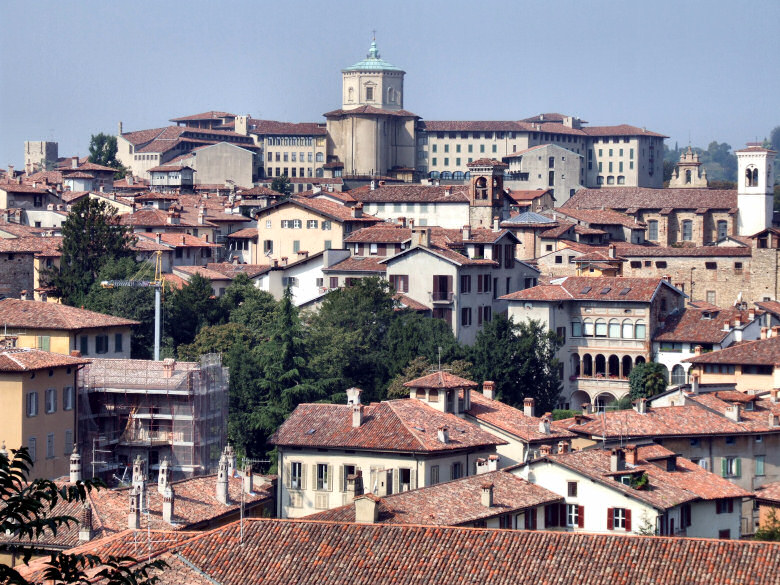
St Anne Square - Bergamo
Europe,
Italy,
Bergamo,
Piazza Sant’Anna is an emblematic location in the city of Bergamo, nestled among historic streets and the evocative landscapes that characterize this place. This square is known for its rich artistic and architectural heritage that harmoniously blends with the day-to-day lives of the locals. During the medieval period, the square was already an important center for interaction and social life, while today it represents a cultural and tourist hub. Its beauty is accentuated by the presence of the Church of Sant’Anna, a building of great historical and artistic significance. The square is not only a meeting place, but also a witness to the transformations that have occurred over the centuries.Origins and HistoryThe origins of Piazza Sant’Anna date back to the medieval period, when the city of Bergamo developed around its important religious and civic centers. The square now appears as a well-preserved example of how public spaces could serve as a vital hub for the community. The Church of Sant’Anna, which overlooks the square, was built between the 16th and 17th centuries, thus becoming an essential part of the identity of this place.The sacred building was constructed thanks to the contributions of the Carmelite friars, who established a convent near the square in 1602. The church was dedicated to Saint Anne, the mother of the Virgin Mary, and became an important center of worship for the local faithful. Its construction was prolonged over time, with various phases of work that continued until 172This lengthy process reflects not only the commitment of the religious figures involved, but also the community’s desire to have a dignified place for prayer and gatherings.Over the centuries, Piazza Sant’Anna has undergone various transformations. During the Napoleonic era, the square was renovated and adapted, incorporating new spaces and improving the existing ones. The urban planning of the area continued to evolve, integrating more modern architectural elements that enriched the visual landscape of the square. Significant restorations were carried out during the 20th century to preserve this historical testimony and ensure its accessibility to visitors.Recently, targeted interventions have been made to recover the original architectural elements and enhance the surrounding areas. The square has maintained its character as a meeting place, enriched by cultural and social events that make it a reference point for urban life.What to ObserveFacade of the Church of Sant’AnnaAs soon as you arrive in the square, your attention will surely be captured by the facade of the Church of Sant’Anna. Characterized by a Baroque style, it is accompanied by beautiful decorations and a central portal of remarkable beauty. The facade was completed in 1749 by architect Giovanni Battista Caniana, who managed to impart a timeless elegance to this sacred space.Church InteriorsUpon entering the church, you will be welcomed by an atmosphere of great spirituality. The richly decorated interiors display frescoes that depict the life of the Saint, created by local artists. The attention to detail immediately stands out, such as the Corinthian-style columns and the elegant stucco decorations. The interiors are a reflection of the community’s devotion and express the sacred art of the era.Main AltarShortly after entering, you will reach the main altar, which is one of the focal points of the church. This extraordinary altar is adorned with golden finishes and features a series of artworks that capture the attention of visitors. The care taken in the details speaks of the strong commitment of those who worked to create it, making it an architectural masterpiece.Chapel of Saint AnneAs you continue your visit, you cannot miss the chapel of Saint Anne. Here, you will find an engaging representation of the Saint accompanied by the Virgin Mary and the Christ Child. The atmosphere created by this corner is one of great intimacy, and the works present are an expression of the spirituality that permeates this place.View from the SacristyUpon exiting the church, we recommend taking a moment to admire the view from the sacristy. From here, you can observe the urban context of Bergamo, with its historic towers and the beauty of the surrounding mountains. It’s a moment of reflection that allows you to appreciate the city’s history at a glance.Architectural DetailsAs you stroll among the architectural details of the square, pay attention to the masks and bas-reliefs that decorate the facades of the surrounding buildings. These particulars tell ancient stories and add character to the square. Every element is part of a larger mosaic that composes the historical narrative of Bergamo.The Market of Piazza Sant’AnnaFinally, if you are lucky, you might stumble upon the market that is held periodically in the square. Here you can discover the typical products of the area, from local crafts to traditional foods. This market is another element of life and vibrancy for the square, making it an even more dynamic meeting center.Context and ConnectionsPiazza Sant’Anna is located in the heart of a neighborhood rich in history and culture. The surrounding streets are dotted with characteristic shops and historic cafés, where you can savor Bergamasque traditions. While you are here, it’s easy to continue your walk toward other important attractions in the city.Just a few steps from Piazza Sant’Anna, you can visit the Church of San Michele al Pozzo Bianco, another architectural masterpiece of Bergamo, also rich in frescoes and artistic details. Moreover, don’t forget to explore the historic Venetian Walls, which offer a spectacular view of the city and the surrounding landscapes. Lastly, Palazzo della Ragione, located nearby, is a place to discover for its historical value and the atmosphere it preserves.CuriositiesAmong the peculiarities of Piazza Sant’Anna, it is said that historically, the square was the focal point of local social life, hosting numerous public events and religious celebrations. During holidays, the square was filled with music and life, becoming a reference point for the community.Additionally, at the time of the construction of the Church of Sant’Anna, many artists and artisans of the era were involved in creating works that are now integral parts of the church itself. This collaborative spirit is a clear sign of the strong interconnection between art and religion in Bergamo.Finally, the square has witnessed numerous historical events, which contributed to shaping the character of the city and its people. It is not uncommon for residents to recall stories of celebrations and festivities that took place here, reinforcing its central role in urban life.We now invite you to explore other gems of Bergamo, such as the Colleoni Chapel, famous for its frescoes, and Palazzo Suardi, a perfect example of noble residence. Happy discovery!
Read More