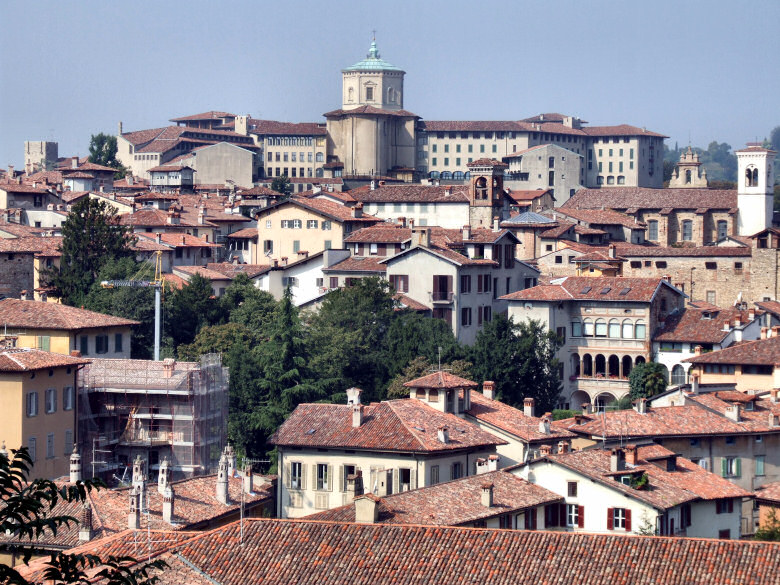
St Anne Square - Portico - Bergamo
Europe,
Italy,
Bergamo,
Welcome to Piazza Sant’Anna, a charming corner in the heart of Bergamo. This square, characterized by elegant porticoed architecture, serves as an important meeting point for the local community and visitors. Located in the lower part of the city, known as Bergamo Bassa, it is famed for its historical charm and vibrant markets. The square dates back to the medieval period and has been crucial for the urban development of the area. Today, Piazza Sant’Anna is a vital space for social and cultural gathering, where tradition and modernity intertwine in an enchanting atmosphere.Origins and HistoryThe origins of Piazza Sant’Anna date back to the 13th century, when the neighborhood began to develop around a place of worship dedicated to Saint Anne, the mother of the Virgin Mary. The church overlooking the square, also dedicated to Saint Anne, was built in 1470, commissioned by the local community. This church is an example of Gothic architecture, although over the centuries it has undergone various restoration interventions.In the 14th century, the square began to take shape as a center for social and commercial life. Thanks to its strategic location, it quickly became a vital point for local trade, populated by artisans and merchants. The porticoed structures surrounding the square provided shelter from the rain and represented an important architectural innovation for the time.During the Renaissance, Bergamo experienced a period of significant growth and development, influenced by Venetian rule. In this context, the square underwent a series of architectural transformations. The porticoes were expanded and beautified, becoming a symbol of the city’s mercantile power and prosperity. In the following centuries, the square continued to be the focal point of public events and celebrations.Between the 19th and 20th centuries, the square faced a period of decline, but by the end of the twentieth century, significant recovery and enhancement work began. Today, Piazza Sant’Anna has returned to being a lively place, rich in activities and initiatives, reflecting Bergamo’s culture and tradition.What to ObserveUpon arriving in Piazza Sant’Anna, the first notable element that catches your eye is the majestic facade of the Church of Saint Anne. This building features a Gothic style with decorative details that tell the story and devotion of the community. If you look closely, you’ll notice the stylized features of the arches, typical of medieval architecture.Continuing on, on the sides of the square, you will find the porticoes, which represent an essential part of its identity. These porticoes, supported by elegant columns, not only provide shelter but also grant access to various shops and cafes. I recommend taking a stroll along the porticoes and perhaps stopping in one of the cafes to savor a traditional Bergamasque coffee, immersing yourself in the vibrant atmosphere of the square.Moving towards the center of the square, you will find a picturesque fountain. This fountain, although not particularly large, symbolizes refreshment and serves as a meeting place for passersby. It’s interesting to note that until a few decades ago, the source of drinking water was a vital resource for the local community.Now direct your gaze to the square’s pavement. The cobblestone surface is partly original and tells stories of the merchants and patrons who traversed it over the centuries. This cobblestone pavement pays tribute to the historical significance of the place and invites reflection on life that took place here centuries ago.If you look up, you cannot miss the beautiful architectural details of the facades of the buildings that overlook the square. The wrought-iron balconies and frescoed windows are a clear example of Bergamo’s rich artistic heritage. These decorative elements give the square an atmosphere of refined elegance.Finally, we invite you to observe the murals that adorn some of the surrounding buildings. These frescoes tell local and mythological stories and are a testament to Bergamo’s cultural and artistic traditions. The artists who have worked here over the centuries left a significant mark on the city’s visual heritage.Context and ConnectionsPiazza Sant’Anna is situated in an urban context rich in history and culture. It is just a short walk from other important attractions in Bergamo Bassa. One of these is Piazza Vecchia, the vibrant heart of the city, considered one of the most beautiful spots in Bergamo. Here, you can admire the Palazzo della Ragione and the Civic Tower, symbols of the city’s autonomy.A short distance away, you will find the Palazzo Frizzoni, the seat of the Bergamo municipality, which houses significant works of art and tells the administrative history of the city. These historical buildings, together with Piazza Sant’Anna, create a pathway that offers visitors a comprehensive view of Bergamo’s urban and social development.Another place of great interest nearby is the Accademia Carrara, one of the most prestigious art galleries in Lombardy, which houses works by artists such as Raphael, Botticelli, and Bellini. This institution represents a connection between Bergamo’s artistic history and its cultural present.CuriositiesThe Gothic architecture of the Church of Saint Anne is often associated with a building tradition that emphasized height and luminosity in interiors. This architectural style has significantly influenced other religious buildings in Bergamo.The porticoes of Piazza Sant’Anna were not only built for functional reasons; they also represent an important example of socialization and social interaction. For centuries, they have been places of meetings, markets, and cultural exchanges.Where the square stands today, markets and fairs took place during the Middle Ages, attracting merchants from various regions. This contributed to a notable cultural enrichment, creating synergy among different traditions.This text is based on verified public sources as of the time of writing.Thank you for visiting Piazza Sant’Anna, a place that carries with it stories of a rich and complex past. Don’t forget to continue your exploration by discovering Piazza Vecchia and the Accademia Carrara, to fully experience Bergamo’s cultural heritage.
Read More