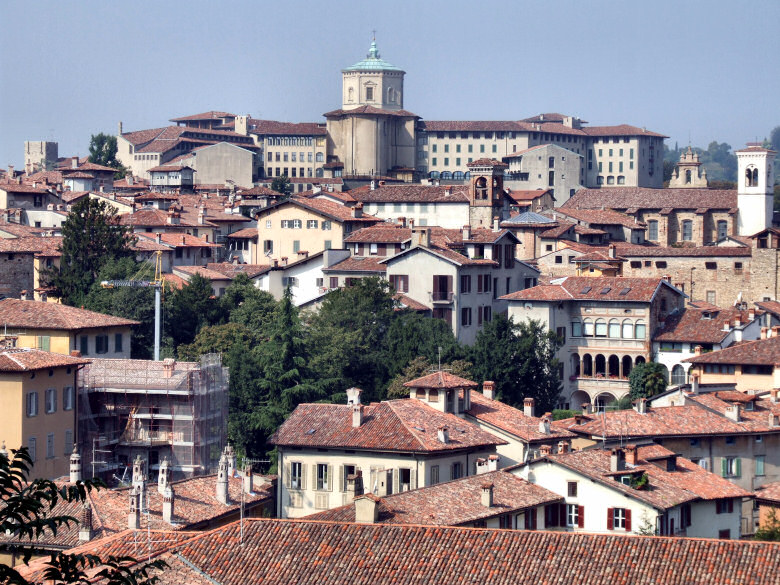
Little Temple of the Fallen - Bergamo
Europe,
Italy,
Bergamo,
The Temple of the Fallen, located in the heart of Bergamo, is a memorial of great historical and cultural significance for the local community. Built between 1921 and 1931, this monument is dedicated to the fallen of World War I and represents a symbol of the city in its process of mourning and in the affirmation of national identity. Inspired by classical models, the Temple stands out for its neoclassical style, which emphasizes the grandeur and solemnity of the place. Its realization was undertaken at the behest of the Municipal Administration during a period in which the country was seeking to honor its heroes and build a new collective consciousness.Origins and HistoryThe idea of creating a monument dedicated to the fallen of World War I emerged immediately after the end of the conflict, during the 1920s. At that time, many Italian cities began to realize similar monuments, seeking ways to commemorate their fallen compatriots. In Bergamo, the project was entrusted to architect and sculptor Enrico Pirovano, who infused the work with profound symbolic meanings.The Temple was officially inaugurated in 1931. This monument recalls those classical architectures that speak of grandeur and memory. The design and construction of the Temple were completed during a historical period in which Italy was undergoing significant political and social transitions. The war had left deep wounds in the fabric of the nation, and monuments like this began to represent an attempt at rebirth.A distinctive feature of the Temple of the Fallen is its temple-like architectural setting, with Doric columns surrounding the structure, a direct homage to the temples of Ancient Greece, symbols of a civilization that celebrated life and the citizen. The materials used, such as Carrara marble, contribute to the monument’s grandeur and sacredness.Over the years, the Temple has undergone several restorations to preserve its beauty and ensure the safety of the structure. The last significant intervention took place recently, aimed at consolidating the foundations and restoring some decorative details damaged by time and weathering. These conservation efforts demonstrate the commitment of the city of Bergamo to keep the historical and cultural memory alive.What to ObserveUpon arriving in front of the Temple of the Fallen, the view is dominated by the sober and monumental lines of neoclassical architecture. The façade is characterized by an imposing portico with Doric columns that stand out in a play of light and shadows, creating an atmosphere of solemnity. The columns, typical of Greek architecture, symbolize strength and stability, elements that reflect respect for those who sacrificed their lives.Inside the Temple, the fresco that greets the visitor is a tribute to the fallen of Bergamo. The ornaments and statues that decorate the structure also tell stories of heroism and sacrifice. The niches, filled with names and recognitions, perpetuate the memory of the fallen, transforming it into a sort of open book of history.Moving towards the back of the monument, one can notice a breathtaking panoramic view of the city of Bergamo, which unfolds in its entirety from here. This aspect is ideal for personal reflections, offering a moment of quiet and contemplation. The location of the Temple was indeed chosen for its outlook over the city, emphasizing not only remembrance but also the connection with the territory and its inhabitants.Another element not to be missed are the commemorative plaques, which bear wise sayings and messages of peace. These texts have been carefully selected to express the desire for a better future and a rejection of war, resonating with the sentiments of the years in which the Temple was built. By observing these inscriptions, visitors can reflect on the value of peace and the importance of historical memory.Finally, let us not forget the care of the garden surrounding the Temple. This green space was designed not only as a frame for the monument but also as a place of gathering and meditation. The plants and flowers that adorn it are symbols of life and hope, offering a contrast to the harsh memories of war.Context and ConnectionsThe Temple of the Fallen is situated in an urban context rich in history and culture. Located in the upper part of Bergamo, known as Città Alta, it is surrounded by other important tourist attractions. Just a few steps away, we find, for example, the Basilica of Santa Maria Maggiore, a masterpiece of Romanesque art dating back to the twelfth century, which houses magnificent works and attracts visitors from all over the world.Not far away, there is also the Colleoni Chapel, a Renaissance monument dedicated to the condottiero Bartolomeo Colleoni, whose architecture and decoration tell stories of power and glory. This place, like the Temple, is a symbol of Bergamo’s greatness, making the path between the two monuments ideal for deepening the history of the city.Finally, it is worth visiting the Parco dei Colli di Bergamo, a vast protected area surrounding the upper city. Here, among paths and viewpoints, nature lovers can immerse themselves in the scenic beauty of the area and reflect on the connection between history and environment, a bond well expressed in the architecture of the Temple of the Fallen.CuriositiesAn interesting detail to know is that the Temple of the Fallen was designed not only to commemorate the memory of the soldiers of World War I but also of the fighters from subsequent wars. This choice reflects a broader idea of peace and the fight against all forms of conflict.Furthermore, the Temple has witnessed numerous ceremonies and commemorations over the years. In particular, its inauguration in 1931 saw significant participation from citizens and authorities, highlighting the importance of the monument in Burgamasca identity.Another interesting aspect is the use of materials. The Carrara marble used in construction is a connecting element between Bergamo and the Italian artistic tradition, reinforcing the bond between art and memory. The choice of such a precious material demonstrates the community’s commitment to honoring its fallen.Finally, the Temple also serves as a symbol of unity and reconciliation. Despite the divisions brought by war, this place represents a meeting point for the citizens of Bergamo, a shared territory of memories and hopes for a better future.
Read More