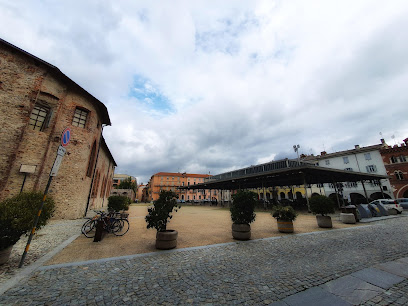
Virginio Square – Cuneo
Europe,
Italy,
Cuneo,
Welcome to Piazza Virginio-Cuneo, an important square located in the heart of Cuneo, a city rich in history, traditions, and artistic beauty. This place, which took its name in 1939, owes its current appearance to several centuries of architectural and urban transformations. Characterized by a lively atmosphere of meeting and exchange, Piazza Virginio-Cuneo represents a point of reference for both local citizens and visitors. Here, history and modernity intertwine, offering a glimpse into Cuneo’s culture. The origins of Piazza Virginio-Cuneo trace back to the 13th century, a period when the city of Cuneo began to develop as an important commercial hub. This square, previously known as “Piazza della Libertà” (Square of Freedom), was a focal point for social and political activities. In 1750, Cardinal Filippo Maria Visconti promoted some renovation initiatives that altered the appearance of the square, making it a more structured and respectable meeting place. In the following decades, several significant interventions took place: in the 19th century, with the expansion of the surrounding urban fabric, the square became increasingly central and recognizable. In 1918, during World War I, the name “Piazza della Libertà” was definitively abandoned to honor Virginio Cuneo, a local politician awarded the Order of the Crown of Italy. After World War II, the square underwent another process of redevelopment. The 1970s and 1980s saw the introduction of modern elements, such as new pavements and urban furniture, which contributed to making it a livable and welcoming space. Today, the square is not just a transit area but a place of sociability and culture, where events, markets, and exhibitions enliven the life of the city. As soon as you find yourself in Piazza Virginio-Cuneo, notice above all the architecture that surrounds you. To your right stands the Town Hall, a building that encompasses various architectural styles, from Baroque to Neoclassical. Built during the 17th century, the palace features an elegant façade overlooking the square, symbolizing the importance of government bodies for the Cuneo community. Continuing your visit, in the center of the square you will find the monumental fountain built in 1892. This fountain, with its white marble structure, is adorned with various decorative motifs that recall local traditions. The water flowing is an ode to Cuneo’s vitality and an invitation to pause and enjoy the urban landscape. To the left, the church of San Francesco, dating back to the 13th century, stands out for its beautiful Gothic façade. Access to the church, closed off by an imposing portal, allows visitors to admire precious frescoes and artworks by local artists inside. Don’t forget to observe the architectural details, such as the spires and pinnacles, which enrich the profile of the church. At the end of the square, you can see the Province Palace, another example of 19th-century architecture, with an imposing façade and a monumental staircase. Inside, it often hosts art exhibitions and cultural events, making it a dynamic and interesting place. Finally, do not overlook the numerous cafés and restaurants that overlook the square. Here, you can enjoy a coffee or ice cream while watching the life unfolding around you and immersing yourself in the local atmosphere. The terraces are a meeting point for residents and tourists alike, creating a friendly and welcoming environment. Situated in the historic center of Cuneo, Piazza Virginio-Cuneo plays a crucial role in the urban fabric of the city. This area is characterized by a dense network of historic streets, shops, and artisan workshops that offer a fascinating glimpse into daily life in Cuneo. Just a few steps from the square, you can visit other extraordinary attractions. For example, not far away is the Civic Museum, which houses a significant collection of artworks and historical artifacts. This museum represents an excellent starting point for deepening your understanding of the city’s cultural roots. Additionally, the Fort of Cuneo, an imposing example of military architecture, is within walking distance and offers a beautiful panoramic view of the city and the surrounding Alps. Another interesting stop for history lovers is the Teatro Toselli, a short distance from the square, where performances and concerts enliven Cuneo’s cultural life. An interesting curiosity regarding the name of the square, dedicated to Virginio Cuneo, is that the politician, known for his commitment to the community, was a key figure in the political and cultural life of the city in the 20th century. His figure represents a tradition of civic activism that still characterizes the heart of Cuneo today. Moreover, the central fountain of the square is said to host, according to tradition, a local legend about a treasure hidden in the depths of the water, dating back to the medieval period. This story is echoed in various folk tales, making the fountain a symbol of mystery and charm. Lastly, the Town Hall is also an object of architectural interest due to its interior frescoes, which narrate the history of the city through evocative images. These frescoes have been restored over the years, and today they are open to the public, offering visitors a glimpse of what life was like in Cuneo in past centuries. We conclude our journey by inviting you to discover these nearby places that complete your visit to Cuneo: the Civic Museum, the Fort of Cuneo, and the Teatro Toselli. Immerse yourself in the history and culture of this extraordinary city!
Read More