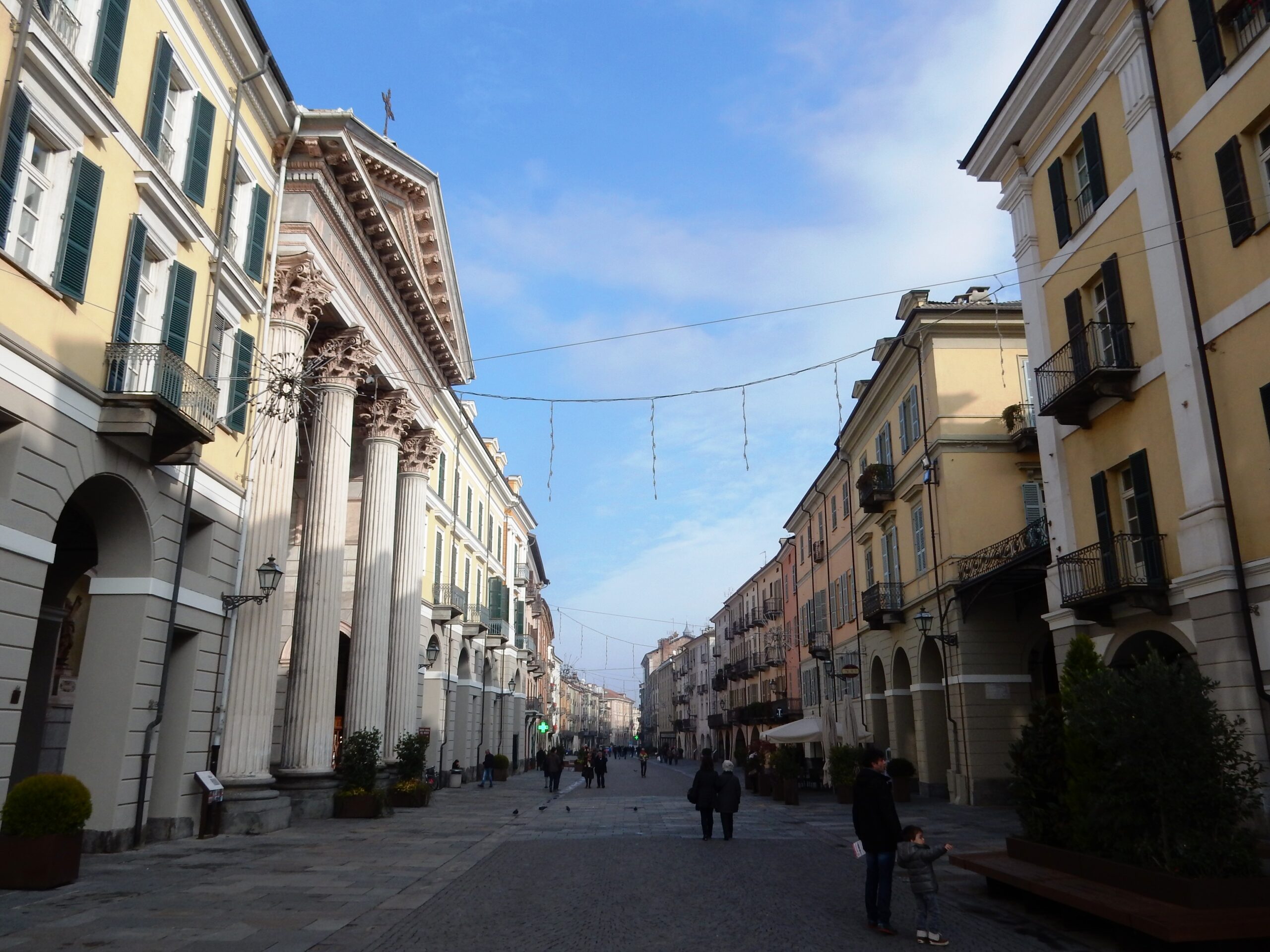
Holy Cross Square – Cuneo
Europe,
Italy,
Cuneo,
Welcome to Piazza Santa Croce, located in the heart of Cuneo, one of the most charming cities in Piedmont. This square is a symbol of the city’s identity and has historical significance dating back to the 13th century, a period when the city began to establish itself as one of the main economic and cultural centers of the region. It is especially known for its spectacular architecture and the lively market that takes place here every week. The square is also famous for its numerous artistic and architectural testimonies, attracting visitors from all over the world. The history of Piazza Santa Croce is deeply intertwined with that of Cuneo, whose origins date back to 1198, when the municipality was founded. During the 13th century, the square began to take shape. It was located in a strategic position, between the Gesso River and the mountain basin, and developed as a meeting point for traders and travelers. In the 14th century, Cuneo experienced significant economic and demographic development. The first buildings in the square began to emerge, including churches and noble residences. A crucial point in the history of the square was in 1730 when the façade of the Church of Santa Croce was completed, designed by the architect Giovanni Battista Borra. This religious building became, over the years, the symbol of the square and a true focal point of city life. In the 19th century, Cuneo further transformed with the widening of the square and the construction of new buildings, such as the Palazzo della Prefettura, which helped give it a more monumental appearance. In 1856, the square was equipped with an imposing fountain in the center, which quickly became a landmark for the residents. In the 20th century, the square underwent various restorations to preserve its architectural heritage. In 1945, it was necessary to restore some parts damaged by the bombings of World War II. The work continues today, aiming to keep its historical and cultural legacy alive. 1. The Church of Santa Croce As you enter the square, on your left, you will find the magnificent Church of Santa Croce. This building, constructed in baroque style, is famous for its richly decorated interior and 17th-century frescoes. In particular, take a look at the chapel dedicated to Saint Joseph, featuring works by local artists that reflect the skill and devotion of Cuneo craftsmen. 2. Palazzo della Prefettura Moving towards the opposite side of the square, you’ll notice the Palazzo della Prefettura. Built in the 19th century, this palace is a perfect example of neoclassical architecture. Its columns and decorative details echo the style of the time, symbolizing the administrative power of the city. Don’t forget to admire the sculptures that adorn the façades, works that tell the story of the Cuneo community. 3. The Central Fountain In the center of the square, the Fountain of Santa Croce is a fundamental element of the landscape. Made in 1856, the fountain is decorated with statues representing allegories of the four seasons. Here, the locals gather not only to refresh themselves but also to chat and enjoy the lively surroundings. 4. The Popular Houses Around the square, you will find a series of selected popular houses, many of which still preserve the original features of Cuneo architecture. The colorful façades and artisanal details tell stories of everyday life and represent the beauty of local tradition. 5. The Market If you are in Cuneo during the weekly market, you will have the opportunity to experience the square in all its splendor. Here, amid stalls of fruits, vegetables, and local products, you can feel the authenticity and dynamism of Cuneo culture. It’s a great chance to taste local specialties, such as the renowned Bra cheese or the famous truffles from the area. 6. The Panorama of the Alps From Piazza Santa Croce, if you look up to the sky, you can admire the stunning Alps that frame the city. This breathtaking view is a point of pride for the people of Cuneo, who often enjoy hiking and winter sports in these marvelous mountains. 7. Architectural Details Finally, don’t forget to observe the architectural details that adorn the square, from the baroque decorations of the church to the elegant cornices of the houses. Each detail tells a part of Cuneo’s history, inviting visitors to discover the city’s cultural heritage. Piazza Santa Croce is situated in an area that reflects the vibrancy of city life. Nearby, you can visit the Civic Museum, which houses a collection of historical artifacts and works of art that tell the story of Cuneo and Piedmont. A short walk away, you will also find the Teatro Toselli, an important cultural and entertainment venue active since the 19th century. Additionally, it is worth mentioning the nearby Church of San Francesco, another example of religious architecture that enriches the artistic heritage of the city. This church, with its neo-Gothic façade and frescoed interiors, represents an intriguing attraction for lovers of history and art. Cuneo is also known as “the city of three bicycles,” referring to its cycling vocation. Every year, events and cycling competitions are held here, attracting enthusiasts from all over. Another interesting fact concerns the market tradition. The Cuneo market, held every Tuesday and Saturday, is one of the oldest in Italy and is renowned for its variety of fresh and artisanal products. Finally, know that Cuneo has a peculiarity: its streets follow a particular geometric system that favors the natural drainage of water, helping to prevent flooding, which is a great advantage especially in an area with significant precipitation. Thank you for joining us on a journey to discover Piazza Santa Croce. We invite you to explore other nearby places, such as the Civic Museum and Teatro Toselli, for an even deeper immersion into the history and culture of Cuneo.
Read More