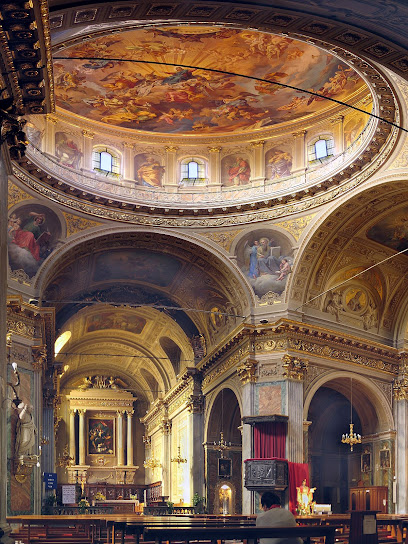
Cathedral of Saint Mary of the Wood – Cuneo
Europe,
Italy,
Cuneo,
The Cathedral of Santa Maria del Bosco, also known as the Cathedral of Cuneo, is a symbol of the city of Cuneo, located in the heart of Piedmont. The building, consecrated in 1715, represents a fusion of architectural styles that reflect the cultural and artistic changes of the centuries. Known for its majestic Baroque façade and sumptuous interiors, the Cathedral is a landmark not only of religious importance but also of historical and cultural significance for the Cuneo community. The cathedral stands out for its dominant position in the area, overlooking one of the most important squares in the city and serving as a backdrop for events and celebrations over the years. The origins of the Cathedral of Santa Maria del Bosco date back to the 12th century, during which Cuneo began to develop as an urban settlement. In the year 1198, a church dedicated to Santa Maria was mentioned for the first time. However, the current structure is the result of numerous expansions and renovations that took place over the centuries. In 1730, under the direction of architect Francesco Gallo, the cathedral definitively took on its Baroque appearance. Gallo, known for his innovative approach, created the unmistakable façade with its decorative elements, which well represent the taste of the era. Throughout the 18th century, the completion work on the interiors, enriched by frescoes and artwork, contributed to making the cathedral one of the most evocative places in Cuneo. In the 19th century, the Cathedral underwent further restorations that modified some internal aspects while maintaining the substance of the building. Additionally, the earthquake of 1887 affected the structure and led to consolidation interventions. Throughout the 20th century, the cathedral has maintained its fundamental role as a center of religious life, witnessing the resilience and continuity of the community. Always linked to the history of the city, the Cathedral has experienced key events, including significant religious celebrations and cultural events, thus becoming a reference point for generations of Cuneo residents. As you approach the Cathedral of Santa Maria del Bosco, you cannot help but notice its façade. This, made of limestone, is characterized by visually striking decorative elements such as columns and curvilinear features. At the top of the façade, a large cross stands out, symbolizing the Christian faith and the importance of the place. Upon entering, you will be welcomed by a vast, bright space. The three naves, divided by tuff columns, offer a sense of grandeur. Natural light filters through the large stained-glass windows, creating an evocative atmosphere. To your right, you will notice a beautiful main altar, made of marble and decorated with gilded stucco. This altar is dedicated to the Virgin Mary, after whom the cathedral is named. As you continue your visit, you might appreciate the artworks present in the side chapels. Among these, the chapel of San Giovanni Battista stands out, home to a bas-relief representing the baptism of Jesus. This work has great iconographic significance and showcases the skill of local artists. To your left, you can observe important wall frescoes that depict biblical stories. These frescoes, created by Piedmontese artists, provide a glimpse into the religious tradition of the region and the sacred art of the time. One of the most distinctive elements of the cathedral is its bell tower, which rises elegantly next to the building. Approximately 70 meters tall, it is visible from various parts of the city and serves as an important landmark for the residents of Cuneo. Its slender and decorated structure is typical of the Piedmontese Baroque style. On one of the internal walls, you will find ex-votos and historical inscriptions, testimonies of the community’s gratitude towards the Virgin Mary. These objects are a tangible element of the popular faith that has always characterized local religious life. Finally, before concluding your visit, don’t forget to observe the majestic organ, situated above the main entrance. This musical instrument, essential during liturgical celebrations, is a masterpiece of carved and decorated wood, representing an excellent example of local craftsmanship. The Cathedral of Santa Maria del Bosco is set in an urban context rich in history and culture. Located in the center of Cuneo, it offers a great view of Piazza Galimberti, the vibrant heart of the city, surrounded by historic cafés and shops. This lively environment represents an ideal place to immerse yourself in the daily life of the Cuneo residents. Nearby, another point of interest is the Civic Museum of Cuneo, which houses a remarkable collection of artworks, including paintings and sculptures by local and international artists. This museum is just a short walk from the cathedral and represents a perfect continuation of your cultural visit. Continuing on, you might visit the Park of Resistance, a green area located a few minutes from the Cathedral. Here, visitors can stroll and enjoy moments of relaxation immersed in nature and the beauty of the commemorative monuments dedicated to the partisan resistance. One of the aspects that make the Cathedral of Santa Maria del Bosco fascinating is its tradition of hosting events dedicated to religious festivities. Every year, on the occasion of the patronal feast, the cathedral fills with faithful and visitors, attracting the attention of the community. This rite not only celebrates religion but represents a moment of social cohesion that evokes ancient traditions. Moreover, the cathedral often hosts cultural events, with concerts and musical performances, thanks to its unique acoustics, which enhance the sounds of the organ and the voices of the singers. Finally, I would like to emphasize the importance of this place as a center for historical studies. The documentation concerning the cathedral is the subject of research conducted by art historians and architects. Recent studies have highlighted previously unknown details regarding construction techniques and the artistic influences that inspired the creators of the artworks present.
Read More