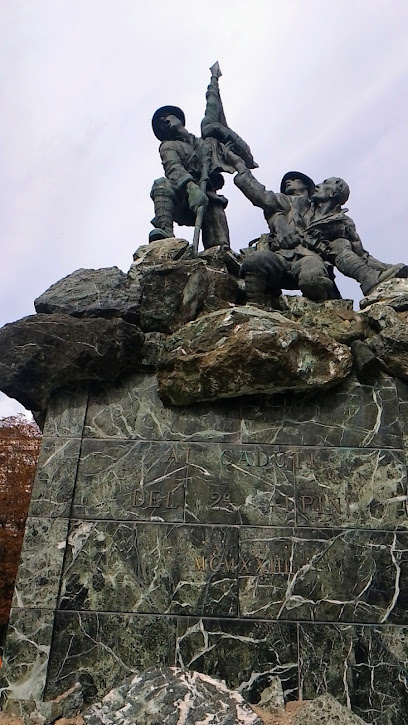
Monument to the Fallen – Cuneo
Europe,
Italy,
Cuneo,
The Monument to the Fallen of Cuneo is an imposing testament to the collective memory of the city, erected to commemorate the soldiers from Cuneo who fell during the world wars. This monumental structure rises in the heart of the city and has taken on a fundamental role in the cultural and historical identity of Cuneo. Inaugurated in 1932, the monument represents a symbol of pride and gratitude for those who sacrificed their lives for the homeland. Its architecture and decorative details make it an important example of public art from the twentieth century, a product of the sensibilities of the interwar period. The Monument to the Fallen of Cuneo was designed by architect Giovanni Battista Tasso, who skillfully combined the architectural language of neoclassicism with the dramatic nature of historical memory. The decision to erect a monument in honor of the fallen dates back to the years immediately following the Great War, when the city, deeply marked by the conflicts, felt the need to honor its heroes. The construction of the monument began in 1927 and concluded with its inauguration in 1932, set against a backdrop of intense reflection on war and its devastating effects. The structure is characterized by an imposing central column, taller than twenty meters, surmounted by a statue of a soldier gazing into the distance, symbolizing courage and vigilance. The architecture of the monument is rich in symbolic details, representative of sacrifice and glory. Over the years, the monument has undergone various restorations to preserve its integrity and beauty. The first significant restoration took place in 1996, when work was done to restore the facades and sculptures. Further maintenance interventions have followed over the years, always with the aim of keeping alive the historical and artistic memory of this important place. The monument is not just a tribute to the fallen but also a gathering point for commemorative events and civic celebrations, thus becoming a central element in the collective life of Cuneo. During the national celebrations on November 4th, for example, the monument becomes the focus of the commemoration of the fallen, attracting citizens and authorities. As we approach the Monument to the Fallen, the first striking feature is the majesty of its architecture. The central column, with its vertical thrust, draws the eye upward, where the figure of a soldier stands strong and proud. Around this column, we can see various bas-reliefs depicting scenes of battle and acts of courage, executed with artistic precision that emphasizes the emotional weight of the work. These details highlight not only the sacrifice of the soldiers but also the resilience of the community. Continuing the visit, we notice the base of the monument, decorated with various commemorative plaques. Each plaque bears the names of the fallen from the two wars, creating a direct connection between past and present. This part of the monument serves as a collective memory, an invitation not to forget the price paid for freedom. If we move towards the surrounding area, we can observe the harmony of the monument with the urban landscape of Cuneo. Its strategic position in the square allows us to appreciate its grandeur in relation to the surrounding architecture. We are surrounded by historical buildings and green spaces that contribute to creating an atmosphere of reflection and respect. In the square, we can observe numerous busts of historical figures who have marked the city’s history, aimed at telling the story of Cuneo’s connection with its heroes and its cultural identity. Among these busts, that of Giuseppe Garibaldi reminds us of our territory’s contribution to Italian history and national unity. Another point of interest is the commemorative plaque dedicated to the Alpini, representing an important chapter in Italian military history. The Alpini, known for their courage and dedication, played a fundamental role in the history of the Great War and deserve respect and admiration. Finally, the view from the square offers a lovely glimpse of the Alps, which stand majestically in the background. This panorama is not just a visual element, but it serves to remind us of the conditions in which our soldiers fought. At the same time, it represents a connection with nature and the beauty of our territory, fundamental elements for the respect and reflection that the monument inspires. The Monument to the Fallen is located in a central area of Cuneo, near other significant cultural and historical institutions. Just a few steps away, we can find the Prefectural Palace, a building of great importance for the administrative life of the city, dating back to the 18th century and characterized by a neoclassical style. The proximity of these structures makes the square a vibrant center for the community, where history, art, and civic activity intertwine. Additionally, we cannot forget the Civic Library, which offers a wide range of cultural resources and serves as a reference point for lovers of reading and history. Visiting it can further enrich our knowledge of local history. A short walk from the monument is the Park of Resistance, a green space dedicated to the memory of the fallen from the wars, providing a place for reflection and relaxation for citizens. This park represents a crucial link with the monument, as both places share the goal of honoring the memory of past sacrifices. One of the most interesting aspects of the Monument to the Fallen is its multifunctional role. In addition to being a place of commemoration, it often hosts cultural events, concerts, and gatherings that bring the community together. This aspect makes it a living symbol, continuously evolving and interacting with the city. Another fascinating element pertains to architect Giovanni Battista Tasso, who created works of great value not only in Cuneo but also in other Italian cities. His ability to integrate decorative elements into a monumental structure has influenced various subsequent projects in the national landscape. Finally, the Monument to the Fallen is often the subject of studies and research by historians and architects interested in understanding the impact and significance of such works in collective memory. Its history is also recounted through books and academic articles that explore its artistic value and the historical context in which it was erected.
Read More