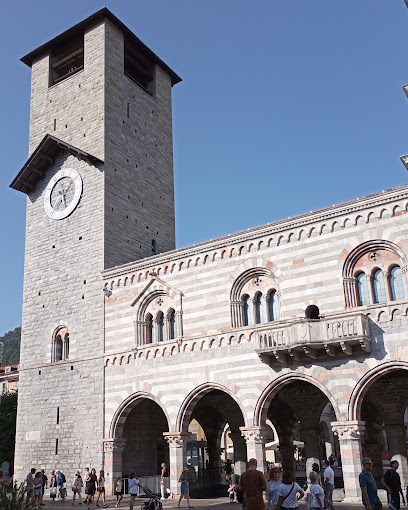
Broletto, Como
Europe,
Italy,
Como,
The Broletto of Como is one of the most significant historical symbols of the city, an emblem that narrates the deeds and transformations of an urban center that has played a crucial role in the history of Lombardy. Built between the 12th and 13th centuries, the Broletto is known for its unique architectural style, which reflects the influence of the various historical periods it has traversed. This structure has had a political and civic function and today invites visitors to discover the richness of the local heritage. The origins of the Broletto trace back to the medieval period, an era marked by a growing protagonism of Italian cities aspiring for independence and self-governance. The term “Broletto” derives from the Latin “broletus,” indicating a resting place for travelers and, in a broader context, can refer to a public palace. The Broletto of Como was built between 1215 and 1230, marking the flourishing of a new communal political system. Originally, the Broletto housed the sessions of the city council and served as a reference point for the city’s political decisions. Over the centuries, it has undergone numerous transformations. One significant milestone was the restoration that took place in the 15th century when the palace was enriched with Gothic details, testifying to a fusion of architectural styles. During the sixteenth century, the Broletto continued to serve its institutional role, but the growing authority of the Habsburgs and political transformations marked a period of crisis for Italian cities. However, the Broletto managed to maintain its central role in the public life of Como. In the 19th century, with the shaping of Italian unification, the Broletto underwent significant restoration aimed at enhancing its history. The works, completed in 1891, restored part of the building’s ancient splendor, turning it into a cultural and tourist landmark. Today, thanks to ongoing restoration efforts, the Broletto is preserved in excellent condition and continues to represent a meeting place between the past and the present. Let’s start our tour at the main entrance of the Broletto. Here, in front of you, you can notice the majestic façade, characterized by Romanesque and Gothic elements. The columns and arches tell a story of stylistic evolution that has materialized over the centuries. Now, let’s move inside. As soon as you enter, the first thing that catches your attention is the large portico, which opens up to a series of pointed arches. These arches are not only decorative elements but also represent an innovative structural solution for the time, demonstrating the mastery of medieval craftsmen. Continuing inside, on the right side is the ancient “cancellone,” which once served as an entrance for the city council members. This richly decorated gate is a testament to the artistic refinement of the period, and its preservation is essential for understanding the historical value of the Broletto. Now let’s move towards the inner courtyard. Here, what immediately strikes you is the loggia, characterized by columns decorated with Corinthian-style capitals, overlooking a well-kept garden. This space was designed to host significant public ceremonies and is now an ideal place for a moment of reflection. Also notice the various inscriptions and plaques present, many of which commemorate historically relevant figures for the city of Como. As you proceed, you can also admire a series of frescoes dating back to the 14th century, which adorn the palace walls. These frescoes depict scenes of daily life and historical moments of the city, offering a window into the art and culture of the time. Now let’s move to the top floor. Here, you will find a magnificent bastion that offers a spectacular view of the city and Lake Como. This panorama is unparalleled and allows you to grasp the natural beauty of the place. You will also observe how the Broletto was strategically positioned, enabling the rulers to control movements within the city. Finally, don’t forget to pay attention to the architectural details, such as the decorative motifs present on the façades. These often-overlooked elements tell stories of craftsmanship and creativity that date back centuries. The Broletto is located in the heart of Como, an area that pulses with history and culture. Its location makes it an ideal starting point to explore other architectural wonders of the city. Just a few steps from the Broletto, you can visit the Cathedral of Como, one of the largest and most beautiful cathedrals in Lombardy. With its grand Gothic façade, the Cathedral continually draws the attention of visitors and represents an important center of worship. Another point of interest is Piazza Vittoria, where the monument dedicated to the fallen is located. This square is another example of how Como has managed to blend history and contemporary vitality, serving as a socializing hub for citizens. In the opposite direction, towards the lake, don’t forget to take a stroll along the lakeside promenade. Here, you can enjoy a breathtaking view and immerse yourself in the relaxed atmosphere that characterizes this area, known since Roman times as a place of leisure and gathering. Did you know that the Broletto was the scene of significant political negotiations? During the 13th century, meetings between different political factions took place here, contributing to shaping the city’s destiny. Moreover, the Broletto has inspired numerous artists and writers over the centuries. Its imposing architecture and rich history have made it an ideal subject for literary and artistic works. Lastly, the palace also hosts cultural events and temporary exhibitions, making it a place of cultural dynamism that continues to enliven the life of the city. In conclusion, the Broletto of Como is not just a simple historic building; it is a living narrative of the city, a place where history intertwines with daily life. We invite you to also discover other gems of Como, such as the Cathedral and Piazza Vittoria, which together with the Broletto form a rich mosaic of culture and beauty.
Read More