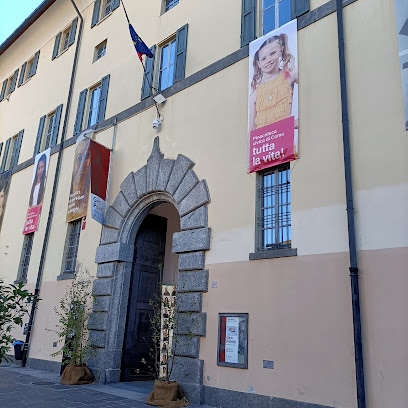
Civic Art Gallery at Palazzo Volpi, Como
Europe,
Italy,
Como,
The Civic Art Gallery of Palazzo Volpi, located in the heart of Como, plays a fundamental role in the cultural identity of the city. This prestigious museum is known for its rich collection of artworks that span various historical periods, from the Middle Ages to the 20th century. The gallery was inaugurated in 1936, but its origins date back to several local collecting initiatives that culminated in the 20th century. Today, it represents an important center for the enhancement and study of visual arts in the Larian territory. The origin of the Civic Art Gallery of Como can be traced back to the various art collections accumulated over the centuries. At the beginning of the 20th century, the city of Como began to recognize the importance of preserving and enhancing its artistic heritage. Palazzo Volpi, where the gallery is housed, was built in the 19th century and initially served as a private residence. Only later, after a series of architectural transformations, did it become a public venue. The real turning point for the gallery occurred in 1936, the year the museum was inaugurated following an important donation of artworks from local collectors and citizens eager to contribute to the culture of their city. In the following years, the gallery continued to expand its collection, including works by renowned Italian and European artists. Significant restorations have also been carried out, including those undertaken in the 1980s and 1990s to preserve and enhance the exhibition heritage. In 2015 and in subsequent years, the gallery launched a series of museum projects aimed at engaging the public more, making culture an accessible language for everyone. Its mission of education and cultural promotion has made the gallery a point of reference not only in Como but in the whole Lombard region. Facade: of Palazzo Volpi Let us begin our visit with the facade of Palazzo Volpi, an example of neoclassical architecture that immediately captures attention. The symmetry and decorative details, such as the frames and the elegantly understated openings, reflect the style of the era. The materials used, predominantly Rapolano stone, give a majestic and solemn appearance to the palace. Also, notice the portico, which welcomes visitors into this space rich in history and art. Exhibition Halls Upon entering the gallery, visitors are welcomed by large exhibition halls that host a selection of artworks of great value. Start discovering the collection with works from the 13th and 14th centuries, where you can admire frescoes and panels by local artists. One of the masterpieces is the “Madonna with Child” by Giovanni Battista Moroni, whose refinement and attention to detail are exemplary for the period. Works from the 17th and 18th Centuries As you stroll through the halls, you arrive at the section dedicated to the 17th and 18th centuries. Here you can admire works by artists such as the Comasco Giuseppe Giordano and the Bolognese Guido Reni. Light and color are masterfully used to create suggestive atmospheres typical of Baroque works. Focus on the painting “Saint John the Baptist” by Reni, a classic example of how the artist used light to bring his subjects to life. 19th Century Section Continuing through the museum path, you will find a section dedicated to the 19th century, highlighting the artistic evolution of the city of Como within the national context. Don’t miss the works of the romantic painter Francesco Hayez, whose “The Kiss” is representative of an era of profound socio-cultural change. Hayez’s emotional portraits are striking for their intensity and ability to capture moments of great humanity. Modern and Contemporary Art Finally, the gallery also hosts a selection of works by modern and contemporary artists. Here you can discover works by artists such as Giorgio de Chirico and Alberto Giacometti. The transition from figurative art to more abstract and conceptual styles is fascinating and represents a bridge between the past and the present. These works invite broader reflections on the role of art in contemporary society. View from the Palace Don’t forget to look up and admire the view from the palace windows. From here, you can glimpse the panorama of Como, with its lake and Mount Brè in the background. This privileged position adds an additional layer of beauty to the museum experience, transforming the visit into a moment of contemplation of the surrounding nature. Architectural Details Finally, we invite you to pay attention to the architectural details of Palazzo Volpi. The decorated frames, double-leaf doors, and frescoed ceilings are testimonies of an era when the beauty of details was essential. These architectural elements not only embellish the building but also speak to the history and culture in which it is immersed. The location of the Civic Art Gallery of Palazzo Volpi is strategic, being situated in the center of Como, a city rich in history and art. This area is lively and frequently visited, with connections to institutions such as the Teatro Sociale, where you can attend performances that celebrate local culture. Not far away is the Cathedral of Santa Maria Assunta, a magnificent example of Gothic and Renaissance architecture, also deserving of a visit. Equally interesting is the Volta Temple, dedicated to Alessandro Volta, the famous Comasco scientist. The Civic Gallery houses one of the most complete collections of sacred art in Lombardy. Among its treasures are also lesser-known works of great artistic value, such as wooden sculptures from the 15th century and polyptychs that adorned ancient local churches. Another interesting aspect is the restoration of certain works, many of which have undergone careful conservation efforts to ensure their preservation. This work is important not only for the preservation of art but also for the public enjoyment of cultural heritage. Finally, it is noted that the gallery collaborates with schools and universities on educational projects, making culture an element of education and growth for future generations. These initiatives help create a connection between the museum and the territory, involving young people in the enhancement of art. In conclusion, we invite you to further explore the city of Como and its artistic treasures, particularly the Teatro Sociale and the Cathedral, which will enrich your cultural experience. Enjoy your visit!
Read More