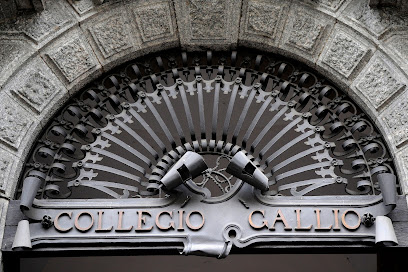
Gallio College, Como
Europe,
Italy,
Como,
Welcome to the Gallio College of Como, a place of profound significance for the cultural and historical identity of the city. Founded in 1563, Gallio College is not only a high-level school but also an important center for humanistic and scientific studies, having welcomed numerous illustrious students through its doors. Its architecture, a fusion of styles ranging from Renaissance to Baroque, is not only a witness to an era but also reflects the value of education in Como society. Today, we will embark on a journey to discover this extraordinary institution, exploring its origins, history, and the elements that make it a treasure to be preserved. Gallio College was born in the context of the Counter-Reformation, a period of intense social and cultural transformation across Europe. Founded by the religious and humanist Carlo Gallio, the college was conceived to provide high-quality education to the young nobility of Como, as well as to students from less affluent families, with the aim of training future leaders of society. Since its founding in 1563, the College has undergone a series of significant transformations. Its first location was in a convent where religious activities also took place. It was not until 1617 that the college moved to its current location, a building designed to accommodate over two hundred students. During the 1600s, the College established itself as one of the leading institutions in northern Italy, aided by the arrival of prestigious professors and the creation of an intense academic curriculum that integrated classical studies and religion. In 1797, with the Napoleonic occupation and the subsequent reform of education, the College experienced a crisis phase. However, in 1816, it reopened and entered a new phase of development under a renewed teaching staff. The building itself underwent various restoration and expansion interventions, especially throughout the 19th century, to adapt to the needs of new generations. With the advent of the 20th century, Gallio College distinguished itself for its absolute dedication to the education of youth while maintaining a strong bond with humanistic values. During World War II, the institution became a refuge for many students and families in difficulty, demonstrating remarkable social commitment. In the 1950s and 1960s, the College experienced a period of great expansion, opening its doors to a broader audience of students, including those wishing to study scientific disciplines. Today, after centuries of history, Gallio College continues its educational mission, focusing on the value of culture and knowledge, with an eye toward openness to the contemporary world. Entering Gallio College, the first thing that strikes you is the majestic façade, adorned with elegant stucco decorations. The sober and classic lines of the portico highlight Italian Renaissance art. Upon passing through the doors, you will find a spacious internal courtyard on your right. Here, the architecture becomes richer in detail: the spectacular cloister, with its arches and columns, is an extraordinary example of how the spaces have been designed to encourage meeting and reflection. As you proceed inside, you cannot help but notice the College Library, an environment that breathes history. The shelves, filled with ancient volumes and modern texts, are a veritable treasure trove of knowledge. The library dates back to the 1600s and has undergone various restorations over the years while maintaining its charm and functionality. On the left side of the courtyard, there is also a large hall used for lessons and lectures. This space, with its high ribbed vaults and frescoes, speaks of a past where education occurred not only through books but also through art. The frescoes, in particular, depict allegorical scenes celebrating knowledge and wisdom. Walking through the main corridor, you will have the chance to observe the classrooms, designed to foster dynamic and interactive learning. The original classrooms of the college bear the marks of centuries of teaching and learning. Each classroom has its unique architectural feature, which helps create an inspiring atmosphere. Don’t forget to visit the inner garden, an oasis of tranquility where students can rediscover the value of nature and rest. This green space has been designed not only as a place for recreation but also as an environment for meditation and reflection. Finally, if you want to delve into the history of the College, visit the small museum that has been set up, collecting artifacts and historical documents. Here, you will find materials that tell about the daily life of students over the centuries, from uniforms to teaching tools. Gallio College is located in the heart of Como, an area rich in history and culture. The city, overlooking the lake, is famous for its artistic heritage, and the College represents an important landmark in the context of intellectual education. In the surroundings, you will find the Cathedral of Santa Maria Assunta, a masterpiece of Gothic and Renaissance architecture that attracts visitors from all over the world. Not far away stands the Volta Temple, dedicated to Alessandro Volta, a fundamental monument for anyone wishing to understand the importance of science and innovation. As you continue your visit, I recommend exploring the Silk Educational Museum, located a short distance from the College. This museum, which celebrates the silk-making tradition of Como, offers a fascinating overview of the region’s economic and cultural history. An interesting fact related to Gallio College is its international vocation. Throughout its history, it has hosted not only Italian students but also those from other European countries, thus contributing to a multifaceted and open cultural dimension. Furthermore, the College has given rise to many renowned figures in the fields of culture, politics, and thought. Among its alumni are well-known names who have made significant impacts in their respective areas. Finally, the restoration of the college’s spaces that took place in the 20th century adhered to the criteria set by the Superintendency, allowing for the preservation of the architectural and cultural heritage of the institution while enhancing its usability. Take the time you need to explore Gallio College and discover the enormous historical and cultural wealth that this institution has to offer. And don’t forget to venture into the surroundings, visiting the Como Cathedral and the Volta Temple for a complete experience of the history and culture of this extraordinary city.
Read More