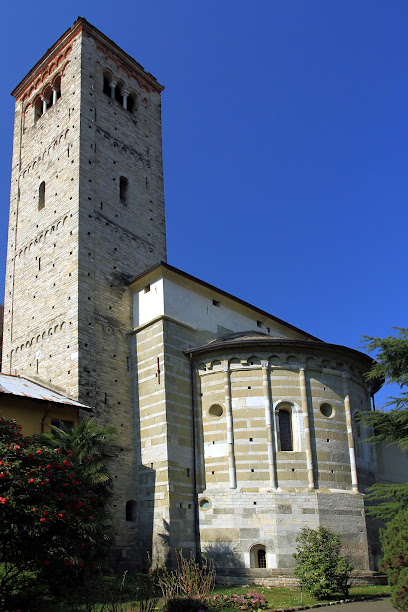
Basilica of Saint Carpophorus, Como
Europe,
Italy,
Como,
Welcome to the historic city of Como, a place where the past harmoniously intertwines with the present. Here we find the Basilica of San Carpoforo, a masterpiece of Romanesque architecture, dating back to the 8th century. This building is renowned for its extraordinary beauty and its significance in the religious history of the region. The basilica not only represents a place of worship but is also a symbol of the cultural identity of Como, an example of how spirituality can manifest through art and architecture. The basilica is deeply linked to the religious life of the community and continues to be a point of reference for both the faithful and visitors. The history of the Basilica of San Carpoforo begins in the 8th century, a period of great transformation for the Como area. It is said that the basilica was built to house the relics of San Carpoforo, a Christian martyr. The earliest written records concerning the building date back to the 9th century, a time when the role of the basilica intensified as a center of devotion and social gathering. Over the centuries, the basilica has undergone various interventions and transformations. In the 10th century, an initial restoration added some architectural elements typical of the Romanesque style, such as columns and arches. From the 12th century onward, the building underwent further modifications to adapt to the needs of the community and to the stylistic innovations of the time. It is interesting to note that the influence of Romanesque architecture remains visible in many of the structures that can still be admired today. During the 15th century, the Basilica of San Carpoforo became an integral part of the religious life of Como. In 1515, an important restoration made it more welcoming for pilgrims and visitors. It was during this period that some highly valued frescoes were created, decorating the walls of the interior, contributing to transforming the basilica into a sort of religious art gallery. In the 19th century, the basilica underwent further restoration work, this time aimed at preserving its authenticity and restoring it to its ancient splendor. The facade was rebuilt, while still maintaining its original architectural style. Art and architecture experts have highlighted how these interventions were carried out with great respect for the history of the building, avoiding any disfigurement. Today, the Basilica of San Carpoforo represents not only an important place of worship but also a historical and cultural heritage for the city of Como. Its history bears witness to the political, social, and religious events that have marked the community throughout the centuries. Today, the basilica is a reference point for the faithful, as well as for visitors who wish to immerse themselves in the history and art of this corner of Lombardy. Now, let us approach the basilica to discover its most significant elements. We begin with the facade. It is characterized by an elegant simplicity, typical of the Romanesque style. It is decorated with arches and a series of columns that create an effect of lightness and harmony. At the center of the facade, one can admire a portal adorned with sculptures depicting biblical scenes. Notice how these works of art give a sense of sacredness to the entrance of the basilica. Upon entering the basilica, your eyes will be captivated. As soon as you cross the threshold, you will find yourself in front of the imposing central nave, flanked by two side naves. The wooden trussed ceiling magnificently contrasts with the stone walls. The trusses testify to the craftsmanship of local artisans and offer a warm and welcoming atmosphere. Now let us turn our gaze to some of the artworks present inside. Among these, the 16th-century frescoes that decorate the walls and the apse stand out. These works, now somewhat faded, tell stories of saints and martyrs. In particular, I recommend observing the cycle of frescoes dedicated to the life of San Carpoforo. Here, the artists have managed to express intense emotions, conveying the spirituality of martyrdom. Another element not to be missed is the presbytery, where the main altar is located. This sacred space features an elaborate structure, with marble decorations and gilding that reflect light in a suggestive manner. Here the Eucharist is celebrated, and important religious ceremonies take place, making the altar the heart of the basilica. If you approach the choir area, you can admire the beautiful wooden seating, almost a work of art in itself. These benches, dating back to the 15th century, are intricately carved and display floral motifs and religious symbols. They represent another example of the artistic heritage that the basilica preserves. As you continue your visit, pay attention to the architectural details as well. The columns, many of which are adorned with sculpted capitals, are a clear example of the skills of artisans from the era. Each capital tells a story or illustrates a religious theme, enriching your visual journey through Romanesque art. Finally, if you look out from one of the side windows, you can enjoy a unique view of the city of Como and the picturesque surrounding landscape. The mountains and the lake create an enchanting scene, giving an additional spiritual significance to the basilica, as if it were a bridge between heaven and earth. The Basilica of San Carpoforo is located in the heart of Como, surrounded by an area rich in history and culture. This neighborhood, once populated by artisans and merchants, is now a crossroads of tourism and social activities. A short distance from the basilica is the Archaeological Museum of Como, where you can delve into the ancient history of the city, with artifacts ranging from the Roman age to the medieval period. This museum serves as an ideal continuation for those seeking to immerse themselves in the history of Como. Another point of interest is the Cathedral of Como, famous for its Gothic style and magnificent dome. Here you will find another facet of the city’s religious history, intertwined with that of the Basilica of San Carpoforo. Both places, although distinct, reflect the artistic and spiritual richness that permeates the territory. One of the most fascinating curiosities regarding the Basilica of San Carpoforo is its connection to the tradition of San Carpoforo himself. It is said that his relics were brought to the basilica to protect the faithful from diseases and disasters. Even today, many pilgrims visit the place in search of comfort and healing. During the restorations carried out in the 20th century, some traces of ancient frescoes emerged, attesting to the remodeling of the building over the centuries. These excavations revealed not only artworks but also a series of objects used in religious celebrations, offering a glimpse into the daily life of the faithful. Another interesting aspect is the basilica’s position. It is located at a strategic point in the city, easily accessible thanks to the network of historic streets. This made it, and still makes it, an easily reachable place for pilgrims traveling along the Via Claudia Augusta, one of the main communication routes of the Roman era. We invite you to continue your exploration of the city by visiting the Cathedral of Como and the Archaeological Museum, places that will enrich your experience in learning about the history of this extraordinary city.
Read More