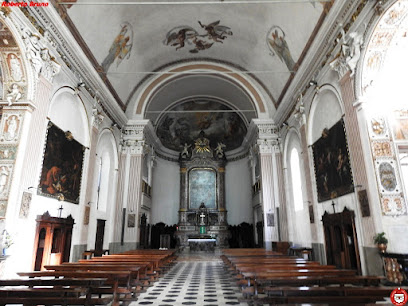
Church of Saint Ursula, Como
Europe,
Italy,
Como,
The Church of Saint Ursula, located in the historic city of Como, holds a special place in the heart and identity of the local community. This church, known for its extraordinary artistic and architectural heritage, dates back to the 15th century and is a significant example of Lombard Gothic style. It is a place of worship that tells not only of the spirituality of its faithful but also an important part of the social and cultural history of the city. Over the centuries, the church has undergone various transformations and restorations, enriching its aesthetic and symbolic value. The beauty of the Church of Saint Ursula is also connected to its surroundings: Lake Como, the surrounding mountains, and the urban fabric, which together create a unique atmosphere. The Church of Saint Ursula was founded in 1485, thanks to the commitment of the local community and particularly the Ursuline Sisters, who took to heart the construction of this sacred building to welcome Christian piety and promote the education of young women. These sisters, from the Order of Saint Ursula, dedicated themselves to an educational mission in a historical period when women’s education was far from being a consolidated reality. Since its inauguration, the church has experienced a series of significant events. At the beginning of the 16th century, in 1535, the façade was completed, characterized by Gothic and Renaissance elements that reflect the stylistic currents of the time. The bell tower, which stands out majestically and distinctively, was built later, during the 17th century, becoming a landmark for the inhabitants and visitors of Como. The 18th century marked another important period for the Church of Saint Ursula: in 1745, the church underwent significant restructuring, thanks to the intervention of the famous local architect Giuseppe Cossa. He made some structural and decorative modifications, creating spaces that would host artworks of considerable value. Throughout the 19th and 20th centuries, the church continued to maintain its religious function, despite undergoing changes and restorations to preserve its heritage. One of the most important restorations took place in the 1980s when interventions were implemented to safeguard the precious internal decorations and artworks. This ongoing care for the church reflects its importance in the religious and cultural life of the community, making Saint Ursula a symbol of resilience and devotion. Facade and portal: As you approach the church, you can admire the limestone façade, featuring a white marble portal. This portal, with its finely carved details, represents the dramatic and intense vocation of Lombard Gothic. The central rose window on the façade, a typical element of many Gothic churches, is a perfect example of the craftsmanship of the time. Interiors: Upon entering the church, you are immediately enveloped by an atmosphere of sacredness and contemplation. The central nave is wide, with ribbed vaults that create a sense of elevation. On the sides, the frescoed chapels depict biblical stories and the lives of saints. These frescoes, created between the 16th and 17th centuries, offer a glimpse into the sacred art of the time. Main altar: At the center of the church is the main altar, dedicated to Saint Ursula. This artwork features a precious retable that hosts a large painting of the saint, flanked by angels and saints. The gilded details and the sculptures that frame it amplify the sense of grandeur of this place of worship. Madonna Chapel: To your left, you cannot miss the chapel dedicated to the Madonna. Here stands a statue of the Virgin Mary, dating back to the 17th century, adorned with richly woven garments. This chapel is often used for special celebrations and offers an intimate and serene prayer environment. Architectural details: Pay close attention to the architectural details such as the Corinthian columns that support the nave and the finely decorated capitals. Each column tells stories of faith and art, reflecting the work of local artisans. The light filtering through the stained-glass windows enriches the space with an extraordinary play of colors, creating an atmosphere of wonder. Bell tower: Lastly, to your right, stands the bell tower, an iconic symbol of the church. This tall and slender structure houses bells that, even today, mark the time for the residents of Como. The bell tower is also a great vantage point to admire the surrounding panorama. The Church of Saint Ursula fits into a context rich in history and culture, located in the historic center of Como, just a few steps from the lake. This neighborhood is an open-air museum, where every corner tells stories from past eras. Not far away, we find the Cathedral of Como, a masterpiece of Renaissance Gothic architecture, where religious devotion blends with artistic beauty. Another nearby attraction is the Volta Temple, dedicated to the illustrious scientist Alessandro Volta, representing the great scientific tradition of Como. Lastly, let us not forget the lakeside promenade, one of the most evocative places in Como, where walking and admiring the stunning landscape offers an excellent opportunity for reflection and contemplation, perfectly in tune with the atmosphere experienced within the Church of Saint Ursula. The Church of Saint Ursula is not only a place of worship; it also represents a cultural center for the community. Over the years, it has hosted events, concerts, and exhibitions aimed at enhancing the local artistic and cultural heritage. Another curiosity concerns the bells of the bell tower: they were made by a famous Lombard foundry and date back to the mid-19th century. These bells have a particular sound that is said to have been specifically designed to resonate and spread across the lake and the surrounding valleys. Finally, the church is an enlightening example of how religious institutions have played a fundamental role in the history of education and women’s education in Como, an aspect that deserves deeper exploration to fully understand its significance.
Read More