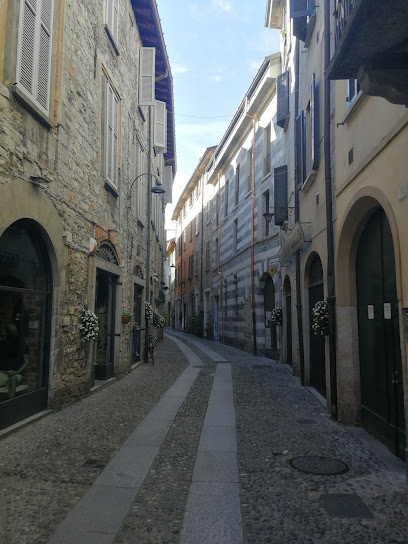
Vitani Street, Como
Europe,
Italy,
Como,
Welcome to Como, one of the most fascinating and historic cities in Lombardy. Today we find ourselves on Via Vitani, a street that is not just a passage but a bridge between the past and the present of this place rich in history. Located in the center of Como, Via Vitani is known for its charming architecture and its proximity to the city’s main points of interest, such as the Cathedral and the Teatro Sociale. The street takes its name from an ancient nobleman from Como, named Vitani, and has represented an essential part of the city life since the Middle Ages. Walking along this street, we can breathe in the history and elegance that characterize this corner of Como. The origins of Via Vitani date back to the 12th century, when the city of Como began to develop as an important commercial and cultural center. During this period, the street became a crucial hub for merchant traffic connecting Lake Como with the surrounding valleys. The medieval architecture of this street tells stories of noble families that contributed to the economic and cultural growth of the city. During the Renaissance, Como experienced a phase of great flourishing, and Via Vitani was a direct witness to this. Numerous palaces were built or renovated, many of which still feature architectural details that reflect the taste of that time. In particular, the city became an important center for silk production, and the strategic position of the street facilitated the trade of this precious fabric. Noble families, such as the Gaddi and the Terzaghi, built residences and workshops here, some of which can still be admired today. Over the centuries, Via Vitani has undergone various transformations. The 19th century brought industrialization and a new push for modernization. Some historic buildings have been preserved and restored to maintain their historical memory, while others have been renovated to meet new commercial and residential needs. Today, Via Vitani is a blend of history and modernity, where visitors can admire the remnants of the past while immersing themselves in the city’s daily life. A significant event in the recent history of Via Vitani is related to the restoration of some historic buildings that began in the 1990s, aimed at enhancing the city’s architectural heritage. This process not only revived the street but also contributed to redefining Como’s image as a high-level tourist destination. The presence of artisanal shops and quality restaurants has made Via Vitani one of the most attractive streets for visitors. Now let us prepare to explore Via Vitani, paying attention to the details and artworks that enrich this unique place. As we enter Via Vitani, on our left stands an ancient palace dating back to the 14th century, with its characteristic Gothic windows. These architectural elements not only reflect the historical importance of the building but also the refined taste of the time, which loved to adorn facades with elaborate details. The windows, with their sculpted frames, tell stories of noble families that once lived here. Continuing along the street, we come across another significant palace, the Palazzo Olginati, rich in stuccoes and frescoes that characterize the façade. The building is an excellent example of Como baroque architecture and often hosts cultural events and exhibitions. It is interesting to note that this palace was the residence of the illustrious Como poet Vincenzo Monti, who wrote much of his work right here. Proceeding, to your right, you will notice a small square offering a view of an ancient oratory. This place of worship, dedicated to Saint John, features interior frescoes of great artistic value that deserve to be admired. The frescoes, dating from the 15th century, provide a vivid representation of religious life of the time, with colors and details that have withstood the test of time. A little further ahead, on the left, you will find a series of artisan shops selling typical products of the area. This is a great place to observe how centuries-old traditions intertwine with modern life. In particular, you can find hand-painted ceramics and silk fabrics here, continuing the tradition of craftsmanship that has made Como famous over the centuries. Don’t forget to look up! Some buildings are characterized by their wrought iron balconies, crafted by skilled artisans. These details, often overlooked, add a unique charm to the street. The art of wrought ironwork has its roots in the territory, with techniques passed down from generation to generation. Finally, at the end of Via Vitani, you will find the view of the Como Cathedral, a symbolic element of the city. Here, it is possible to understand how the street presents itself as a corridor leading to one of the most important Gothic monuments in Italy. The cathedral, with its grand elaborate façade and wonderful sculptures, is truly worth visiting for its timeless beauty. Via Vitani is set in an urban context rich in history and culture. It is just a few steps from the center of Como, surrounded by other places of historical interest. For example, just a few hundred meters away is the Teatro Sociale, an architectural gem of the 19th century, famous for its acoustics and high-quality productions. The Broletto, located nearby, is also an important example of medieval architecture, which, along with the cathedral, creates an atmosphere of extraordinary beauty. Right next to Via Vitani is Piazza del Duomo, the beating heart of Como. This square is not only a meeting place but also an exhibition of the architectural history of the city, with the Cathedral and the Palace of the Prefecture being true local symbols. An interesting curiosity concerns an ancient palace located along Via Vitani, which according to tradition was the residence of a famous alchemist from the 16th century. Although the evidence is limited, it is said that this figure contributed to secrets of folk medicine. Another curiosity is the link of Via Vitani with silk production. The city of Como is historically known as a center for silk processing, and it is estimated that in the 18th century about 90% of Italian silk was produced here, with many merchants active right along this street. We invite you to further discover Como by exploring the nearby Archaeological Museum, where you can delve into the ancient history of the city, and Villa Olmo Park, a place of relaxation and beauty overlooking the lake. Happy exploring!
Read More