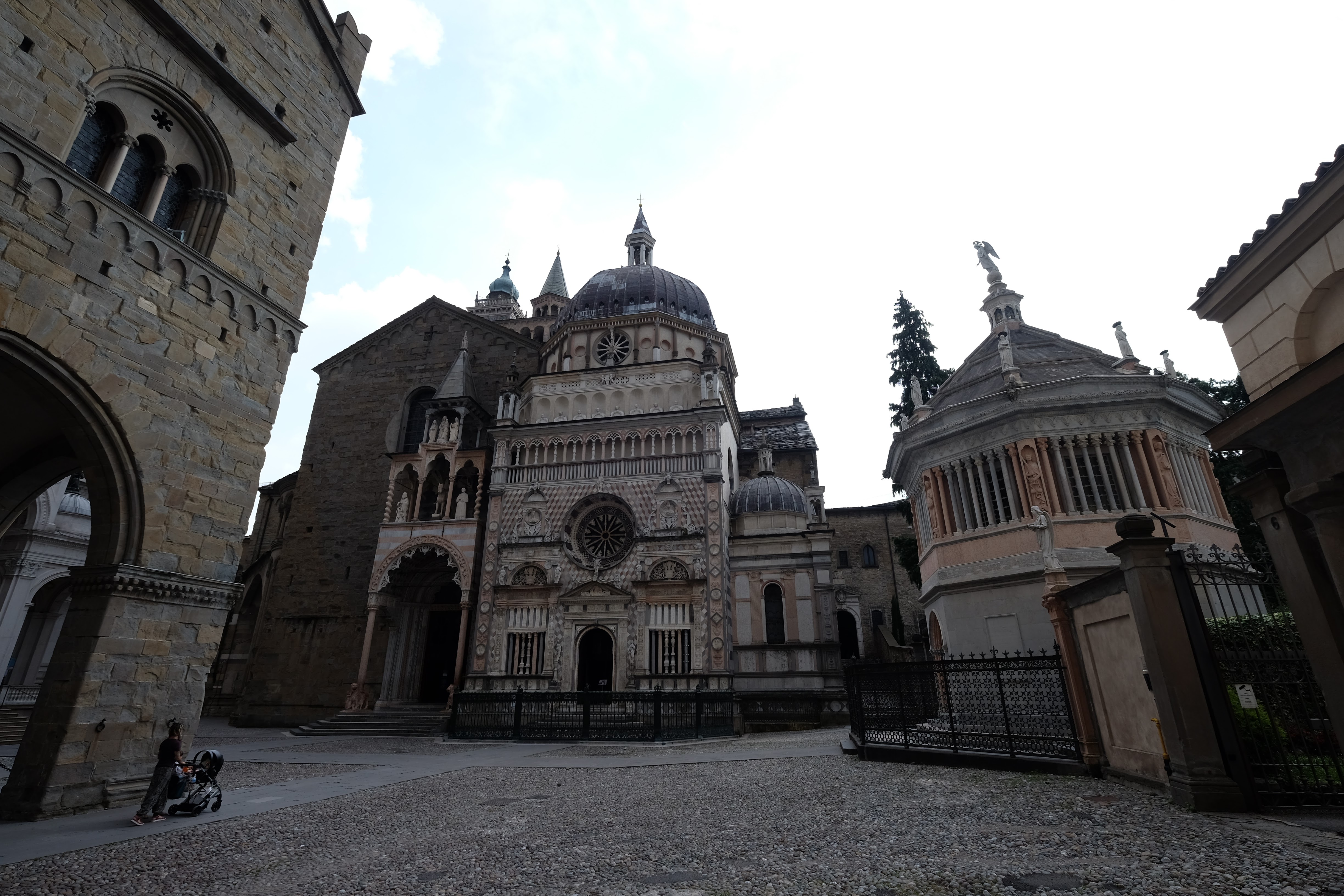
Archaeological Area of Piazza Duomo - Bergamo
Europe,
Italy,
Bergamo,
Welcome to the fascinating Archaeological Area of Piazza Duomo in Bergamo. This place is not only an important historical testimony but also a vibrant heart of the cultural identity of this city. Located in the historical center, in front of the majestic Cathedral of Bergamo, this area holds the remains of a Roman settlement dating back to the 1st century AD, a true window into a distant past. It is known for its valuable archaeological heritage, which tells us about the daily life and religious practices of the ancient inhabitants. The area was unearthed thanks to excavations carried out throughout the 20th century and continues to spark the interest of historians and visitors alike. Now, let’s prepare to discover together the origins and history of this unique place!Origins and HistoryThe Archaeological Area of Piazza Duomo unveils a fascinating tale that begins in the 1st century AD. During this era, Bergamo, known as Bergomum, was an important Roman center. The archaeological discoveries made here reveal the remains of a forum, a public area where economic and social activities took place, a fundamental element of Roman urban life. Excavations in the 1920s uncovered significant structures, such as the bases of columns and mosaic floors of ancient public and private buildings.Among the most relevant excavations are the structures of a temple, dated between the 2nd and 3rd centuries AD, dedicated to the religious cults of the time. It is an example of how Roman architecture blended with local traditions. The presence of the temple indicates the importance of Bergamo in the religious context of the era. Other finds have revealed a network of paved roads that demonstrate the wealth and organization of the city.Over the centuries, the area has undergone various transformations. With the fall of the Roman Empire, many buildings were abandoned or destroyed. However, history did not stop there; in the Middle Ages, Bergamo became an important stronghold with the erection of its city walls. Some materials extracted from Roman buildings were reused in the construction of new medieval structures.In the 16th century, the city experienced a period of great cultural and artistic flourishing due to the influence of the Serenissima Republic of Venice. During this time, the Cathedral was expanded and renovated, but the Roman remains remained hidden beneath the new buildings. Only in the 1930s, an intense excavation campaign recovered the area, making the archaeological remains visible and returning to the public a significant piece of Bergamo’s history.Today, the Archaeological Area of Piazza Duomo is not only a place of study for archaeologists and historians but is also an important reference point for cultural tourism, inviting visitors to reflect on the layers of history through the centuries.What to ObserveAs soon as you enter the Archaeological Area of Piazza Duomo, you will be faced with an extraordinary view of the Roman remains. The first element that captures attention is the mosaic floor, which features elaborate geometric decorations. These mosaics, made of small pieces of colored stones, not only embellished the interiors of buildings but also tell stories about the aesthetics and tastes of Roman times.To your right, you can observe the foundations of an ancient temple. The columns, now partially reconstructed, highlight the importance of this place as a religious center. You will notice traces of a cult dedicated to Roman deities, representative of the mystical culture of that time. The use of local materials for the construction of the temple remains another curiosity not to be overlooked.Moving forward, to the left, you can appreciate a section of the Roman roads, with the typical cobblestones that characterized the streets of antiquity. These roads not only served for the passage of people but were also crucial for trade and interaction between different cultures. Walking along these paths feels like taking a step back in time.At the end of the archaeological area, by observing carefully, you may notice a series of fossils and bone remains. These finds provide further insight into the daily life of the ancient inhabitants, revealing valuable information about their eating habits and social practices. It is not uncommon to think that these remains may belong to local citizens who lived here centuries ago.Finally, take note of the strategic location of this archaeological area. It is positioned directly beneath the Cathedral of Bergamo, which is a masterpiece of Renaissance architecture. This union of ancient and modern elements represents a fascinating fusion of history and culture, inviting reflection on how cities evolve over time.Context and ConnectionsLocated in the heart of Bergamo, the Archaeological Area of Piazza Duomo is an integral part of a city context rich in history. Around this area, you can find invaluable monuments such as the Cathedral of Santa Maria Maggiore and the Baptistery, which are just a few steps away. These places not only enrich the visitor experience but also illustrate the various historical eras that have unfolded over time in the city.Continuing your exploration, you might be interested in visiting the Rocca di Bergamo, which rises above the city. This ancient fortress offers spectacular panoramic views and is an important testimony to the city’s medieval history. Similarly, the Civic Museum of Archaeology and History, located in nearby Via Pignolo, is another key landmark for those wishing to delve into Bergamo’s Roman origins and its developments over the centuries.The synergies between these places and the Archaeological Area of Piazza Duomo emphasize the historical and artistic evolution of Bergamo, making it a captivating stage for the discovery of its cultural roots.CuriositiesIf you are a fan of curiosities, did you know that the mosaic found here in the Archaeological Area is considered one of the best examples of mosaic art from the 1st century AD in Lombardy? This fact attracts scholars and art enthusiasts eager to admire its beauty and complexity.Additionally, another interesting discovery concerns the remains of everyday utensils, including plates, amphorae, and glass instruments. These artifacts provide a glimpse into the domestic life of Roman times, showcasing not only social aspects but also the available technologies.Lastly, you will be surprised to learn that Piazza Duomo, besides being a historic center, has been the site of important public events and celebrations since Roman times. This area has always been a meeting place and a vital space for the inhabitants of Bergamo.Now we invite you to continue your discovery of the stunning Bergamo by visiting some of the nearby places interconnected with the Archaeological Area of Piazza Duomo, such as the Cathedral of Santa Maria Maggiore and the Baptistery, rich in art and history to explore!
Read More