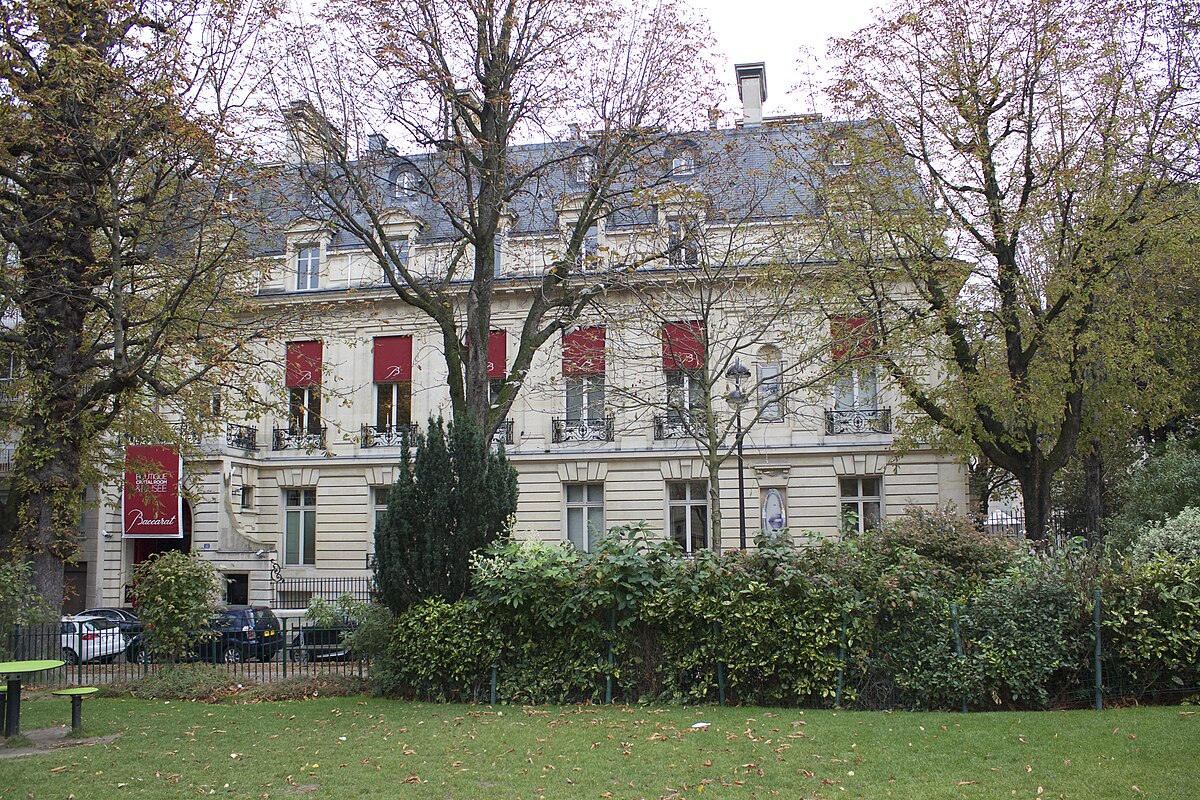
Baccarat Museum
Europe,
France,
citta,
XVI arrondissement
The Musée Baccarat, located at 11 Place des États-Unis in the 16th arrondissement of Paris, is a hidden treasure that celebrates the art of luxury crystal. Founded in 2003, the museum is housed in the elegant residence of Marie-Laure de Noailles, a prominent figure in Parisian cultural life. This magnificent place has been transformed by designer Philippe Starck, who has combined historical and modern elements to create a fascinating and refined atmosphere.
Baccarat’s history began in 1764, when King Louis XV authorized the opening of a glassworks in the town of Baccarat, in Lorraine. Since then, Baccarat has become synonymous with high-quality crystal, producing extraordinary pieces that have adorned royal palaces and luxury homes around the world. The Musée Baccarat in Paris pays tribute to this long tradition, displaying an impressive collection of crystal objects, including vases, glasses, chandeliers, and jewelry.At the entrance of the museum, visitors are greeted by a spectacular staircase adorned with a majestic crystal chandelier, a prelude to the beauty that awaits them in the exhibition rooms. The museum tour is divided into different thematic sections that illustrate the history and evolution of Baccarat’s production. One of the most fascinating rooms is the “Alchemy Room,” designed by artist Gérard Garouste, where iconic pieces such as the Simon vases and a crystal chessboard are displayed.Another section of great interest is “Beyond Transparency,” which features four thematic showcases: “Tales from Afar,” “Designers,” “Celebrities,” and “Femininity and Lightness.” These showcases illustrate glass cutting techniques, wheel engraving, enameling, and gilding, showcasing pieces of particular interest such as the enameled Turkish coffee service from 1878 and the Elephant vase from 1880. These objects not only testify to Baccarat’s craftsmanship, but also to the company’s ability to innovate and adapt to artistic and cultural trends of the time.Among the most famous pieces exhibited in the museum are those created for the great universal exhibitions of the 19th century, such as the Harcourt vase, created for the Universal Exhibition of 1867, and Napoleon III’s glass. These objects represent the pinnacle of Baccarat’s artistic production and demonstrate how the company has earned a worldwide reputation for the excellence and sophistication of its products.In addition to historical objects, the Musée Baccarat also hosts limited edition collections created by internationally renowned designers such as Georges Chevalier, Ettore Sottsass, and Marcial Berro. These contemporary pieces show how the art of crystal can continue to evolve and remain relevant in the modern artistic context. Collaboration with these designers has allowed Baccarat to explore new aesthetic languages and attract an increasingly sophisticated and international clientele.The museum also dedicates a significant space to works commissioned by celebrities and prominent figures from the political and cultural world. Among these, one can admire pieces created for the Emperor of Japan, the Prince of Wales, and the famous singer and actress Josephine Baker. These objects not only exemplify Baccarat’s craftsmanship, but also tell fascinating stories of luxury and prestige.
Read More