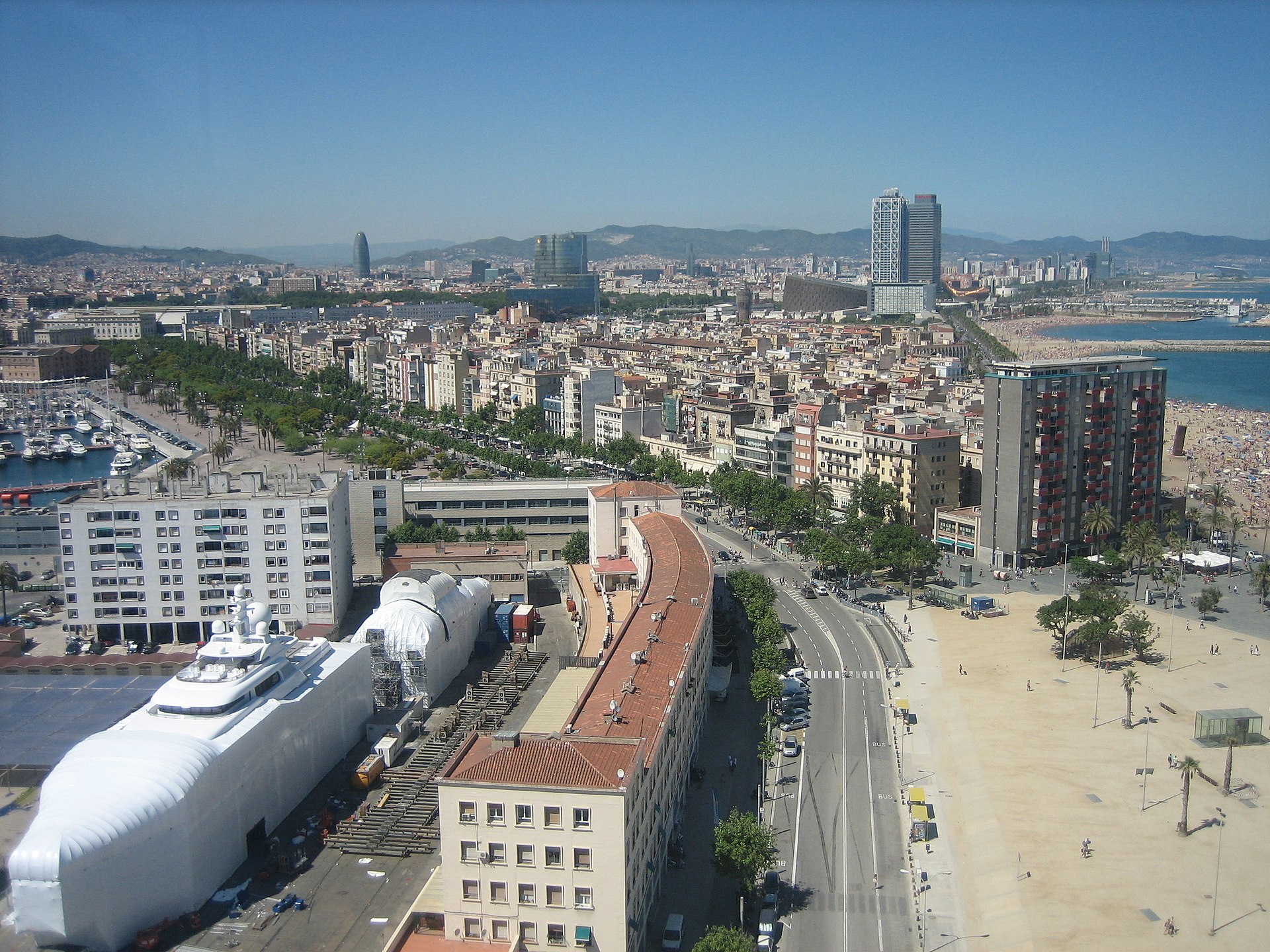
Barceloneta beach
Europe,
Spain,
Barcelona,
Barceloneta
Barceloneta Beach, located in the heart of Barcelona, is one of the city’s most iconic beaches, famous not only for its beauty but also for its rich history and vibrant culture. This beach stretches for about 1.2 kilometers along the Mediterranean coast, offering a perfect retreat for both residents and tourists looking to escape the urban hustle and bustle.
The history of Barceloneta dates back to the 18th century, when the neighborhood of the same name was built to accommodate fishermen and port workers. This urban project was commissioned by Felipe V as part of a series of reforms to strengthen the crown’s control over the city. The area, originally a sandy peninsula, was developed with an orthogonal design, featuring narrow streets and low houses, characteristics that still define the neighborhood today.The beach itself has undergone many transformations over the centuries. During the 19th century and the first half of the 20th century, Barceloneta was known more for its industrial and port activities than for tourism. It was only with the preparations for the 1992 Olympics that the beach underwent a significant redevelopment. The city government undertook a vast urban renewal project that included cleaning up the waters, creating new infrastructure, and improving beach facilities. These efforts transformed Barceloneta into one of the city’s main tourist destinations. Along the beach, you can admire works by contemporary artists such as the famous sculpture “L’Estel Ferit” by Rebecca Horn, composed of four metallic cubes stacked in an apparently unstable manner, symbolizing the old fishermen’s houses and the evolution of the neighborhood. This public artwork not only embellishes the beach but also serves as a point of reflection on history and local identity.The redevelopment of Barceloneta and its beaches represents an interesting case study on how urban policies can influence the quality of life and tourist attractiveness of a city. The transformation of the beach was part of a broader strategy to reposition Barcelona as a global and welcoming city. The 1992 Olympics were a catalyst for this change, demonstrating how a major sporting event can stimulate lasting investments and infrastructural improvements.Barceloneta is a microcosm of Barcelona life. During the summer, the beach fills up with locals and tourists mingling in a vibrant cultural mosaic. The waterfront promenade, known as Passeig Marítim, is dotted with restaurants, bars, and chiringuitos (beach bars) where you can enjoy typical dishes like paella and fresh fish. The nightlife is equally lively, with numerous venues offering live music and DJ sets until late at night.
Read More