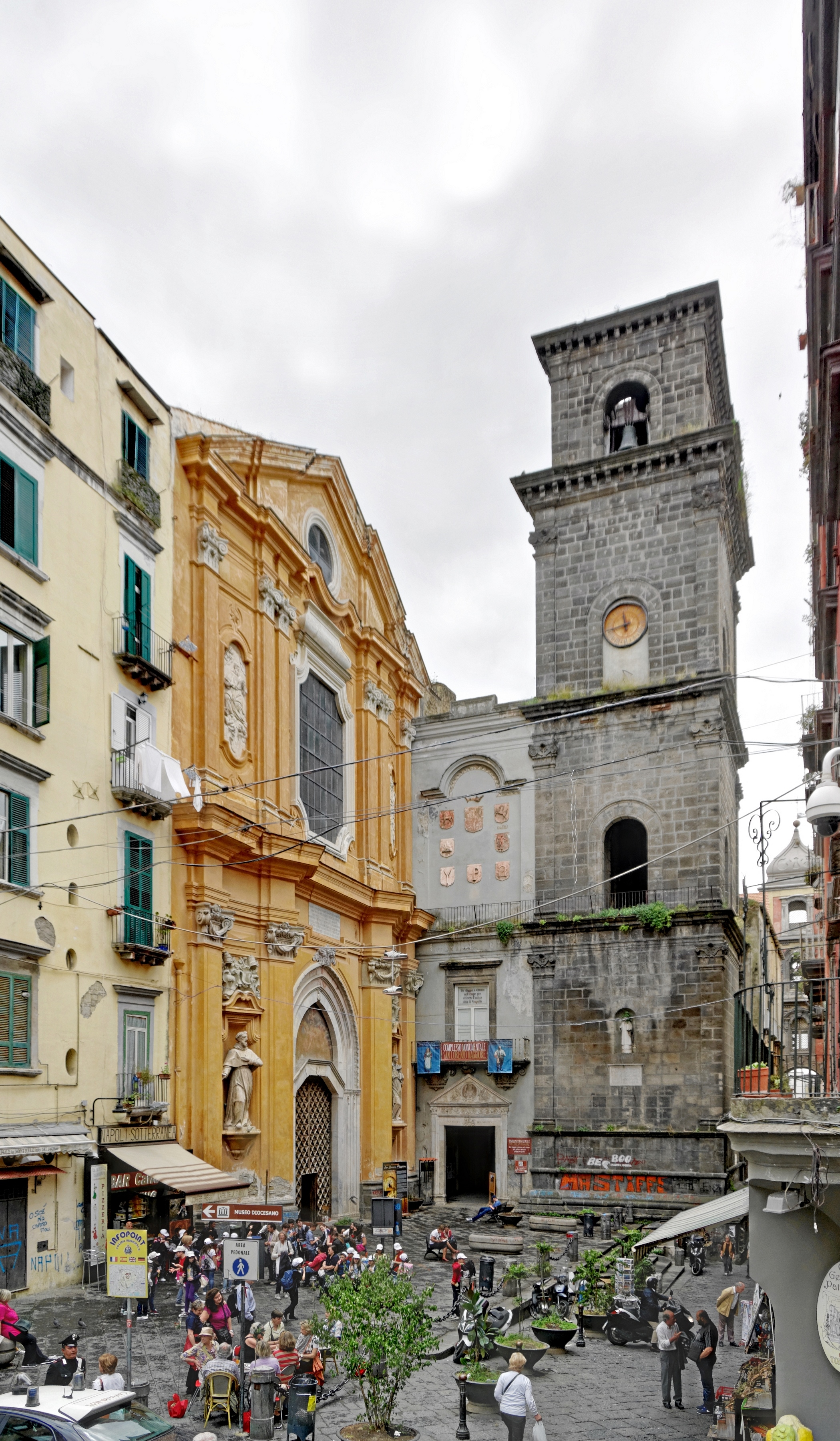
Basilica of San Lorenzo Maggiore
Europe,
Italy,
citta,
Ticinese
The Basilica of San Lorenzo Maggiore in Milan is one of the oldest and most important sacred buildings in the city, located in Corso di Porta Ticinese. Its history, rich in cultural and artistic layers, dates back to the Roman era, making it a symbol of continuity through the centuries. Probably built between the 4th and 5th centuries AD, the basilica has undergone several phases of restructuring and expansion, reflecting the political and social transformations of Milan.
The architecture of San Lorenzo is a fascinating example of how Roman, early Christian, and Byzantine influences have merged to create a unique monument. The central plan, dominated by a large dome, recalls the models of Byzantine churches, but the structural elements, such as columns and capitals, come from Roman buildings of the imperial era, testifying to the reuse of ancient materials.The main facade, severe and imposing, is flanked by four corner towers, while the interior of the basilica is striking for its vastness and the brightness that filters through the windows of the dome. The walls are decorated with frescoes and mosaics that tell biblical and saints’ stories, offering a glimpse of early Christian spirituality and art.One of the most famous elements of the basilica is the Chapel of Sant’Aquilino, an adjacent chapel decorated with magnificent 4th-century mosaics depicting scenes from the New Testament. This chapel, originally part of an imperial mausoleum, testifies to the importance of the site already in Roman times and the continuity of Christian worship in the following centuries.The basilica is surrounded by an architectural complex that includes the Columns of San Lorenzo, a Roman colonnade that is one of the rare examples of Roman architecture still visible in Milan. These sixteen columns, tall and slender, form a suggestive portico that leads to the entrance of the basilica, creating a scenic effect that has fascinated generations of visitors.Over the centuries, the Basilica of San Lorenzo has undergone numerous restorations. One of the most significant took place in the 16th century when the building was severely damaged by a fire. The restoration, carried out with great skill, sought to preserve the original elements while adding new Renaissance details. Another restoration was undertaken in the 19th century, under the direction of the architect Maciachini, who restored part of the basilica’s original splendor.The Basilica of San Lorenzo is not only a place of worship but also a cultural and social center. Its central location and millennia-old history make it a reference point for the city. The basilica regularly hosts concerts, exhibitions, and cultural events, attracting both locals and tourists. Its architectural beauty and the richness of its decorations make San Lorenzo a must-see for anyone wanting to learn about the history and art of Milan.From a political and social perspective, the basilica played a crucial role during the Middle Ages and the Renaissance. It was the scene of important historical and religious events, and its cloister was often used as a meeting and discussion place for prominent figures in Milanese society.
Read More