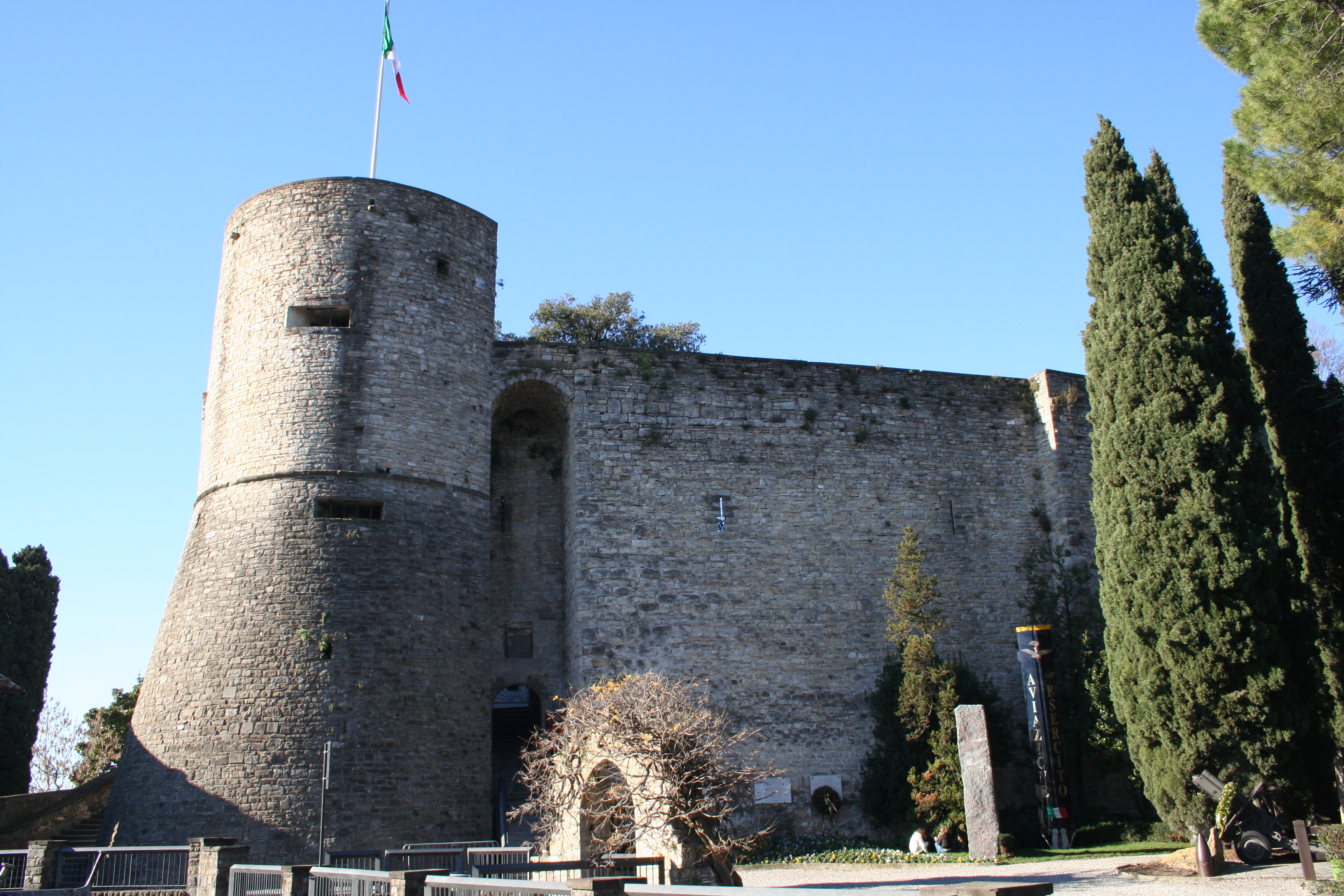
Bergamo Rocca (Fortress) - Bergamo
Europe,
Italy,
Bergamo,
The Rocca di Bergamo, an imposing fortification that dominates the upper city of Bergamo. This extraordinary monument is not only a symbol of the city’s military history but also represents an important landmark for Bergamasque identity. Built initially in the 14th century, the Rocca is known for its historical defensive function and for the wonderful panoramic views it offers over the city and its surroundings. From here, one can understand not only the geography of Bergamo but also its development over the centuries, up to the present day.Origins and HistoryThe Rocca di Bergamo has ancient origins, dating back to the 14th century. Its construction began in 1331, when the lord of Milan, Azzone Visconti, ordered the erection of fortifications to protect the city from potential enemy sieges. This strategic choice proved fundamental, as Bergamo was situated at the intersection of important commercial and military routes.Over the centuries, the Rocca underwent significant transformations. In 1428, the Venetians conquered Bergamo, and the Rocca was enlarged and renovated to meet new defensive needs. This period marks the beginning of an important construction phase during which bastions and walls were added. Between the 16th and 17th centuries, the Rocca was further strengthened, becoming one of the main fortifications of the Republic of Venice.At the beginning of the 19th century, with the transition under Austrian rule, the Rocca underwent another transformation. The Austrians carried out restoration work and structural modifications aimed at improving its functionality. However, the Rocca was not only a military work; it also became a place for representation and a symbol of power. After the First World War, the Rocca was left in a state of neglect, but starting from the 1960s, important restoration and enhancement works were initiated.Today, the Rocca di Bergamo is open to the public and has become one of the most visited places in the city, a symbol of resistance and historical identity. Besides its tourist function, it now also offers exhibition spaces and cultural initiatives that honor the past and heritage of Bergamo.What to ObserveThe Facade of the Rocca As soon as you arrive, you will notice the majestic facade of the Rocca, made of sandstone. Its style is a perfect example of medieval military architecture. At the top, you can admire the battlements, emphasizing the defensive function of the structure. On the main entrance, a large wooden door, decorations, and Visconti coats of arms tell us the story of the patrons and the powers that succeeded one another.The Park of the Rocca Moving towards the surrounding park, you will find well-maintained green areas offering a space for relaxation and contemplation. The park, rich in plants and flowers, allows you to enjoy a tranquil atmosphere, away from the chaos of the city. From here, you can enjoy a spectacular view of Bergamo and its surrounding hills.The Tower of the Rocca In the distance, the Tower of the Rocca rises, a significant monument that hosts a breathtaking panorama. With its 20 meters in height, the tower is accessible via a staircase leading to its highest point. As you ascend, you will find openings that allow you to admire a landscape like no other. From here, you can observe the peaks of the Alps and the underlying plain.The Internal Rooms Inside the Rocca, there are several rooms that host exhibitions and historical reenactments. Here, it is possible to sense the atmosphere of the past, with furnishings and decorations that recall life in the fortress. The rooms narrate Bergamo’s historical events through a series of dedicated exhibitions.The Armory Don’t forget to visit the Armory, where ancient weapons are displayed, from swords to cannons. These objects tell the stories of battles and sieges, making the turmoil of past eras palpable. Each exhibited piece has its own story that connects us to the past.The Walls of the Rocca The powerful walls surrounding the Rocca are another element not to be missed. To understand their grandeur, notice their sloped construction, designed to increase resistance to attacks. Walking along the walls, you will be immersed in the history of the fortification, traversing paths that narrate centuries of defense.The Panoramic View Finally, take a moment to admire the panoramic view from the Rocca. From here, the view of Bergamo is unparalleled, especially at sunset, when the sunlight highlights the warm colors of the houses and hills. A magical moment to share, reflecting on the beauty of the city and its history.Context and ConnectionsThe Rocca di Bergamo is located in the Città Alta district, an area rich in history and culture. The cobbled streets, charming squares, and historic buildings make this place a true treasure to explore. Just a short walk from the Rocca, you can also visit the Cathedral of Bergamo, with its splendid frescoes, and the Basilica of Santa Maria Maggiore, famous for its decorations and religious significance.Another point of interest nearby is Palazzo della Ragione, which hosts medieval frescoes and represents an important center of civic and social life for the city. Don’t forget to venture into the mysterious Sentiero dei Colli, a path that winds around the Rocca, allowing you to discover hidden corners and unique panoramic views.CuriositiesThe Rocca di Bergamo is not just an architectural work; it has also inspired artists and writers over the centuries. For example, the famous painter Paolo Girolamo Pannini, in the 18th century, depicted the Rocca in his works, highlighting its beauty and historical value.Moreover, the Rocca often hosts cultural events and manifestations, making it not only a place of history but also of contemporary activities. Under its auspices, concerts, festivals, and art exhibitions take place that engage the local community.Finally, did you know that the Rocca has been used as a film set? This monument has served as the backdrop for several productions, contributing to the spread of the image of Bergamo in the Italian and international film scene.
Read More