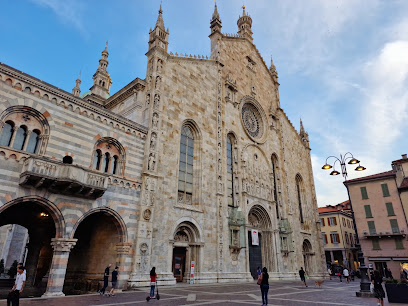
Cathedral of Santa Maria Assunta, Como
Europe,
Italy,
Como,
Welcome to the Cathedral of Santa Maria Assunta, a symbol of great importance for the city of Como. This imposing cathedral, often simply called the “Duomo,” represents the spiritual and cultural heart of the city. Its construction began in 1396 and continued until 1770, covering a long period that spans the late Middle Ages and the Renaissance. The cathedral is known for its architectural magnificence, a blend of styles that reflects the cultural and artistic evolution of Como over the centuries. The Cathedral of Santa Maria Assunta has ancient origins. Its construction began in 1396, commissioned by the Bishop of Como, Giovanni Paolo, and the commune, to replace the old church of Santa Maria Maggiore. The choice of the site is not accidental; here, in Roman times, there was an important religious center. Over the years, the cathedral has transformed and updated, aiming to respond to the needs of an evolving community. The design of the cathedral was influenced by various artists and architects, including the famous Giovanni Antonio Amadeo, who greatly contributed to its realization in the 15th century. During its construction, the cathedral went through different phases, reflecting the cultural and artistic changes of the time. For example, Gothic influences are evident in its lines and stained glass windows, while the Renaissance element emerges in the imposing facade made of white Candoglia marble. One of the most significant events for the cathedral occurred in 1740, when the great dome was completed, a symbol of this monument. This architectural feature, standing 75 meters high, gives extraordinary grandeur to the profile of the Duomo and marks a fundamental step in the completion of the work. The dome, designed by architect Filippo Juvarra and later realized by other architects, is an example of Baroque architectural genius, with its characteristic octagonal shape. Over the centuries, the cathedral has undergone various restorations and transformations, especially in the 19th century, when a major restoration aimed to restore the structure to its former glory. These interventions have preserved the integrity of the cathedral and protected its valuable works of art. Today, the Duomo of Como is considered one of the main monuments of Italy’s artistic heritage and continues to attract visitors from all over the world, captivated by its beauty and history. Facade: Let’s begin our visit at the facade of the Duomo. This extraordinary example of architecture is characterized by a mix of styles, ranging from Gothic to Renaissance. The pointed arches, typical of Gothic style, are accompanied by statues that tell the story of the Christian faith. Pay particular attention to the central rose window, the great eye of light that illuminates the interior. The intricate marble sculptures that surround you as you approach offer a glimpse of the craftsmanship of the artists who worked here. Interiors: As you cross the doors of the cathedral, you will be struck by the majesty of the interiors. The central nave is wide and impressive, supported by slender columns that draw your gaze upwards. The stained glass windows, many of which date back to the 15th century, are an exceptional testimony to medieval glass art. They depict biblical scenes and saints, and the light filtering through them creates a sacred and contemplative atmosphere. Main Altar: As you proceed towards the main altar, notice the large altarpiece dedicated to the Assumption of Mary. This work of art, placed above the altar, was created by local artists in the 17th century. The use of vibrant colors and the dramatic composition represents a moment of great spiritual fervor. Pay close attention to the details and the expressions on the faces of the saints surrounding the Virgin Mary. Side Chapels: Don’t miss the opportunity to visit the side chapels, each with its unique work of art. The Chapel of the Most Holy Sacrament, for example, is decorated with extraordinary carved wooden sculptures, depicting scenes from the life of Christ. Small works of art and frescoes alternate in these chapels, allowing you to discover insights into the religious and cultural history of Como. Organ: To the left, there is a monumental organ of extraordinary beauty. Built in the 18th century by Giuseppe Bianchi, this instrument is a masterpiece not only musically, but also aesthetically. Its elegant wooden case is decorated with detailed carvings. It is an extraordinary example of the importance of music in the liturgical context. Dome: Don’t forget to look up at the dome. This architectural feature is one of the most iconic characteristics of the cathedral. The internal decoration is a mosaic representing the Assumption of the Virgin, a treasure of bright colors that reflect light in an extraordinary way. The view of the dome is a masterpiece not to be missed. Architectural Details: Finally, pay attention to the architectural details, such as the capitals of the columns, which tell stories of saints and martyrs through their elaborate sculptures. Each detail is a window into history and sacred art, an invitation to explore the deep meaning that resides in these works. The Cathedral of Santa Maria Assunta is located in the historic center of Como, an area rich in history and culture. From here, within walking distance, you will find other significant places worth visiting. Just a short walk away is the Palazzo del Broletto, a magnificent example of medieval architecture. Here, government activities once took place, and you can still sense the historical importance of the site. Another point of interest nearby is the Basilica of Sant’Abbondio, a Romanesque church dating back to the 11th century. This monument offers a unique glimpse into faith and art during the medieval period. Together, the cathedral and the basilica tell the spiritual and cultural journey of the city of Como, from its beginnings to the present day. Finally, don’t forget to visit Lake Como, just a short distance from the Duomo, where natural beauty blends with history and architecture. Its shores, rich in historic villas and breathtaking views, offer the opportunity to immerse yourself in a unique and enchanting environment. 1. Historical fireworks: In 1890, the Duomo of Como was illuminated by a spectacular series of fireworks on the occasion of the visit of King Umberto I. This historically significant event highlighted the importance of the cathedral for the city. 2. The treasure of Como: Inside the cathedral is the treasure of the Duomo, a collection of sacred objects and relics of great artistic and historical value. Among them are a silver cross and several reliquaries, which represent the community’s devotion over the centuries. 3. Chains of harmony: During the restoration of the dome in the 19th century, brass chains were found connecting the pillars, an ingenious system designed to support the roof. This shows the attention to engineering and safety of the time. 4. Artistic influences: Since the 19th century, the Duomo of Como has inspired numerous artists, writers, and poets, becoming a symbol of beauty and culture reflected in many Italian works of art. 5. Local traditions: Every year, on the day of the Assumption of Mary, the cathedral celebrates a solemn mass, followed by festivities that attract thousands of faithful and tourists, testifying to the vital bond between the community and this symbol of faith. Thank you for joining us on this journey to discover the Cathedral of Santa Maria Assunta in Como. We hope your visit offers you not only an enlightening cultural experience but also a moment of reflection and beauty.
Read More