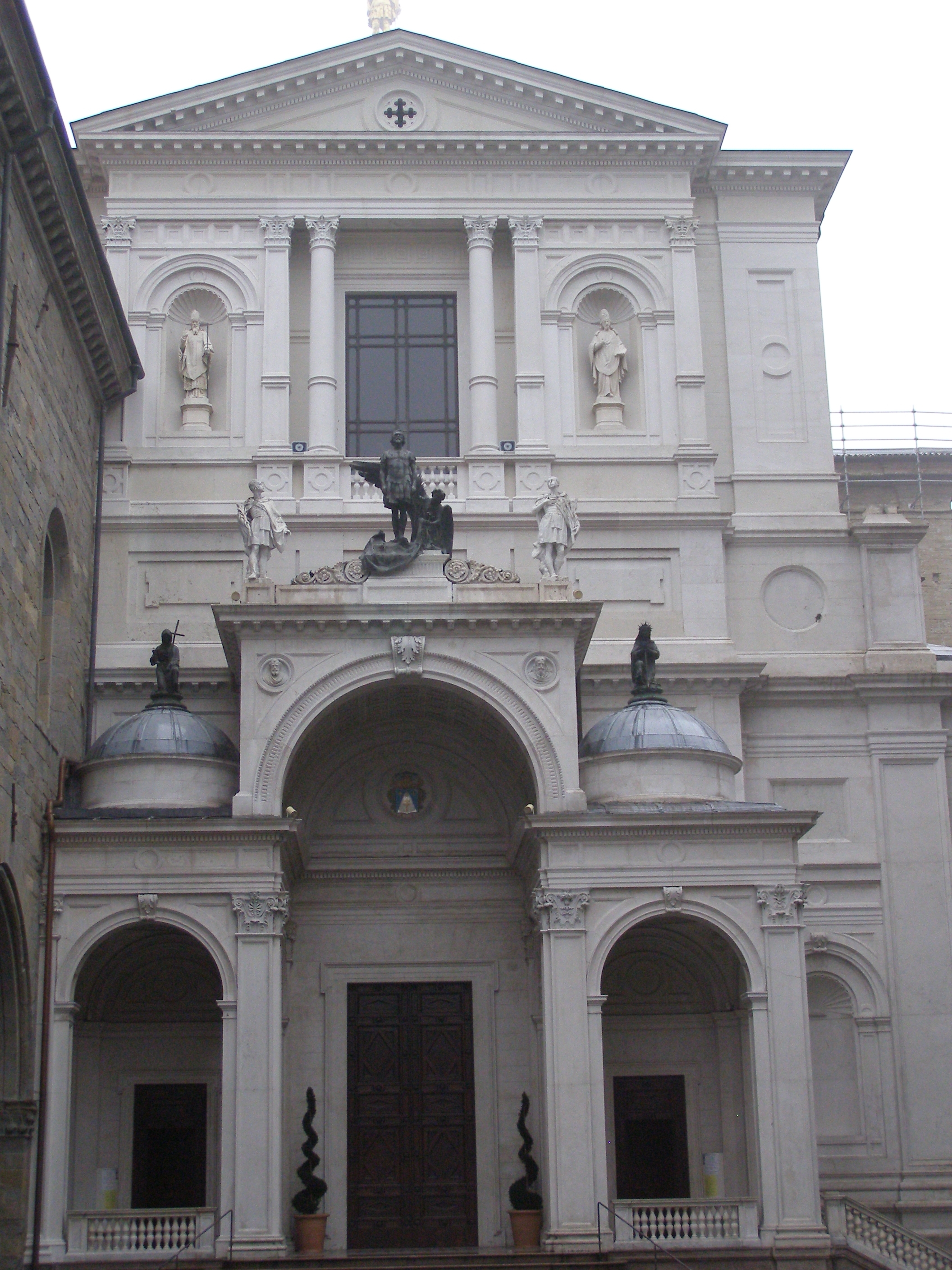
Cathedral of St Alexander - Bergamo
Europe,
Italy,
Bergamo,
The Cathedral of St. Alexander is one of the most significant monuments in Bergamo, a powerful symbol of the city’s cultural and religious identity. Located in the upper part of Bergamo, in the historic Città Alta, the cathedral is dedicated to the patron saint of Bergamo and is known for its extraordinary architecture, which reflects the various artistic periods it has gone through over the centuries. The earliest documents date back to the medieval period, with the foundation of a church as early as 837 A.D. The cathedral we see today is the result of numerous expansion and renovation efforts that took place up until the 18th century.Origins and HistoryThe origins of the Cathedral of St. Alexander trace back to the 9th century when a church dedicated to the patron saint of Bergamo was founded. In 1137, a document attests to the presence of a larger building, marking the beginning of what would become an important center of worship for the local community. Over the centuries, the cathedral has undergone various renovations and expansions.In the 13th century, the church was rebuilt in Romanesque style, characterized by robust masonry and round arches. The façade we see today dates back to the 14th century and is distinguished by its marble decorations and three portals that welcome visitors with refined sculptural details.A significant element in the history of the cathedral is its consecration, which took place in 1472 when Bishop Giovanni Gallo officiated the blessing ceremony for the new high altar. The 16th century saw the influence of Renaissance styles, thanks to the work of architects and artists such as the famous Donato Bramante, who influenced the design of the interiors.During the Baroque period, specifically in the 17th century, the cathedral underwent a radical transformation. It was decorated with valuable frescoes and works of art, including the fresco cycle by Guercino, which further enriched the interior with its grace and dynamism.In the following centuries, the cathedral has been the subject of restorations and renovation efforts to preserve its beauty and adapt it to new liturgical styles. The last major restoration, which took place in the 20th century, aimed to restore original architectural and decorative elements, giving the monument its splendid appearance back.What to ObserveApproaching the Cathedral of St. Alexander, the first impression is given by its imposing façade, built of marble and characterized by elegant columns. We notice the three portals, each decorated with sculptures depicting biblical scenes and saints. To the left, the portal stands out for a bas-relief of St. John the Baptist, appreciated for its iconographic significance in Christian tradition.Entering, we are welcomed by a rich and evocative environment. Above us, the barrel-vaulted ceiling adorned with frescoes invites the gaze to closely scrutinize the beautifully crafted details. To your left, right in the center of the nave, you can admire the high altar, which houses a precious altarpiece dedicated to St. Alexander, celebrating artistic craftsmanship and devotion.Continuing inside, we cannot help but notice the side chapels, each featuring works of varying artistic value. Among these, the Chapel of the Most Holy Sacrament stands out, decorated with golden stuccos and a grand representation of the Trinity, reflecting Baroque influence on sacred architecture.At the end of the central nave, we find ourselves in front of the choir, an area restored with great care in the 19th century. The finely carved wooden seats, often decorated with images of saints, provide an idea of what liturgical life was like in past eras.Finally, we can direct our gaze toward the cathedral’s dome, which rises majestically above the central nave. Its internal decoration, rich in frescoes, is the work of local artists and represents a perfect example of the splendor of Baroque art in Bergamo.Context and ConnectionsThe Cathedral of St. Alexander is located in the heart of the Città Alta of Bergamo, a historic area rich in culture and architectural beauty. This area is surrounded by Venetian walls, a UNESCO World Heritage Site, dating back to the 16th century. The walls not only enclose the cathedral but also a series of significant places, such as the Palazzo della Ragione, a symbol of medieval civic power and justice.Just a few steps from the cathedral stands the Basilica of Santa Maria Maggiore, another architectural marvel with extraordinary Baroque decorations and an important collection of artworks. This place is a significant center of worship and culture for the people of Bergamo, as well as a destination for curious visitors.Additionally, the Museum of Natural Sciences is an equally excellent spot to visit, providing insight into the natural history and ecology of the region. Combining a visit to the Cathedral of St. Alexander with these attractions allows for a better understanding of the history and culture of Bergamo, creating a rich and engaging experience.CuriositiesOne of the fascinating aspects of the Cathedral of St. Alexander is the presence of a treasury that includes highly valuable liturgical objects, such as reliquaries and ecclesiastical vestments. These treasures are carefully safeguarded and occasionally displayed to the public, providing a glimpse into sacred art and Bergamasque tradition.Moreover, every year on December 27, a festival is held in honor of St. Alexander, during which the cathedral becomes a pilgrimage site and celebration for the community. This celebration is an example of the deep connection between the citizens and their patron saint.Another curiosity is that inside the cathedral, one can find various inscriptions and plaques that tell the story of the territory. These inscriptions, in both Latin and vernacular, testify to the linguistic and cultural evolution of our language and identity.
Read More