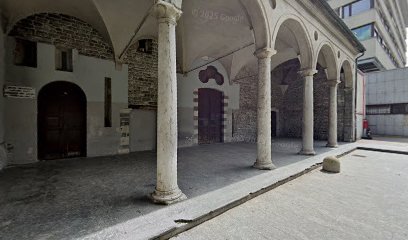
Church of Saint Francis, Como
Europe,
Italy,
Como,
Welcome to the Church of San Francesco, a place of deep spirituality and beauty, nestled in the heart of Como. Founded in the 14th century, this church represents one of the main examples of Gothic architecture in the region. Its history is closely linked to the religious and cultural life of the city, becoming over time a symbol of Como’s identity. Today, the Church of San Francesco is known not only for its fascinating architecture but also for the precious works of art it houses within. Let us embark together on a journey through its past and its artistic treasures. The Church of San Francesco was built starting in 1250 by the friars minor, an order founded by Saint Francis of Assisi in the 13th century. The convent, attached to the church, served as a spiritual and cultural center for the Como community. The church was consecrated in 1315, marking an important moment in the religious history of the city. During the period of its construction, Gothic architecture was spreading across Europe, influencing many sacred buildings. The Church of San Francesco is a perfect example of this, with its slender lines and ribbed vaults. In 1457, an important renovation led to the creation of the splendid stained glass windows that still illuminate the interior of the church today. Over the centuries, the church has undergone numerous restorations, particularly after the damage sustained during World War II. In the 1950s, a recovery project aimed to restore its original splendor, with particular attention to the paintings and wall decorations. Among the most significant works, we find frescoes dating back to the 15th century that adorn the walls. If you have the chance to visit, you will notice how every corner tells a story of faith and resilience. In 2011, the Church of San Francesco was declared a monument of historical interest due to its cultural and architectural significance. Today, it often hosts concerts and cultural events, aimed at enhancing its historical and artistic heritage. At the entrance of the Church of San Francesco, you will be greeted by an imposing façade. The Gothic lines, with the sculpted portal, display floral motifs and figures of saints. As soon as you enter, pay attention to the light filtering through the colored stained glass windows. These windows, made in the 15th century, represent biblical scenes and saints, creating an atmosphere of spirituality and contemplation. On the right, you will find the main altar, a majestic work made of marble, adorned with gilded decorations. Above the altar stands a large work, “Christ on the Cross,” attributed to Fiorenzo di Lorenzo, a Renaissance artist who influenced religious painting of his time. This piece captures the intensity of the Christian faith, drawing the gaze of visitors. Continuing the visit along the central nave, you can notice frescoes decorating the walls. Created by local artists in the 15th century, these paintings depict episodes from the life of Saint Francis and Christian life. The sacred art expressed here is an example of how faith intertwines with the visual culture of the time. To the left, near the choir, is the Chapel of Santa Maria delle Grazie. This chapel is known for its Baroque decorations, made in the 17th century. The twisted columns and ornate stucco frames make it a place rich in beauty and veneration. The ceiling of the church, with its captivating ribbed vaults, deserves special attention. The decorations that adorn it date back to different periods and show the continuous artistic evolution of the building. Looking upwards, you can notice the architectural details that tell the story of the church and the city. Another element not to be missed is the adjacent cloister. Built in Gothic style, it is a place of peace and meditation. Its arches overlooking the inner garden create an atmosphere of serenity, reflecting the contemplative life of the friars minor. Here, you can stroll and enjoy the beauty of the surrounding landscape. Finally, do not forget to explore the tombs and graves present in the church. These commemorative monuments offer a glimpse into the history of Como and the personalities who contributed to the development of the city. The Church of San Francesco integrates perfectly into the historical and cultural context of the city of Como. Located in one of the oldest areas, it is surrounded by other important religious and cultural institutions. A short distance away is the Cathedral of Como, a masterpiece of Lombard Gothic architecture, which offers an interesting comparison with the Church of San Francesco. Next to the church, the Broletto Palace represents another fundamental example of Como’s history. This building, once the seat of the city government, now serves as an exhibition and cultural space, linking to the theme of art and history that permeates the city. The G. A. M. Historical Museum of Como, situated nearby, is also a reference point for those who wish to delve into the history and culture of this fascinating city. Here, you will find works of art and historical artifacts that recount the greatness of Como over the centuries. One of the curiosities related to the Church of San Francesco is the presence of an ancient pipe organ, dating back to the 17th century. This musical instrument is still used during liturgical celebrations and represents an important sound heritage for the community. Furthermore, the church hosts a series of cultural events and concerts of sacred music, allowing visitors to experience a unique moment that unites art and spirituality. Its perfect acoustics makes every performance a memorable occasion. Finally, despite numerous restorations, many of the church’s original elements have been preserved, thus maintaining its authenticity. This is a fundamental aspect in the preservation of cultural heritage, which allows future generations to appreciate the beauty and history of this sacred place. We hope this guide has inspired you to discover not only the Church of San Francesco but also the wonders that surround it. Don’t forget to visit the Cathedral and the Broletto Palace, which, together with this church, tell the story and beauty of Como. Enjoy your exploration!
Read More