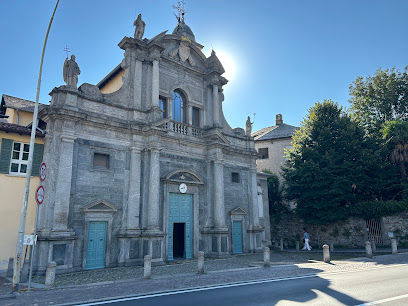
Church of Saint George, Como
Europe,
Italy,
Como,
Welcome to the Church of San Giorgio, one of the architectural gems of Como, located in the heart of this historic Lombard city. This church, built in the 15th century, is a remarkable example of how art and religion can merge to create a place that is both a site of worship and beauty. San Giorgio is known not only for its Gothic architecture but also for the artworks that adorn its interiors, making it a must-see for anyone visiting Como. Its historical importance is evidenced by the presence of various artists who have worked here over the centuries, enriching it with diverse styles and influences. The Church of San Giorgio has origins dating back to the 12th century, although the current structure is the result of renovations that have occurred over time. Initially, the church was built in Romanesque style, but between the 15th and 16th centuries it underwent a significant transformation. It was during this period that the architect Giovanni Battista Galli undertook the renovation work, redesigning the church in Gothic style. 1438 is the crucial year of consecration, during which the church was finally dedicated to San Giorgio, the patron saint of the city. The choice of this saint is not random: San Giorgio is a symbol of courage and protection, qualities highly valued by the people of Como throughout history. In the 17th century, further restoration work was carried out to adapt the church to the Baroque styles of the time. During these renovations, altars and artworks were added, transforming it into a true treasure chest of artistic riches. Among the most important pieces is the ciborium, an architectural structure that dominates the altar, created in 1625 by Francesco Ponzini. In the subsequent centuries, the church has continued to undergo changes, but it has always maintained its function as a place of worship. In the 19th century, also thanks to the growing attention to artistic and cultural heritage, the Church of San Giorgio was restored by the local architect Giuseppe Enrico Maffi, who took care to preserve the Gothic and Baroque characteristics of the building. After World War II, an additional phase of redevelopment saw the recovery of fresco decorations and architectural details, so that the place could be returned to the community as a point of reference both spiritual and cultural. This conservation path demonstrates how vital the Church of San Giorgio is not only for Como but also for understanding the history and art of Lombardy. Upon entering the Church of San Giorgio, one is immediately struck by the majestic stone façade, characterized by a fully arched portal and flanked by two bell towers that reach toward the sky. These towers, built in Gothic style, are a clear nod to the medieval architectural tradition. Just inside the entrance, on the left, is an iconic work by painter Andrea Appiani, one of the most significant figures of Italian Neoclassicism. The painting, created in the early 19th century, depicts the Virgin Mary and Saint Joseph and represents an excellent example of the illumination and detail characteristic of the artist. Continuing inside, on the right side, it is impossible not to notice the main altar, adorned with frescoes that depict the life of Saint George, along with a magnificent wooden crucifix. The altar, dedicated to the patron saint, was built in the 17th century and serves as the focal point of the church, thanks to its artistic details and spiritual significance. Additionally, looking up, we can admire the trussed ceiling, a magnificent work by local carpenters, which offers a suggestive view of Gothic architecture. The well-preserved wooden beams showcase the craftsmanship of the era and create an atmosphere of intimacy and reflection. As we continue our visit, we can observe several side chapels, each dedicated to a different saint, enriched with statues and paintings that tell stories of devotion and faith. Among these, the Chapel of the Madonna del Rosario stands out, decorated with works by local artists who have brought this sacred space to life over the centuries. Finally, let us not forget to take a look at the so-called “rose” window, which illuminates the central nave. This architectural element is not only functional but also contributes to the aesthetic harmony of the entire building, making the interiors even more evocative through the interplay of light it creates. Located in the heart of Como, the Church of San Giorgio is set within an urban context rich in history and culture. This city, overlooking Lake Como, is known not only for its breathtaking views but also for its historical heritage that dates back to Roman times. Nearby, the Cathedral of Santa Maria Assunta is worth a visit; it is a masterpiece of Gothic and Renaissance architecture, located just a short walk from the Church of San Giorgio. The Cathedral, one of the main places of worship in the city, represents a symbol of the religiosity of the people of Como. Not far away, we can also visit the Broletto, the ancient town hall, which preserves part of the civic history of Como through its architecture and artworks. Finally, one cannot miss a stroll along the shores of Lake Como, where one can discover the magnificent villages and historic villas, such as Villa Olmo and Villa Carlotta, which further enhance the beauty of this extraordinary territory. One fascinating aspect of the Church of San Giorgio is that in the 18th century it hosted one of the first music schools in the city, thus contributing to the dissemination of musical culture in Lombardy. Another curiosity concerns the refusal of architect Giovanni Battista Galli to incorporate elements of Baroque architecture in the renovation of the church, thus remaining true to the Gothic origins of the building and the aesthetic values of the time. Furthermore, the church has been the scene of significant historical events, including important moments of celebration during religious holidays that have involved the community of Como for centuries.
Read More