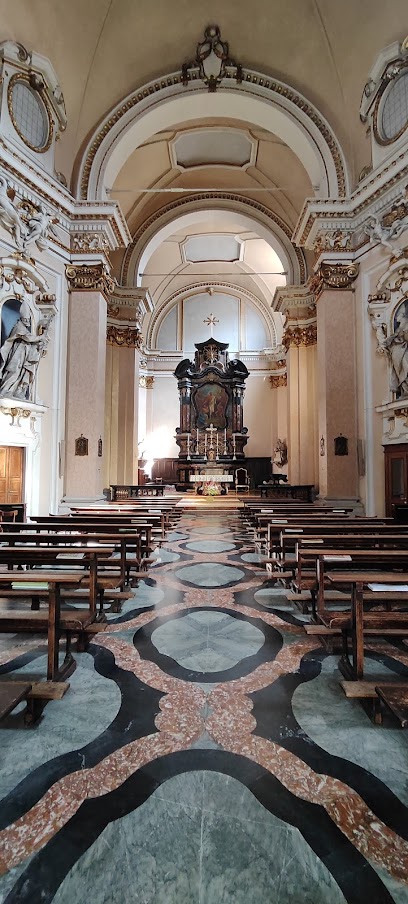
Church of Saint Julian, Como
Europe,
Italy,
Como,
The Church of San Giuliano stands in the heart of Como, a city rich in history and culture. This place of worship is an important symbol for the community of Como, not only for its architectural beauty but also for its historical and spiritual significance. Founded during the 12th century, the temple is known for its Romanesque style, with Gothic and Baroque influences, making it an interesting example of architectural evolution over time. The church is dedicated to Saint Julian, a Christian martyr, and represents a significant spiritual landmark for the faithful in the area, housing a series of valuable artworks. The Church of San Giuliano has ancient origins dating back to the 12th century. Founded in 1164, this place of worship was erected during a period when Como was experiencing significant economic and cultural development. Initially built as a Romanesque church, it underwent several transformations over the centuries, reflecting the various artistic trends and the needs of the social context. In the 14th century, the church was expanded and renovated, making room for new decorations and the introduction of Gothic elements. This period is significant as it coincides with a time of great religious and cultural fervor in the city, during which the arts flourished and artistic and architectural commissions multiplied. During the Renaissance, the church underwent further modifications, including the addition of several side chapels and the restructuring of the façade. The chapels were decorated with frescoes and artworks that are now part of the church’s heritage. In the 18th century, under the direction of local masters, the church acquired a Baroque appearance, testifying to the fervent religiosity of the time and the impact of the Baroque movement on sacred art. Throughout the 20th century, the Church of San Giuliano underwent several restorations aimed at preserving its architectural integrity and artistic heritage. These restoration works were carried out with particular attention to maintaining the authenticity and historical significance of the place, restoring it to an appearance that reflects its glorious past. Today, the church continues to serve as a place of worship and gathering for the local community, while also acting as a tourist attraction for visitors who wish to explore the history of Como. Upon entering the Church of San Giuliano, the first thing that strikes you is the imposing Romanesque façade, characterized by a decorated portal and round arches. The sculptural elements adorning the entrance and the capitals tell historical and religious stories, conveying the devotion of the skilled artisans who created them. Just beyond the main door, you find yourself in a typically Romanesque sacred environment, where the contrast between the gray stones and white stuccos creates a particular brightness. To the left, one can admire a beautiful 14th-century fresco depicting scenes from the life of Saint Julian. This fresco, aside from being an artistic masterpiece, offers a valuable testimony of how religious narratives were visualized and communicated to the faithful. Continuing further in, on your right, opens a chapel dedicated to Santa Maria della Misericordia, decorated with works by local artists. The colored stained-glass windows filter the light, creating a mystical atmosphere, while the wooden sculptures represent saints and martyrs, showcasing the craftsmanship of artisans of the time. In the center of the nave, above the main altar, rises a magnificent Baroque altar. This is an extraordinary example of sacred art of the era, with gilded details and floral decorations, reflecting the wealth and power of the religious community at the time. The frescoes on the vault, depicting heavenly scenes, invite reflection on the spirituality and sacredness of the place. As you explore further, do not forget to observe the architectural details of the side walls, where niches housing statues of saints alternate. Each statue tells its own story, a symbol of the faith and devotion that has animated the community over the centuries. In conclusion, an element not to be missed is the bell tower, which, with its height and thrust, seems to challenge the sky. Built in different eras, the bell tower represents the evolution of architectural style over time and features Romanesque and Gothic elements that harmoniously integrate. If possible, climbing the bell tower will offer you a panoramic view of Como and its wonderful landscapes, an experience that further enriches the visit. The Church of San Giuliano is located in a historically significant area of Como. Indeed, the surrounding neighborhood is rich in other valuable buildings, witnesses to the history and culture of this city. Right nearby, you can find the Palazzo del Broletto, home to important civil events over the centuries, and the nearby Cathedral of Como, one of the main landmarks of the city. Additionally, the church is a short distance from the Paolo Giovio Archaeological Museum, where you can delve into the ancient history of Como and its role in the context of Lake Como. These places offer a comprehensive experience of immersion in the history of Como, enriching your visit to the Church of San Giuliano. One of the most fascinating aspects of the Church of San Giuliano is its fresco of Saint Julian, said to have the power to protect travelers. During the Middle Ages, it was customary to pray here before embarking on a journey, hoping for the saint’s protection. Moreover, the church has been an important stop for pilgrims heading to Rome. This lends the place a certain aura of sacredness and a historically significant connection to the spiritual journey of the faithful. Another curiosity is the choice to dedicate a side chapel to Santa Maria della Misericordia, which reflects the great devotion towards the Marian figure in the art and religious culture of the time. We therefore invite you to continue your exploration of the treasures of Como by visiting the nearby Natural History Museum and the beautiful Piazza Cavour, which overlooks the lake. Every step in these places will lead you to explore yet another dimension of the beauty and history of Como.
Read More