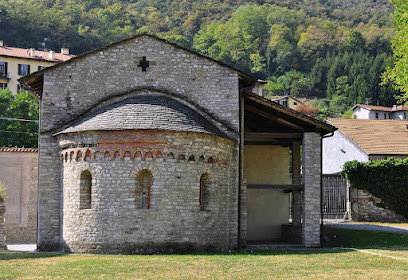
Church of Saints Cosmas and Damian, Como
Europe,
Italy,
Como,
Welcome to the Church of Saints Cosmas and Damian, a place of extraordinary significance for the city of Como. Located in the picturesque historic center, this church is a perfect example of religious architecture linked to the Christian tradition. The date of its founding dates back to the medieval period, specifically the 8th century, although the structure we see today is the result of numerous renovations that have taken place over the centuries. The church is known not only for its fascinating architecture but also for the rich artistic heritage it preserves. In this visit, we will explore the history, architectural elements, and artworks that make this building a true gem. The Church of Saints Cosmas and Damian has ancient origins, dating back to the 8th century, when it was initially erected as a simple chapel. Saints Cosmas and Damian, physicians from the time of Diocletian and Christian martyrs, are the patrons of the church and, more generally, of health professions. Over time, the structure underwent various expansions and renovations. In 1097, the church was mentioned in a document by Bishop Amizone, which attested to its spiritual and communal value for the area of Como. During the medieval period, the church became an important landmark for the local community. With the arrival of the Renaissance, it was decided to renovate the interiors and the façade, paying particular attention to the architectural details. Starting from the 17th century, further modifications occurred thanks to the intervention of local artists who added baroque works. By 1640, the church already had a new façade, characterized by decorative elements in baroque style that enriched its exterior appearance. Thanks to the support of local nobles and the commitment of the community, it was able to establish itself as one of the most significant places of worship in Como. In the 19th century, the church underwent a series of conservative restorations that lasted until the 1970s, during which many of the original decorations were restored, and the splendor of the artworks housed inside was returned. Today, the Church of Saints Cosmas and Damian remains a symbol of the history and tradition of the city, representing a happy union of faith and culture. When you visit the Church of Saints Cosmas and Damian, there are several key elements to admire. Upon entering, the first thing that will catch your attention is the exterior façade, embellished with baroque decorations. Observe the sculptural details that adorn the entrances; each element tells a story, reflecting the mastery of the artisans of the time. As you proceed inside, you’ll immediately notice the elegance of the spaces. The interiors feature a single nave, decorated with frescoes dating back to the 17th century. The frescoes, depicting biblical scenes and saints, are the work of local artists, one of whom was the Como painter Giovanni Battista Crespi, also known as “Cerano.” The brightness of the interiors is enhanced by large windows that let in natural light, creating an atmosphere of deep spirituality. To the left of the nave, you cannot miss the main altar, dedicated to Saints Cosmas and Damian. The altar is made of polychrome marble and houses a precious statue of the saints, which dates back to the 18th century. This statue is not only an object of veneration but also a significant work of art for the period in which it was created. Continuing on, to your right, you will find a chapel dedicated to the Virgin Mary. Here you can admire frescoes that celebrate the highlights of the Madonna’s life. In particular, one of the most notable frescoes represents the Annunciation, a recurring theme in religious art. Upon entering the sacristy, observe the decorations and furnishings, where you can find items of great historical and artistic value, such as liturgical vestments and carved wooden furnishings. The sacristy itself is an elegant example of baroque architecture, with painted ceilings and details that demonstrate the wealth of the church. Finally, don’t forget to look out the church window, which offers a charming view over the rooftops of Como. From here, the city presents itself in all its beauty. This vantage point offers a moment of contemplation not only of the place but also of the history it represents. The Church of Saints Cosmas and Damian is located in the heart of Como, in an area rich in history and culture. Nearby, you will find significant places such as the Como Cathedral, one of the most representative cathedrals in Lombardy, which combines Romanesque and Gothic styles. Not far away, there is also the Basilica of San Fedele, another example of medieval architecture that deserves a visit. Close to the church, you will find the Silk Museum, dedicated to the Como tradition in silk production. This museum represents an important testimony to the economic and cultural history of the city, revealing its connection to the craft and commercial world. An interesting curiosity concerns the use of colors in the frescoes inside the church. The colors used by the artists followed the traditions of the time and also had symbolic meanings; blue, for example, represented the divine, while red symbolized passion and sacrifice. Furthermore, the Church of Saints Cosmas and Damian hosts an annual celebration in honor of the patron saints, attracting numerous faithful and curious visitors. This festivity is a time of great gathering for the local community, reinforcing the historical and cultural bond between the church and the inhabitants of Como. Another fascinating detail is the symbolism of Saints Cosmas and Damian in the Christian calendar; besides being the protectors of physicians and pharmacists, they are also invoked for the protection of animals, a connection that emphasizes their importance in the daily lives of people. In conclusion, we invite you to discover not only the Church of Saints Cosmas and Damian but also the surrounding places that further enrich the cultural landscape of Como. Visit the Cathedral and the Silk Museum to continue your journey through the history and art of this captivating city.
Read More