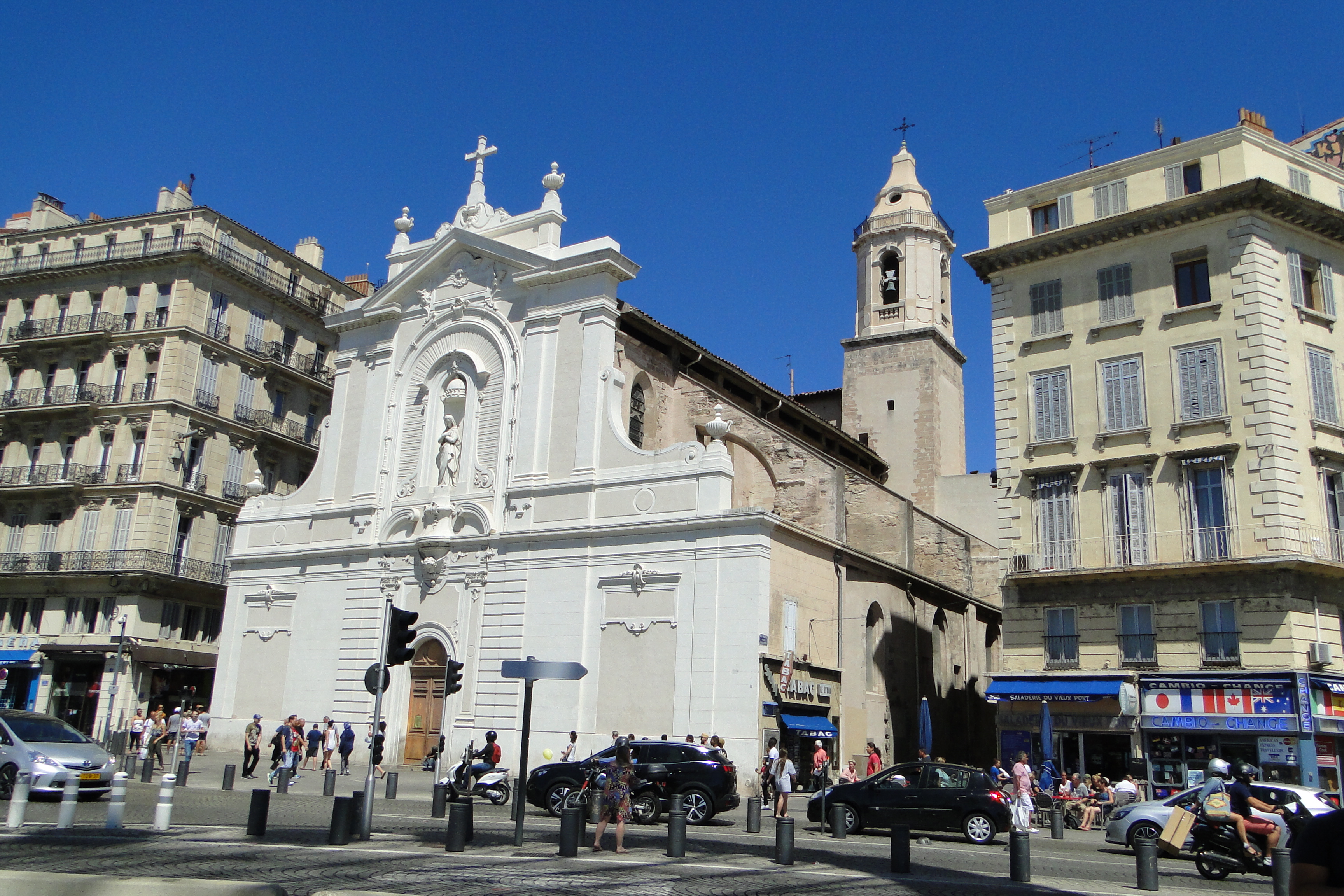
Church of San Ferréol the Augustinians
Europe,
France,
Marseille,
Vieux-Port
The Church of Saint-Ferréol les Augustins, located on the Quai des Belges in the Vieux-Port of Marseille, is a living testimony of the city’s rich religious and architectural history. Originally owned by the Knights Templar, the site was transferred to the Augustinian hermits in 1369. Driven by their religious fervor, they began the construction of a new church in 1447, which was consecrated in 1542, although the vault was only completed in 1588.
During the Ancien Régime, the church served as a venue for professional ceremonies, with altars dedicated to Saint Peter and Saint Paul, erected by the dockworkers as early as 1390. A significant historical event was the marriage between Catherine de’ Medici and Henry II of France, celebrated by Pope Clement VII on October 28, 1533 inside this church.The French Revolution marked a turbulent period for the Église Saint-Ferréol. Almost destroyed, it managed to survive and was later renamed in honor of Saint Augustine before being returned to the Catholic Church. In 1801, the facade was demolished due to road works and rebuilt in 1875. In 1803, the church was dedicated to Saint Ferréol de Vienne, a Christian martyr from the 3rd century.The church’s architecture is particularly notable for its grand altars, designed by Dominique Fossaty, and for important family tombs, such as those of the Mazenod family from 1564 and the Montolieu family from 1695. Inside, there are also the relics of Saint Louis of Toulouse (1274–1297).From an artistic point of view, the church houses three paintings by Michel Serre (1658-1733) depicting Sainte Marguerite, The Virgin and Child appearing to Saint Peter and Saint Paul. There are also sculptures by Raymond Servian (1903-1953) and other artists such as Élie-Jean Vézien and Louis Botinelly, who created works of Saint Teresa and Joan of Arc respectively. A more recent sculpture of the Holy Family, created by Yves le Pape in 1979, further enriches the church’s artistic heritage.A prominent feature is the neo-Gothic organ, designed by Augustin Zieger in 1844, which contributes to creating a spiritual and majestic atmosphere inside the church.Today, the Église Saint-Ferréol les Augustins continues to be a point of reference for both the local community and visitors. The church is open every day and regularly hosts masses and other religious events, maintaining its function as a place of worship. Its strategic location near the old port makes it easily accessible and visible, continuing to be a symbol of Marseille’s history and culture.
Read More