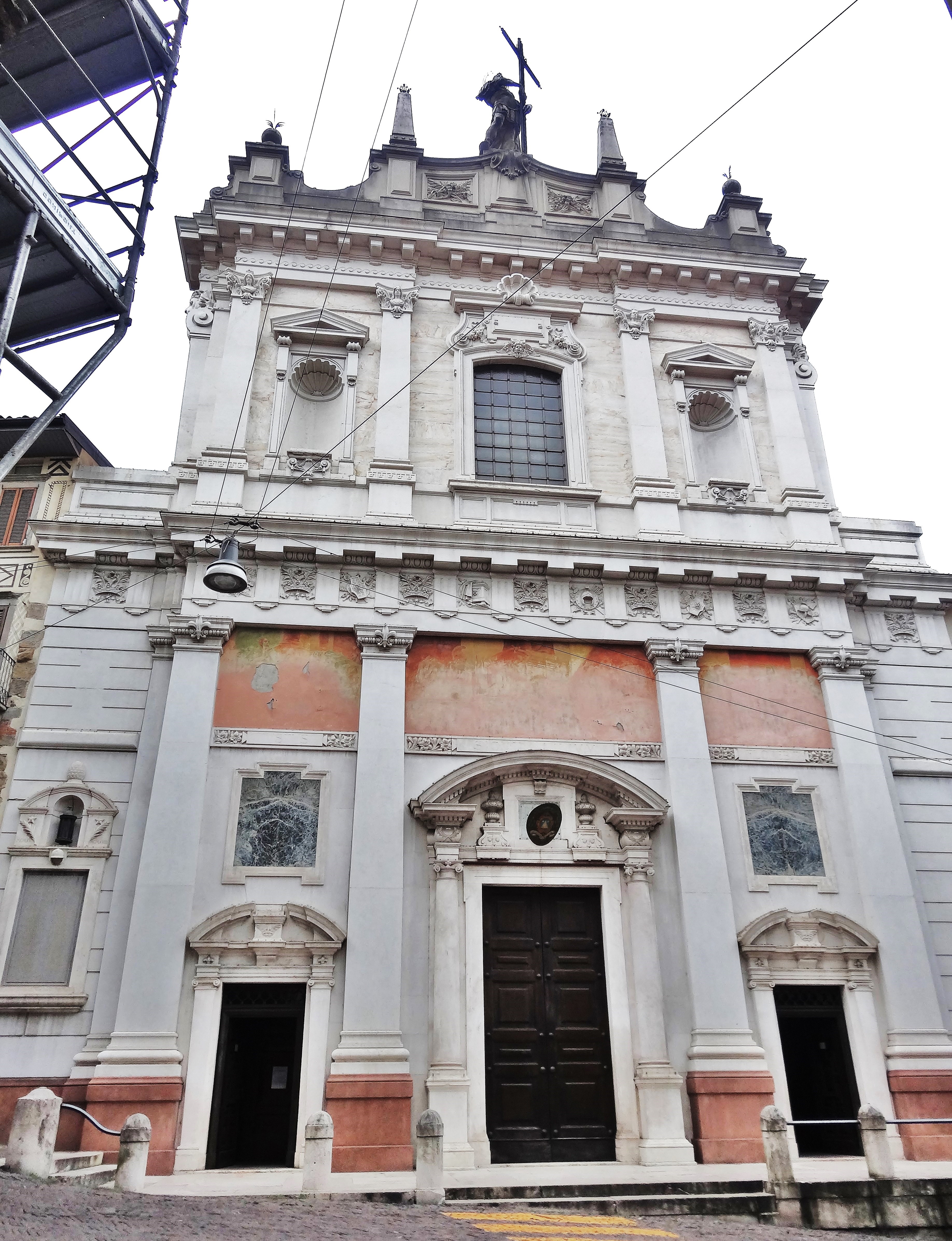
Church of St Alexander of the Cross - Bergamo
Europe,
Italy,
Bergamo,
The Church of Sant’Alessandro della Croce stands in the heart of Bergamo, a place of great spiritual and cultural significance for its inhabitants. The construction of the building dates back to the 17th century, during a period of fervent artistic and religious renewal that characterized all of Europe. This church is known for its Baroque architecture and the works of art that adorn its interior, attracting visitors and artists from everywhere. Its dedication to Saint Alessandro, the patron saint of the city, makes the site even more important in the context of local devotion. Its official inauguration took place in 1692, and since then, it has undergone numerous restoration and renovation interventions that have preserved its beauty over the centuries.Origins and HistoryThe Church of Sant’Alessandro della Croce was built between 1679 and 1692 thanks to the will of the Bergamasque community and with the support of the local nobility. The designer of the project was the architect Giovanni Battista Caniana, a prominent figure in Baroque architecture at the time. The church has significant historical value not only for its architecture but also for the role it has taken as a center of social and religious aggregation within the city.The name it bears, “Sant’Alessandro della Croce,” refers to a martyr saint, a symbol of resistance and faith. Historically, its feast is celebrated on August 26 and attracts numerous faithful. In the 19th century, the church underwent several restoration interventions to repair the damage caused by time and wars. A significant restoration took place between 1889 and 1892 when some frescoes and internal decorations were restored.In the following years, the church took on an even more central role in the religious life of the community, becoming a spiritual and cultural point of reference. The presence of important Bergamasque families among its parishioners enriched the artistic heritage of the building with donations of artworks that today form part of its invaluable patrimony.What to Observe, in OrderEntering through the main door, one is welcomed by an atmosphere of sacredness and beauty. The first thing that catches the eye is the frescoed ceiling. Here we find a representation of the Martyrdom of Saint Alessandro, a work of remarkable visual impact. The frescoes are the result of the work of local artists and offer a fine example of Bergamasque Baroque.On the left side of the nave, we can admire the high altar, consecrated in 1710. It is dedicated to Saint Alessandro and features a beautiful altarpiece depicting the Saint, created by the painter Giovanni Battista Ghianda. This painting is a clear example of how art could serve to strengthen faith and popular devotion.Continuing in the central nave, turning your gaze towards the apse, you will notice an interesting contrast between the white of the walls and the bright colors of the decorations. The decorations of the choir are attributed to Francesco Ferrari and create a visual harmony that envelops the believer in an embrace of light and color.On your right, notice a series of side chapels. Each chapel is dedicated to a different saint and features wonderful works of art. In particular, the Chapel of San Carlo Borromeo, adorned with a polychrome marble altar, is memorable. It demonstrates the importance of the Saint in the history of the Catholic Church and in the city of Bergamo.Another element to observe is the choir loft, located at the entrance of the church. This is embellished with a series of finely crafted stuccos and houses a splendid pipe organ. The organ dates back to the 19th century and is still used for liturgies, thus contributing to the perfect blend of music and spirituality.Don’t forget to observe the external architectural details. The façade, in Baroque style, is characterized by elegant curves and a play of light and shadows that enhances its beauty. The upper part is decorated with a large cross, a symbol of Christian devotion, inviting passersby to contemplate the sacredness of the place.Finally, take a moment to contemplate the bell tower, which towers over the church. Built at the end of the 17th century, the bell tower is an example of architecture in transition between Baroque and Neoclassical. Its history also includes a restoration in the 20th century, which preserved its original features.Context and ConnectionsThe Church of Sant’Alessandro della Croce is located in the center of Bergamo, in an area rich in history and culture. Continuing your visit, you can head towards the nearby Church of San Bartolomeo. This church, dating back to the 13th century, offers a fascinating contrast to the Baroque opulence of Sant’Alessandro, presenting a Romanesque style.Another important site is the Basilica of Santa Maria Maggiore, just a few steps from the Church of Sant’Alessandro. This basilica is one of the most important examples of medieval architecture in Lombardy and hosts precious frescoes and works of art that deserve to be explored.Finally, do not forget to visit the famous Palazzo della Ragione, located in the main square of Bergamo. This medieval building is a symbol of the city and represents an important center of social and commercial life from the Middle Ages to the present day.CuriositiesOne interesting aspect of the Church of Sant’Alessandro della Croce is its structure, which was designed to manage proper acoustics, given that sacred music has always played a central role in the celebrations. This care in design has made the church a favored venue for concerts and celebrations.Another fascinating curiosity concerns the materials used in construction. Many of the marbles used come from the Orobie Alps, and different varieties of stone can be seen in the façade, creating a unique chromatic effect. This variety is not only aesthetic but also reflects the richness of the Bergamasque territory.Lastly, it is interesting to note how the church, over the years, has become a reference point not only for the faithful but also for artists and art historians who come here to study the artistic renewal that characterized the area in the 18th century.
Read More