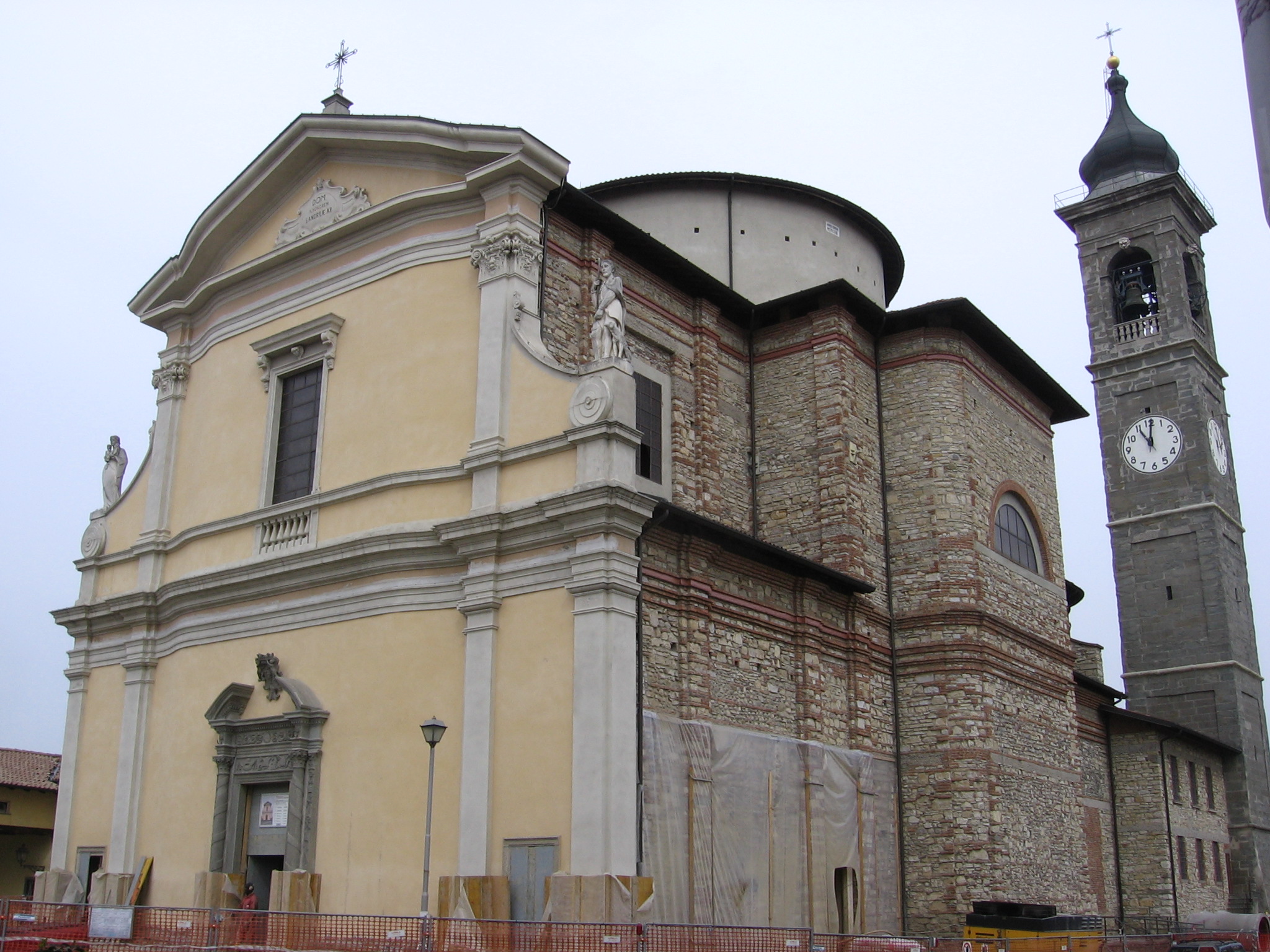
Church of St Andrew - Bergamo
Europe,
Italy,
Bergamo,
Welcome to the Church of St. Andrew, an architectural gem that stands in the heart of Bergamo, a city rich in history and culture. This building, dating back to the 1400s, is a significant example of the artistic taste of the Renaissance period. The church is known for its wonderful facade and precious frescoes that decorate the interiors, making it a landmark for both locals and tourists. The Church of St. Andrew is not only a place of worship but also a crossroads of stories and traditions that make it an integral part of Bergamo’s identity.Origins and HistoryThe Church of St. Andrew was built between 1450 and 1460 at the initiative of the friars of the Order of Servants of Mary. This order, founded in Florence, quickly distinguished itself for its commitment to the promotion of Marian devotion. The decision to dedicate the church to the Apostle Andrew turned out to be significant. St. Andrew was considered a protector of sailors and merchants, as well as a symbol of unity among different peoples, a fascinating theme for a city like Bergamo, which has always played roles in economic and cultural exchange.Over the centuries, the church has undergone various restorations and transformations. Between the 1700s and 1800s, the interiors were enriched with frescoes and baroque decorations, under the supervision of local artists who contributed to giving the church a more sumptuous appearance. In the 1920s, an important restoration brought to light part of the original Renaissance paintings, which had been partly hidden under baroque structures.In 1909, the complex of the Church of St. Andrew was definitively entrusted to the Augustinian friars, who managed and preserved it until today. In the following years, the church continued to be a center of spiritual and cultural life for the Bergamo community, hosting religious events, concerts, and artistic performances.The artworks inside the church, such as the frescoes and sculptures, testify to the artistic and historical importance of the building. The presence of artists like the painter Giovanni Battista Moroni, known for his portraits and sacred works, has made the place even more significant, representing a fusion of art and spirituality.The Church of St. Andrew is not only an example of Renaissance architecture but also a place that has traversed the centuries, adapting while maintaining its central role in Bergamo’s cultural landscape. Every stone, every fresco tells a story, a moment from the past intertwined with the present.What to ObserveNow, as we prepare to explore the Church of St. Andrew, let us focus on some of its key elements. These details not only enrich your visit but also connect the visitor to the historical and artistic essence of this place.The FacadeAs we approach the church, the first element that strikes us is undoubtedly the facade. Made of brick and stone, it features a sober yet elegant Gothic-Renaissance style. The large main door is topped by an imposing stone frame, which frames a fresco depicting St. Andrew. This particular type of wall decoration is typical of the time and served both to beautify and to tell religious stories to the faithful.The InteriorNow, let’s enter the church. The internal atmosphere is immediately enveloping, thanks to the warm illumination and the numerous artworks. The naves are decorated with frescoes depicting episodes from St. Andrew’s life. Among these works stands a fresco attributed to Giovanni Battista Moroni, which deserves particular attention.The CeilingLet us raise our gaze towards the ceiling, where the architectural details create an extraordinarily deep effect. The vaults of the side naves are adorned with elegant stucco and frescoes, adding a touch of grandeur to the already evocative atmosphere. The craftsmanship of the stuccoes reflects the baroque taste of the time and is a perfect example of how art could enrich even the most common spaces.The Main AltarNow let’s move toward the main altar. This is a place of great spiritual and artistic importance. The altar, made of polychrome marbles, is topped by a beautiful canvas depicting the “Madonna and Child with St. Andrew.” This artwork is particularly significant as it represents the essence of the church’s devotion. The light filtering through the side windows enhances the altar’s colors, creating a play of light that invites meditation.The Side ChapelsThe side chapels also deserve specific attention. Each chapel is a small treasure chest of art. In particular, the chapel of the Madonna, with its frescoes dating back to the 15th century, speaks to us of faith and popular veneration. The sacred images present here tell stories that have roots in Christian tradition, making the visitor a part of a spiritual continuity.The OrgansWe cannot forget to mention the organs of the church, located above the main entrance. These instruments are an integral part of Bergamo’s musical tradition and contribute to creating a unique atmosphere during liturgical celebrations. Their presence is not only functional; they are a testament to a flourishing musical tradition that has endured through the centuries.Decorative DetailsFinally, let’s observe the decorative details that adorn the interiors. The gilded frames, finely carved pillars, and glass mosaics create an extraordinary visual harmony. Each detail has been carefully designed to reflect the sacredness of the place, demonstrating the craftsmanship and attention to detail of the artists who worked in this church.Context and ConnectionsThe Church of St. Andrew is located in the historic center of Bergamo, surrounded by other important monuments. A short distance away stands the Cathedral of Santa Maria Maggiore, another extraordinary testament to the artistic history of the city. The latter, with its baroque interiors and sumptuous crypt, offers a fascinating contrast to the stylistic sobriety of the Church of St. Andrew.In the opposite direction, we find Piazza Vecchia, considered the heart of Bergamo Alta. This square, with its iconic Civic Tower and Palazzo della Ragione, represents another crucial hub of the city’s cultural and social life.Equally important is the Natural History Museum, which, with its exhibitions, offers another incentive to visit for those who wish to deepen their understanding of the history and natural beauty of the region.CuriositiesDid you know that the Church of St. Andrew has hosted numerous significant events over the centuries? Among these, there was an important contemporary art exhibition that drew attention to how Renaissance art can dialogue with modern artistic forms.Additionally, the church’s organ has been played in numerous concerts, becoming a symbol of the union between sacred music and Bergamo’s culture.Another fascinating aspect is that the church served as a refuge during certain wartime events, attesting to its centrality in the communal life of Bergamo.We conclude this visit by inviting you to continue your exploration of Bergamo by strolling toward the Cathedral of Santa Maria Maggiore and Piazza Vecchia, two places that together further enrich your experience in this historic city.
Read More