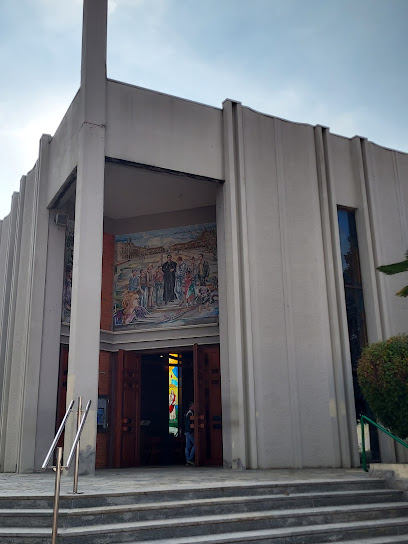
Church of St. John Bosco – Cuneo
Europe,
Italy,
Cuneo,
Welcome to the Church of San Giovanni Bosco in Cuneo, a place rich in spirituality and history that is an integral part of the identity of this city. Built between the end of the 19th century and the beginning of the 20th century, this church is dedicated to St. John Bosco, a famous educator and founder of the Salesian congregation, who had a profound impact on the education of young people. The Church of San Giovanni Bosco is known not only for its fascinating architecture but also for its role in the local community, promoting values of solidarity and education. The Church of San Giovanni Bosco was constructed between 1912 and 1924 based on the design by architect Giovanni Battista Gallo, in a neo-Gothic style that combines traditional elements with a freshness typical of the period. It was built to meet the spiritual needs of the many young people connected with the Salesian Oratory, one of Don Bosco’s founding works. In 1931, the church was consecrated, but over the years, it has undergone various transformations and restorations. During World War II, the church suffered significant damage, but thanks to the commitment of the community and the Salesians, a major recovery effort began in 1946. These works aimed to restore the integrity of the structure and renew the interior spaces, continuing until the 1950s. In the 1970s, further interventions were made to improve the accessibility and usability of the church, adapting it to the needs of an increasingly active community. Another significant restoration took place in the early 2000s, which aimed to further enhance the beauty of the interiors and the quality of the works of art housed within. Upon entering the Church of San Giovanni Bosco, the first element that strikes you is undoubtedly the façade, characterized by an imposing central portal and tall stained-glass windows that reflect natural light, creating a unique atmosphere. The stained-glass windows, depicting scenes from the life of St. John Bosco and various saints, are a fundamental element, not only from an artistic perspective but also as a vehicle for religious teachings. Continuing inside, on the left, there is a large fresco of St. John Bosco created by a local artist in the post-war period. This fresco represents the founding moment of the congregation, highlighting the charisma and energy of the educational saint. The figures of the young people depicted around him emphasize Don Bosco’s attention to new generations. On your right, you can admire the baptismal font, a central element for Christian initiation, which reminds us of the importance of sacraments in the lives of the faithful. This font, made of marble, features elegant floral decorations similar to those found throughout the rest of the church. In the center of the nave, the main altar is another precious piece of religious architecture. It features carvings and gilding, the result of high-quality craftsmanship. The altarpiece depicts the Madonna with Child, an image that alludes to themes of protection and maternal love, core to Christian spirituality. Let us not forget the characteristic choir, located above the main entrance, which provides a space dedicated to liturgical music. In many moments of the year, this choir is occupied by local youth who use music to express their faith, in a continuous dialogue between art and spirituality. As we approach the end of our visit, let us turn our gaze towards the side chapel dedicated to St. Anna, which has always been dear to the parishioners. Here, the ex-voto and prayers of the faithful testify to the gratitude and devotion of the community, making it a place for deep reflection. Lastly, an architectural aspect not to overlook is the wooden ceiling of the central nave, an example of craftsmanship that highlights attention to detail from the period. The structure is made with wooden beams, decorated with geometric and floral motifs, giving a sense of warmth and welcome to the interior spaces. The Church of San Giovanni Bosco is situated in an urban context rich in history and culture. Located in a neighborhood that has seen a strong social and educational commitment grow over the years, it is close to other significant institutions. A short distance away, we find the Salesian Oratory, a key facility for the educational activities of young people. Here, school and cultural initiatives take place, testifying to Don Bosco’s legacy in promoting comprehensive education for youth. Another place of interest nearby is the Church of San Francesco, which offers a contrasting yet complementary view of Cuneese spirituality, with its medieval origins and Gothic architecture. The surrounding area is perfect for a walk, enriched by green spaces and suggestive atmospheres. Finally, we must not forget the Civic Museum of Cuneo, which collects works of art and historical testimonies from the city, creating an ideal network of connections for those wishing to delve deeper into local culture. The Church of San Giovanni Bosco is known not only for its architecture and religious significance but also for the strong bond with the local community. During the 1990s, the church hosted musical and cultural events, becoming a reference point for the social life of the city. Furthermore, San Giovanni Bosco, as the founder of the Salesian Congregation, is celebrated worldwide, and his figure is adored by many young people. The church hosts annual events that draw faithful from various locations, witnessing its role as a center of spirituality. Lastly, an interesting fact is the presence of a group of volunteers who take care of the church’s maintenance and the organization of cultural events, reinforcing the idea that the Church of San Giovanni Bosco is not just a place of worship but a true center for social gathering. I hope this introduction to the Church of San Giovanni Bosco in Cuneo has impressed you and inspired you to further explore this extraordinary example of faith and community. You will continue your journey by visiting the nearby Salesian Oratory and the historic Church of San Francesco. Enjoy your exploration!
Read More