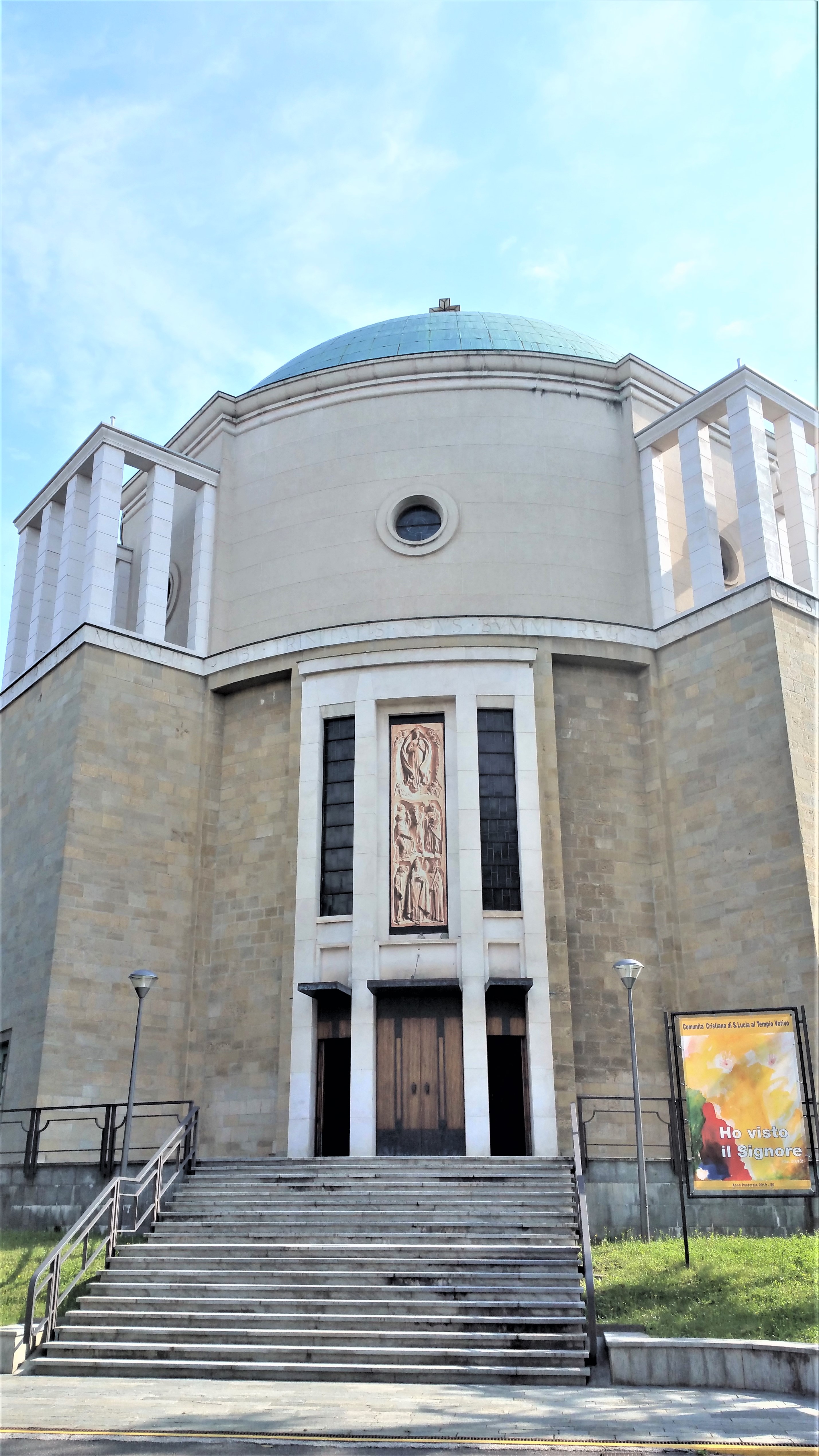
Church of St Lucy - Bergamo
Europe,
Italy,
Bergamo,
The Church of Santa Lucia, a jewel of the historical and religious heritage of Bergamo. This church, located in the heart of the upper city, is a significant example of the devotion and art that have developed in the region over the centuries. Founded in the 17th century, it has become an important landmark for the local community, as well as a place of worship for the faithful. The church is famous for its frescoes and interior furnishings, which tell sacred stories and the life of the saint, the patron of sight. Let us prepare to discover its history and the artistic wonders it holds.Origins and HistoryThe Church of Santa Lucia has origins dating back to the 17th century, specifically in 1646, when it was built at the behest of a brotherhood dedicated to the protection of those suffering from eye ailments. The cult of Santa Lucia, revered for her miraculous powers, quickly gained popularity, and the church became an important religious reference point.Over the years, the church has undergone various transformations and restorations. In 1730, for example, it was expanded and renovated, with the addition of frescoes and decorations that enriched its appearance. Among the artists who contributed to this embellishment was Giovanni Battista Tiepolo, one of the most renowned Venetian painters of his time, whose baroque style manifested in artworks that continue to attract the attention of visitors today.In the 19th century, further restoration work was carried out to preserve its beauty and functionality. Modifications continued into the following century when a more conservative approach was adopted, aimed at maintaining the original appearance of the structure. The various restoration periods are a testament to the devotion of the local community, which has always cared about maintaining its cultural heritage.Today, the Church of Santa Lucia represents not only a place of worship but also a historical and cultural testimony of the city of Bergamo. It is an example of how art and religion can harmoniously merge and how generations have committed to preserving the memory of the past.What to ObserveFacadeUpon arriving in front of the Church of Santa Lucia, the first thing that strikes is its simple yet elegant facade, characterized by sober lines and a minimalist decoration that reflects the baroque style. The facade is made of local stone, which gives the church a reassuring and durable appearance. The main entrance is topped by an elegant pediment, which frames the opening and guides the gaze upward.InteriorsEntering the church, one is welcomed by an atmosphere of calm and spirituality. The interiors are decorated with vibrant frescoes depicting religious scenes, primarily related to the life of Santa Lucia, the patroness of the eyes. These frescoes, created by local artists, offer a rich and colorful vision of popular devotion and the artistic style of the baroque period.Main AltarAt the end of the nave, the main altar stands out, a masterpiece of sacred art. It is made of polychrome marble and features a rich decorative apparatus. Behind the altar, we find a beautiful altarpiece depicting Santa Lucia, surrounded by angels and saints, which creates a strong visual impact and invites reflection. It is interesting to note how this work not only celebrates the figure of the Saint but also embodies the community’s desire to express its faith through art.Side ChapelsAs you proceed along the nave, you can notice the side chapels, each dedicated to a different saint or event in the life of Christ. These chapels offer a wide range of artworks spanning from the 16th to the 18th century. Some of them feature frescoes and sculptures, while others house relics and sacred objects. Each chapel is a small treasure that deserves attention.Stations of the CrossAnother element not to be missed is the Stations of the Cross, represented along the walls of the church. Each station is depicted with great attention to detail and invites the visitor to follow the path of the Passion of Christ. The Stations of the Cross are not just a decorative element but an invitation to meditate and reflect on suffering and redemption.FloorDon’t forget to look at the floor, adorned with beautiful mosaics that carry the style and influences of Sicilian art. These mosaics, made with traditional techniques, reflect particular attention to detail and offer a pleasant contrast to the frescoed walls.Architectural DetailsFinally, we invite you to pay attention to the architectural details that enrich this sacred place. The columns supporting the arches, as well as the ornate cornices, are examples of high-quality craftsmanship. Every detail tells a story, highlighting the dedication and passion of the artisans who worked here.Context and ConnectionsThe Church of Santa Lucia is not just a place of worship, but it is situated in a vibrant context rich in history. We are in the upper city of Bergamo, an area famous for its architectural wonders and breathtaking views. Nearby, you will find the Citadel, which represents an important example of military architecture from the 16th century, and Piazza Vecchia, the beating heart of Bergamo’s life, lined with elegant historic buildings.Moreover, just a few steps away is the Basilica of Santa Maria Maggiore, another artistic marvel of the city, known for its extraordinary frescoes and carved wooden choir. These places, along with the Church of Santa Lucia, form an ideal route for those wishing to immerse themselves in Bergamo’s history and culture.CuriositiesThe Church of Santa Lucia has a special feature: its patronal feast, which is celebrated on December 13, attracts numerous devotees. During this special day, the faithful participate in religious functions and processions in honor of the Saint, witnessing the church’s significance within the community.Another fascinating curiosity pertains to the decorative art found inside. Among the exhibited works is a precious wooden crucifix dating back to the 16th century, which offers a testament to the talent of local artisans of the time.Finally, the Church of Santa Lucia is an important reference point for social assistance. Over the years, it has continued to play an active role in the community, offering support to those in need.
Read More