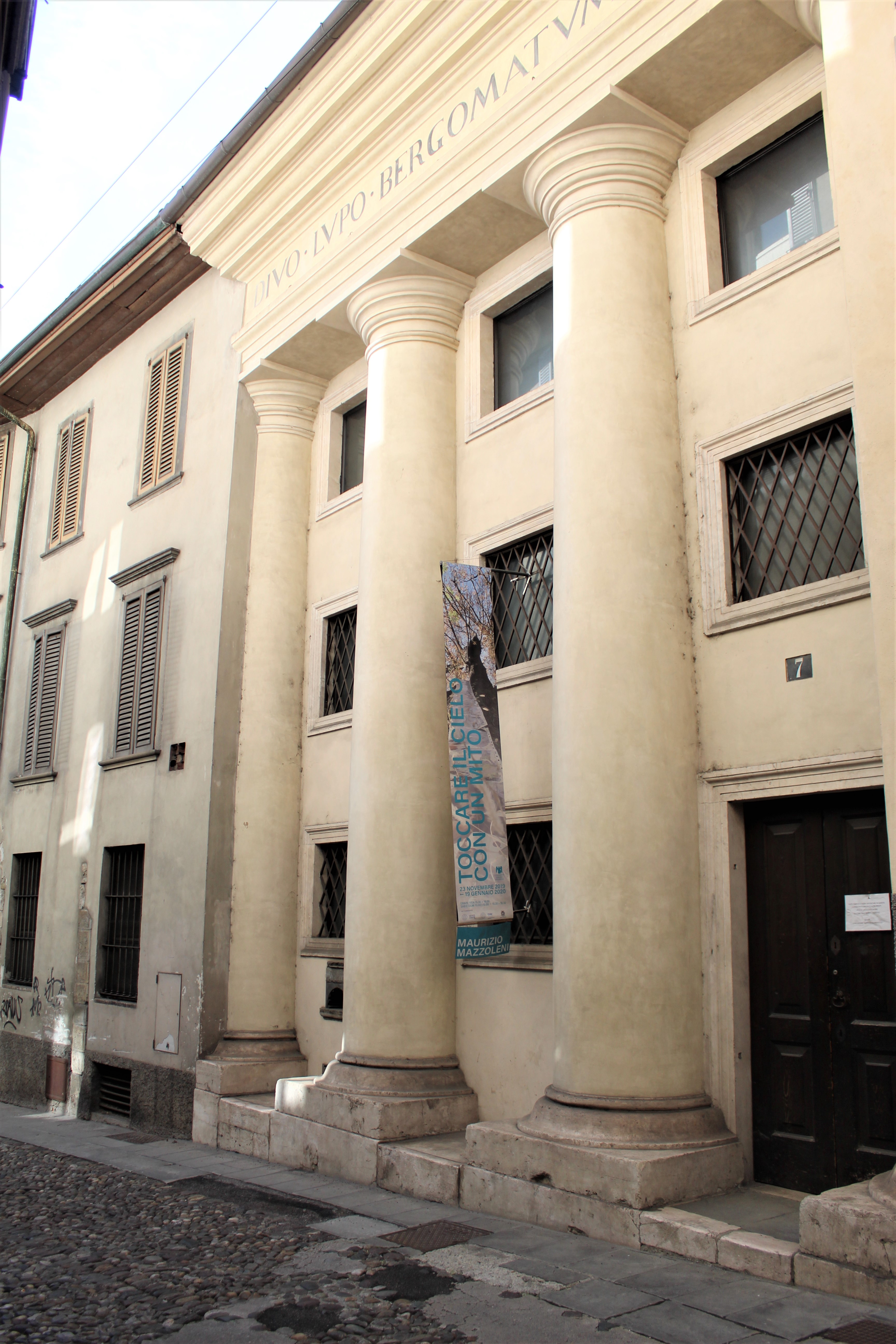
Church of St Lupo - Bergamo
Europe,
Italy,
Bergamo,
The Church of San Lupo stands in the heart of Bergamo, a true jewel of history and architecture. Located in the district of Borgo San Leonardo, the church is dedicated to San Lupo, a saint venerated in various regions of Italy. This place plays a fundamental role in the cultural and religious identity of the city, witnessing centuries of artistic and spiritual evolution. Notable is its architectural style, which combines elements of Romanesque and Baroque, making it one of the most interesting churches to visit in the Bergamasque landscape. The structure we see today is the result of transformations and restorations that took place from the 12th century to modern times, with an important renovation occurring in the 18th century. Therefore, the Church of San Lupo is not only a place of worship but also an important document of Bergamo’s history.Origins and HistoryThe origins of the Church of San Lupo date back to the 12th century, a period when the Romanesque style was reaching its peak in Lombardy. The first documented mention of the church is dated 1184, when it was already an important reference center for the local community. The church was built in a context of intense monastic activity typical of those times and was erected in honor of a saint venerated in Christian tradition.Over the centuries, the Church of San Lupo has undergone numerous modifications and internal transformations to meet the different needs of the community and the evolving architectural styles. A significant restoration took place in the 17th century, transitioning towards a richer Baroque style, which involved the addition of internal decorations and modifications to the facade. The bell tower, originally simpler, was elevated and embellished in the following years to give the church a more majestic presence in the urban landscape.Between 1740 and 1750, an important restructuring was carried out under the direction of architect Giovanni Battista Caniana, who made significant changes to the interior spaces, creating a harmony between architecture and decoration. The facade, initially rather sober, was enhanced with ornamental elements typical of the Baroque style and accentuated by an imposing entrance portal. This intervention contributed to giving the church its current appearance that can be admired today.Throughout the 20th century, the Church of San Lupo continued to be a focal point for the faithful, maintaining its functionality and enriching itself with new works of art. During the World Wars, the church suffered damage but was restored, keeping its history and artistic heritage alive.What to ObserveUpon entering the Church of San Lupo, the first thing that catches the eye is the coffered ceiling, a splendid example of wooden architecture from the 18th century. The decorations present tell biblical stories and scenes from the lives of saints, creating an atmosphere of great suggestion. On the left side, you can notice an ancient fresco depicting San Lupo, created in past centuries by a local school of artists. This fresco is important for the historical context, as it testifies to the veneration of the saint and the community’s involvement in his worship.Continuing the visit, to your right is the main altar, beautifully decorated. It houses a finely crafted tabernacle, guarded by wooden angels. The beauty of the Baroque finishes invites contemplation and reflects the artistic commitment of the era. The presbytery, with its altar, is a place of spiritual gathering that reflects the devotional life of the faithful throughout the centuries.Another element of particular interest is the chapel dedicated to the Madonna, located at the end of the nave, where you can appreciate the polyptychs and statues that adorn the space. The art of sacred sculpture is evident in the representation of the saints and the details of the works, which showcase the stylistic evolution over various historical periods.Moving towards the upper part of the church, you can admire the organ, a large instrument that is an integral part of sacred music and liturgical celebrations. The organ has been recently restored and continues to play during functions, offering the audience a sound experience that perfectly complements the architecture of the church.To complete the visit, the ornaments and wall decorations must be observed carefully; many of them are the result of stylistic influences that reflect the artistic trends of the Baroque period. These details, while sometimes underrated, tell stories of faith and devotion, making every corner unique and fascinating.Context and ConnectionsThe Church of San Lupo is located in the lively district of Borgo San Leonardo, an area rich in history and tradition. This zone is characterized by cobbled streets, typical stone houses, and a series of small artisan shops that create a unique and welcoming atmosphere. It is an ideal place for a walk that allows you to immerse yourself in local culture since medieval times.Within a few steps of the Church of San Lupo, you can visit other extraordinary Bergamasque attractions. One example is the Church of San Bartolomeo, not far away, which also features a rich artistic and architectural heritage. Additionally, the Bergamo Natural History Museum, located just a few minutes’ walk away, offers an excellent opportunity to explore further aspects of local culture and history. Finally, the Donizetti Theatre is another place of interest not only for theater lovers but for anyone wishing to discover the cultural roots of Bergamo.CuriositiesOne of the interesting aspects of the Church of San Lupo is its connection to local traditions, including some popular beliefs regarding the miraculous powers of the saint to whom it is dedicated. Every year, numerous faithful go on pilgrimage, hoping to receive a sign of grace.Moreover, the church often hosts cultural events that go beyond simple liturgical life, such as concerts and exhibitions, allowing the community to interact with its historical heritage in a dynamic way.Finally, the Church of San Lupo is also an example of the resilience of places of worship, managing to keep its spiritual and social function alive despite the challenges of time and modernity.
Read More