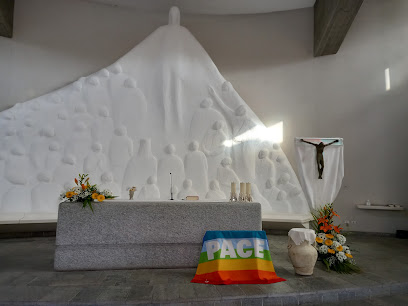
Church of St. Paul – Cuneo
Europe,
Italy,
Cuneo,
The Church of San Paolo stands in the heart of Cuneo, an architectural gem that represents an important part of the historical and cultural identity of the city. This church, built between the late 17th and early 18th centuries, is known for its baroque elegance and for the extraordinary frescoes that adorn its walls. Its consecration dates back to 1708, while in the 19th century it underwent significant restoration work. The Church of San Paolo is not just a place of worship, but also a reference point for the local community, a witness to numerous historical events that have marked Cuneo and its territory. The origins of the Church of San Paolo are intertwined with the religious life of the city of Cuneo. Its construction began in 1683 thanks to the will of the Scholapian Fathers, a religious order founded by St. Joseph Calasanz, known for its commitment to the education of young people. The work lasted several years, and in 1708 the church was finally consecrated. The timing of its construction is significant; this period marks the transition between late Baroque and Neoclassicism, an era characterized by intense artistic and cultural activity. In 1820, a convent was added to the church, which was initially intended for the education of boys, as was tradition for the Scholapian Fathers. Over the years, the Church of San Paolo has undergone various restoration processes. For example, in the 1930s, an important consolidation of the internal structures and enhancement of the frescoes was carried out. The restoration carried out in 1987 was also significant, after damage caused by time threatened the integrity of the church and its artworks. Thanks to these interventions, we can now admire the beautiful frescoes by the Piedmontese painter Giovanni Battista Marcenaro, which greatly adorn the ceiling and the side walls. As soon as we cross the threshold of the Church of San Paolo, we are enveloped by an atmosphere of great sacredness and beauty. The first thing that catches the eye is the façade, in an elegant light tone, in baroque style, with a monumental portal topped by a large oval that encloses the figure of St. Paul. The façade is embellished with two Doric columns, which give a sense of balance and harmony. Continuing inside, on our left, we can admire the grand main altar. This structure is enriched by a magnificent marble predella, which represents the artistic climax of the church’s sacred architecture. The altar hosts a beautiful statue of St. Paul, a work by a skilled sculptor of the 18th century who brought the figure of the saint to life. Moving towards the transept, we are greeted by another important point of interest: the ceiling frescoes. Created by Marcenaro, these frescoes depict significant episodes from the life of St. Paul and are an excellent example of baroque art. The brightness of the colors and the complexity of the compositions convey a sense of movement and vitality. From this position, it is easy to appreciate the natural light filtering through the large windows, adding an almost magical atmosphere to the church. If we head towards the counter-facade, on the right, we will find the pipe organ, a musical instrument of great value, built in the early 19th century. The organ is characterized by a splendid neoclassical style, with golden decorations that enhance its importance. It is still used today during celebrations and concerts, bringing sacred music to life within the church. Finally, we cannot overlook the beautiful presbytery, visible at the end of the main nave. This sacred space is framed by a majestic triumphal arch, adorned with golden decorations and baroque elements that catch the eye and lead it towards the altar. Here, the sacredness of the space is emphasized by the presence of important relics of saints, carefully preserved. The Church of San Paolo is located in a central area of Cuneo, which also hosts other significant historical and cultural realities. A short walk from here stands the Prefecture Palace, an example of neoclassical architecture that serves as the hub for public administration. Another nearby attraction is the Church of Saints James and Philip, famous for its bell tower and precious internal frescoes. If we move a little further away, we can reach the San Francesco neighborhood, where the church of the same name is located, a late Gothic architectural example that houses remarkable works of art, similar in importance to those in San Paolo. Furthermore, the area offers a lively atmosphere rich in history, with squares, markets, and historic cafés where one can reflect on the importance of the Church of San Paolo in the cultural evolution of Cuneo. The Church of San Paolo is also known for its ability to host various activities and events. Throughout the year, the church hosts concerts and cultural events, thereby contributing to the preservation of local musical traditions. Another curiosity concerns the numerous ex-votos present inside the church. These are testimonies of graces received by the faithful and are often artistic expressions of great value, telling stories of hope and faith. Finally, the frescoes by Giovanni Battista Marcenaro are considered a reference point for scholars of baroque art. His ability to use light and color has influenced other artists in the region, making his work a symbol of the cultural vitality of 18th-century Piedmont. We invite you to discover the beauty of Cuneo by also visiting the Prefecture Palace and the Church of Saints James and Philip, both cultural and historical landmarks that complement your journey of knowledge of the city.
Read More