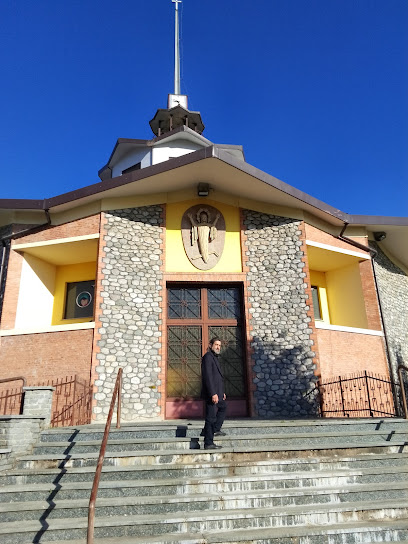
Church of St. Pius X – Cuneo
Europe,
Italy,
Cuneo,
Welcome to the Church of San Pio X, a place that represents a significant part of Cuneo’s identity. This church, consecrated in 1954, is known for its modern and functional architectural style, which stands out from the traditional religious constructions of the city. Located in a dynamic urban context, the church is a perfect example of how spirituality and modernity can come together, meeting the needs of a constantly evolving community. Its construction reflects a period of great transformation in Italy, characterized by a renewed religious and social fervor. Through essential architecture and bright spaces, San Pio X has become not only a place of worship but also a gathering center for the faithful and the wider community. The Church of San Pio X arose during a historical period when the needs of a rebuilding Italy required spaces that reflected modernity and a new vision of worship. The foundation stone was laid in 1951, at a time when Cuneo, like many other Italian cities, was striving to recover from the rubble of World War II. The church was commissioned by Monsignor Giovanni Battista Gai, then bishop of Cuneo, who desired a building that could accommodate the growing local community. The architect appointed for the project was Luigi Porta, who chose a modern architectural language that was simple yet evocative. The church was completed and consecrated three years later, in 1954, and was designed to respond to the new demands for worship and community gathering of a changing society. Its structure is characterized by wide stained-glass windows, allowing natural light to filter into the interiors, creating an atmosphere of spirituality and calm. An important restoration took place in the 1990s, during which interventions were made to preserve the original elements while making the building more accessible for new generations. Today, the Church of San Pio X is not only a place of worship but also an active center for the community, hosting events, meetings, and activities for all ages. Now, let’s focus on what makes the Church of San Pio X a special place to visit. As we approach the main entrance, we can notice the façade, which features clean, unembellished lines. The simplicity of the design clearly reflects the modern architecture of the 20th century. Just a few steps from the door, on the façade, we can see a large multicolored stained-glass window depicting the figure of San Pio X, the Pope after whom the church is named. This stained glass is not just a decorative element, but it serves an important spiritual and symbolic function, reconnecting the faithful to religious traditions. Upon entering the church, we are welcomed by a large nave, characterized by a high and bright ceiling. The materials used, such as concrete and glass, contribute to a sense of space and openness. To our right, we can observe the main altar, which appears sober and austere, in line with the church’s overall aesthetic. Continuing inside, various contemporary artworks are displayed on the side walls, interacting with the architecture. These works have been chosen to communicate a message of faith and hope. One of these, for example, is a series of paintings depicting biblical scenes, created by local artists. It is no surprise that the Church of San Pio X has encouraged creativity and artistic expression, making art an integral part of modern spirituality. Looking inward, we can notice how natural light reflects on the wall surfaces thanks to the stained glass. This play of light and shadow creates suggestive atmospheres during religious celebrations, contributing to the spiritual experience of the faithful. The light changes with the passage of time, making each visit unique. Another interesting element is the choir, located above the entrance. It is an example of how sacred music has always played an important role within the liturgy. Here we also find a modern organ, which accompanies the celebrations and enriches the sound of the liturgy with evocative melodies. In front of the altar, we can see a large crucifix, reminding us of the importance of the cross in Christianity. This element is fundamental not only for worship but also as a symbol of unity for the community. Finally, we cannot forget the area dedicated to meditation, a small space reserved for personal prayer and reflection. Although small, this tranquil corner provides a refuge amidst the chaos of daily life and fits perfectly within the identity of the Church of San Pio X as a center of spirituality and community. The Church of San Pio X is located in a vibrant and dynamic neighborhood of Cuneo, characterized by residential buildings, shops, and green spaces. This location makes it a landmark not only for religious practitioners but also for all the citizens living nearby. The church is part of a continuously evolving social fabric, where different stories and cultures intertwine. Nearby, we find other cultural and social realities that collaborate with the Church. For example, not far away is the San Giovanni Cultural Center, a place dedicated to events, concerts, and exhibitions that promote local culture and art. This interaction between the church and the cultural center helps create an environment rich in initiatives and connections between faith and culture. Furthermore, just a few steps from the church, we can visit the Parco della Resistenza, a green area that invites reflection and walking. Here, it is possible to immerse oneself in nature while reflecting on the importance of historical memory, especially in a context like Cuneo, which has experienced significant moments during the Italian Resistance. One of the lesser-known secrets of the Church of San Pio X is its welcome of contemporary artworks by local artists. The church not only hosts religious celebrations but also promotes the enhancement of contemporary art, creating a unique dialogue between faith and artistic expression. Another curiosity regards the presence of special events during religious holidays. The church is known for organizing celebrations that involve the whole community, such as outdoor masses and sacred music concerts, attracting visitors from other neighborhoods in Cuneo. Finally, one noteworthy feature is the parish’s commitment to environmental sustainability. The church participates in eco-friendly initiatives, such as waste separation and the promotion of ecological-themed events, encouraging the community to be more attentive to environmental issues. In conclusion, we invite you to discover the richness of Cuneo by visiting the nearby San Giovanni Cultural Center and the Parco della Resistenza, places where culture and history intertwine, offering opportunities for reflection and new experiences.
Read More