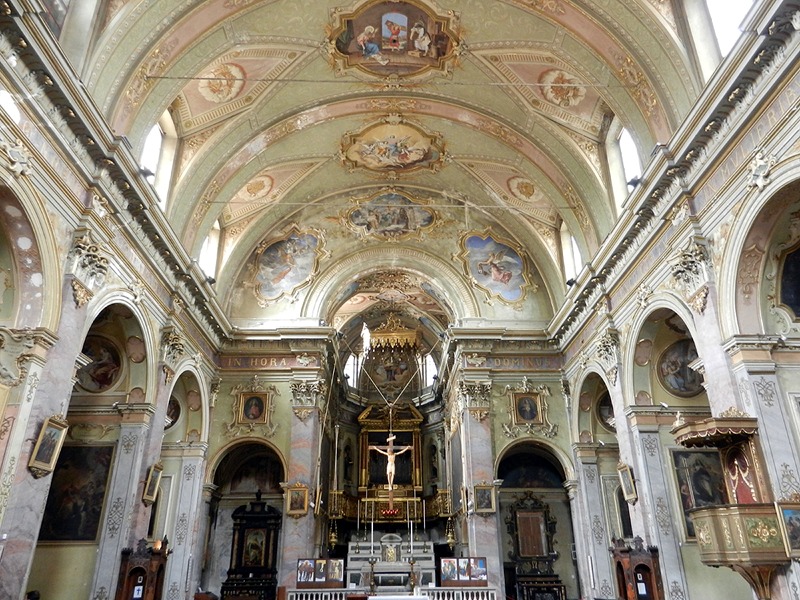
Church of the Carmine - Bergamo
Europe,
Italy,
Bergamo,
The Church of Carmine in Bergamo, a true architectural gem located in the heart of this historic Lombard city. This church, dedicated to the Virgin Mary of Mount Carmel, represents a fundamental element of Bergamo’s identity. Its construction began in 1340 and lasted until 1450, a period of great fervor for art and architecture. The Church of Carmine is known for its Baroque frescoes and the grandeur of its architecture, which testify to the stylistic evolution and influences that have succeeded each other over the centuries.Origins and HistoryThe origin of the Church of Carmine dates back to the 14th century when, in 1340, a group of Carmelite monks arrived in Bergamo. These religious figures settled here to spread the cult of Our Lady of Carmel. The construction of the church began in a historical context characterized by the arrival of various artistic and cultural currents, particularly from Lombardy. The church, in its original Gothic forms, was completed in 1450, after over a century of modifications and expansions.Over the centuries, the building has undergone numerous renovations and restorations, particularly in the 17th century when the imposing facade was created, a significant example of Baroque architecture. This transformation reflects the tastes of the time, focusing on rich and detailed ornamentation. The Pistoian architect Giovanni Battista Rava was one of the main contributors to these works, giving the church its current appearance.In the 19th century, the church underwent new interventions to consolidate its structure and affirm its artistic value. However, nothing could stop the natural deterioration related to time, until, in the 1920s, a restoration project was launched that allowed the Church of Carmine to regain its splendor. Today, we are witnesses to a building that preserves the memory of centuries rich in events and transformations.What to ObserveNow we prepare to enter the Church of Carmine. As you pass through the entrance, it will be impossible not to be struck by the magnificence of the central nave. The vaults are beautifully frescoed, depicting religious scenes that narrate the history of the church and Carmelite devotion. The contrast between the natural light filtering through the large windows and the vibrant colors of the frescoes creates an atmosphere of great spirituality.To the right, you will notice the Presbytery, which is distinguished by an imposing marble balustrade. This area is dedicated to liturgical functions and is adorned with significant sculptures and paintings, some of which are works by the famous Bergamasque artist Giambattista Moroni.Proceeding towards the back of the church, to the left, you will find a chapel dedicated to Saint Teresa of Avila, one of the most important figures in Carmel. Here, some 17th-century frescoes depict the life of the saint, paying tribute to her contribution to the reform of the Carmelite Order. These frescoes, lively and rich in details, offer a glimpse of the Marian devotion still very much alive among the faithful.As you continue your visit, don’t forget to look up at the side walls where, in various niches, you can admire the statues of Carmelite saints. These sculptures, often made of wood, testify to local craftsmanship and the skill of Bergamasque artists who have been able to blend tradition and innovation.Another significant element is the ceiling, beautifully decorated with stucco and frescoes that express a sense of movement and dynamism. This work is representative of the Baroque style, effervescent and rich in details, which characterized the interiors of churches of that period. Take a moment to admire the meticulous work and beauty of these decorations.Moving outside the church, let’s also take a look at the cloister, a short walk that is worth taking. Here, you will find a series of arches framing a quiet garden, a corner of peace that invites reflection. The cloister is a perfect example of Renaissance architecture and represents a place of meditation for the hermit monks who lived here.Context and ConnectionsThe Church of Carmine is situated within the urban fabric of Bergamo, precisely in the Borgo Santa Caterina district. This area is rich in history, just a stone’s throw from the Città Alta and surrounded by other beautiful churches and monuments. Among these, you cannot miss the Church of San Bernardino, another important testimony to the city’s religious past. Continuing on your route, you will also find the ancient Basilica of Santa Maria Maggiore, which preserves an artistic heritage of indescribable value.Moreover, not far away stands the Castle of San Vigilio, from which you can enjoy breathtaking panoramic views of Bergamo and its valley. This historically fortified area is emblematic of how the city has been shaped by centuries of history and cultural influences.CuriositiesThe Church of Carmine has hosted numerous religious and cultural events over the years, remaining active in the life of the community. It is interesting to note that the frescoes of the church, dating from different periods, represent a true cultural heritage for the city of Bergamo, many of which are also recognized at the European level.In every corner of the church, one can breathe the history of centuries of faith and devotion. Some extraordinary events are also recorded, such as the processions dedicated to Our Lady of Carmel, a moment of gathering that attracts thousands of faithful. These celebrations, filled with emotion and tradition, are a living testament to the history of the church and the community.Finally, it is curious to know that, due to its historical significance and the beauty of its art, the Church of Carmine is often used for concerts and cultural events. These events help to bring the church spaces back to life, making them an integral part of modern life in Bergamo.We thank you for accompanying us on this exploration of the Church of Carmine. We hope you have found inspiration in the beauty of this place and that you continue your discovery of Bergamo, visiting its historic streets and other artistic wonders that make this city so unique.
Read More