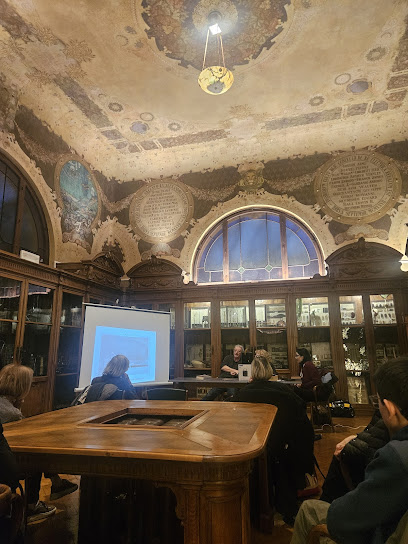
Civic Museum “Casartelli Science”, Como
Europe,
Italy,
Como,
Welcome to the Civic Museum of Science Casartelli, a gem of the city of Como, dedicated to science, technology, and the history of scientific culture. This museum, located in an ancient palace, is a place that speaks of innovation and knowledge, witnessing the importance that science has had and continues to have for the local community. Founded in 1996, the museum is named after Giulio Casartelli, an important scientist and science communicator from Como. Its collection is particularly known for the breadth of historical scientific instruments and models that illustrate scientific principles in an interactive way, making the experience fascinating and accessible to everyone. The Civic Museum of Science Casartelli has its roots in the rich cultural heritage of Como. The history of science and scientific education in the city has been intertwined since the 19th century, when there was a strong push for science communication. The desire to make science more understandable and appealing to the public developed with the establishment of various collections and initiatives. The museum was officially inaugurated in 1996, but its embryo has roots in the “Civic Museum,” which already existed in the 19th century and was dedicated to natural history and mineralogy. Over the years, the need for an institution dedicated exclusively to science became increasingly pressing, leading to the creation of the Civic Museum of Science Casartelli in 1996, promoted by the Municipality of Como and the International Center for the Study of the History of Science. The museum houses a collection of ancient scientific instruments, many of which date back to the 18th and 19th centuries. Among the most significant pieces are telescopes, microscopes, and instruments for meteorological and physical measurements, which testify not only to the history of science but also to the evolution of technology and scientific thought. Over the years, the museum has continued to grow, expanding its collections and updating its exhibitions. Important restorations and expansions have been carried out, with the aim of making the visit experience increasingly engaging and educational. In addition to exhibitions, there are also educational workshops and meetings aimed at students and science enthusiasts. Another important aspect of the museum’s history is its role in promoting scientific culture. Through collaborations with universities and research centers, the museum has become a reference point for the community, offering educational programs and workshops that engage visitors directly in the discovery of science. Now that we have framed the history of the Civic Museum of Science Casartelli, let us begin to explore together the wonders you can observe inside. As soon as you enter, you will be welcomed by a cozy hall that introduces the theme of science. Here you will find informational panels that illustrate the history of the museum and its collections. Continuing on, we invite you to head to the first exhibition room, where you will find an extraordinary selection of scientific instruments, including the telescopes used by early astronomers. On the right, notice the models of moving solar systems. These models are not only fascinating to observe, but they also provide a clear idea of astronomy and the understanding of the universe over the centuries. It’s interesting to know that many of the displayed telescopes come from private collections donated to the museum, thus helping to make the scientific past accessible to everyone. Moving on, in the next room, you will find the area dedicated to physics. Here, take a moment to stop in front of various measuring instruments, such as the barometer and thermometer. These instruments not only show how our ancestors measured time and atmospheric conditions but also allow you to see how physics intertwines with daily life. On the left, there is a microscope of great historical value. What makes this piece unique is its use in biological research, a field that has undergone radical transformations thanks to improvements made by researchers in the 20th century. Don’t forget to observe some microscopic tissue samples, which offer a unique opportunity to learn how science can reveal what is invisible to the naked eye. Another must-see is the interactive laboratory present at the museum. Here, families and children can engage in hands-on scientific experiments. It’s an engaging and fun way to learn, helping to solidify scientific concepts through direct experience. Finally, do not leave the museum without visiting the section dedicated to the history of energy. Here you will find models of turbines and generators that illustrate the evolution of energy production. A visit to this part of the museum is a true lesson in sustainability and innovation. The Civic Museum of Science Casartelli is part of a rich and vibrant cultural fabric typical of the city of Como. Just a short walk from the museum is the Paolo Giovio Archaeological Museum, another institution worth visiting. Here, history intertwines with archaeological discoveries, shedding light on the city’s past from ancient times to the modern era. Within walking distance, there is also the Basilica of San Fedele, a splendid example of Romanesque architecture, which has retained its charm through the centuries. This basilica represents an important reference point for all those who wish to discover the spiritual history of Como. Moreover, Lake Como, located not far from the museum, offers a unique opportunity for reflection on natural beauty and the importance of the environment. A walk along its shores is a great way to complete a day dedicated to science, enriching your experience with the scenic beauty of this region. 1. Among the instruments on display at the museum are ancient sundials, which testify to how humanity has always sought to measure and understand time. These instruments, in their simplicity, represented significant innovations in the past. 2. A section dedicated to flight experiments illustrates the early attempts at building airplanes and the developments in the physics of flight. These historical models remind us of the human dream of dominating the sky, culminating in the conquest of space flights in the 20th century. 3. The museum’s interactive experience is designed to stimulate not only interest but also curiosity. Often, the laboratory activities are led by local experts, who also share the latest scientific news with visitors. And now, we invite you to continue your discovery of science and history with a visit to the Paolo Giovio Archaeological Museum and the Basilica of San Fedele. Safe travels!
Read More