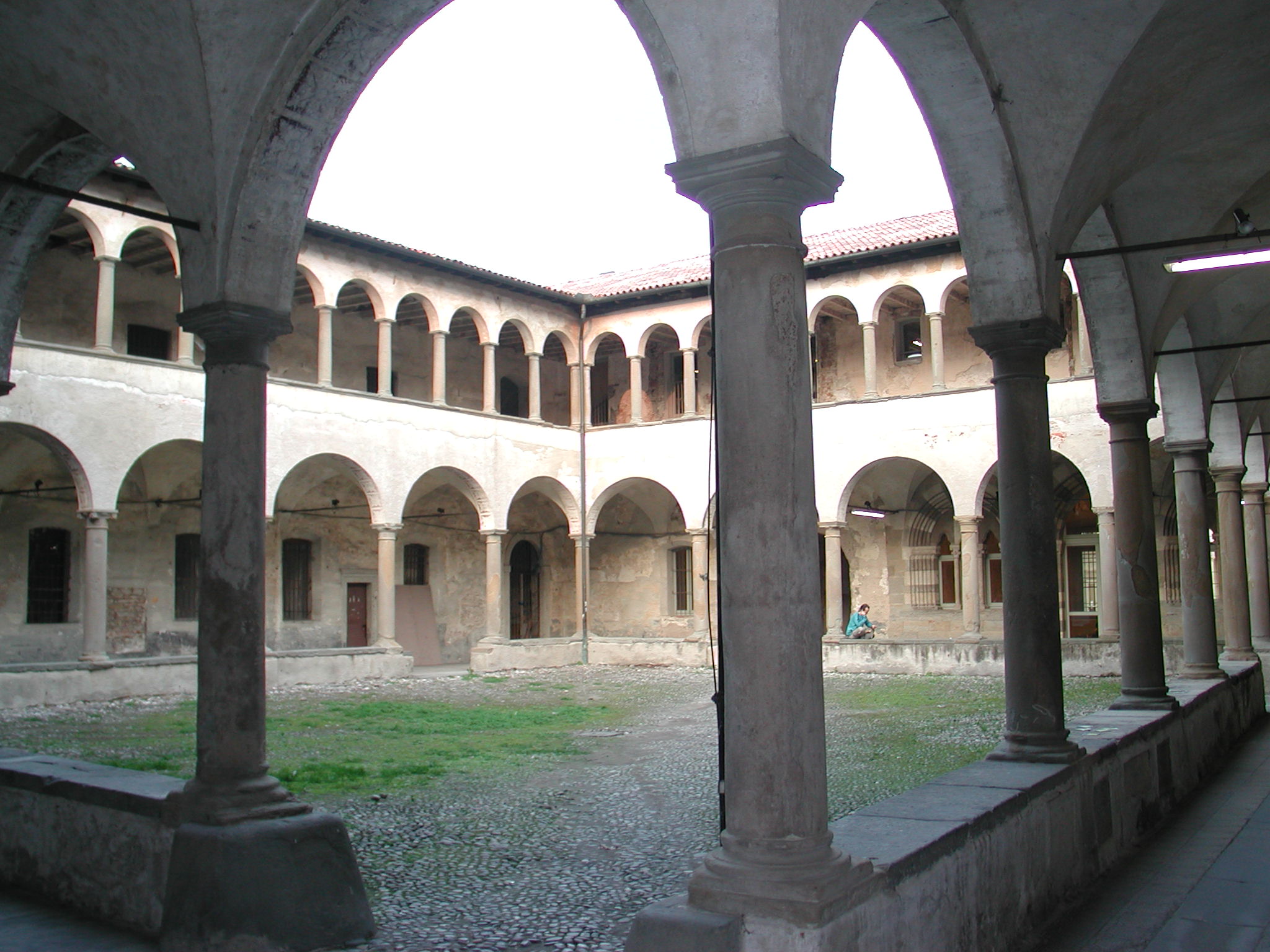
Cloister of St Augustine - Bergamo
Europe,
Italy,
Bergamo,
The Cloister of Saint Augustine, a place of extraordinary beauty that embodies an important piece of Bergamo’s history. Located in the heart of the city, this cloister is part of the complex of the former Augustinian convent founded in the 14th century. It is known not only for its evocative architecture but also for the role it has played as a center of culture and spirituality over the centuries. Its significance was recognized in 1974 when the complex was declared a national monument. Stay with us as we explore together the origins, history, and artistic treasures of this fascinating place.Origins and HistoryThe Cloister of Saint Augustine was founded in 1330 by a group of Augustinian friars and quickly became an important center of religious and cultural life. Its construction dates back to a period when Bergamo was experiencing significant expansion and development. The architecture of the cloister reflects the Gothic taste of that time, characterized by elegant lines and an architectural harmony that still enchants visitors today.During the 14th and 15th centuries, the cloister became an important residence for the Augustinian friars, who lived their monastic life here, dedicating themselves to prayer and study. However, in the 18th century, the life of the cloister changed dramatically with the arrival of Joseph II of Austria’s reforms, which led to the suppression of many religious orders. This event marked the beginning of a long period of decline for the cloister, which was repurposed for other functions.In the 19th century, the Cloister of Saint Augustine underwent significant restoration and recovery. The work of restorers was crucial in bringing to light the ancient beauty of the complex, rediscovering frescoes and decorations that had been covered or damaged over time. Today, the cloister is a place not only for spiritual contemplation but also for cultural events and art exhibitions.Evolution and RestorationsOver the years, the cloister has seen numerous restoration interventions. For example, between 1960 and 1980, there were significant restoration works that allowed for the recovery of the original structures and the enhancement of some architectural details. The internal gardens have also received great attention, creating an oasis of peace in the center of the city.Starting from the 2000s, the Cloister of Saint Augustine has entered a new phase of life. Today, it hosts cultural and artistic activities, with temporary exhibitions and conferences that attract a diverse audience, enhancing its role as a center for gathering and culture.What to ObserveAs soon as you pass through the cloister’s main door, you will be welcomed by an atmosphere of calm and serenity. The first thing that strikes you is the architecture of the cloister itself. The stone columns, adorned with finely carved capitals, create a striking sequence of arches that surround the central courtyard. These architectural elements are typical of Lombard Gothic and tell stories from a bygone era.The CourtyardOnce inside, turn your gaze to the central courtyard. Here, you will find a green area with a garden rich in aromatic plants, evoking the idea of a refuge from the frenetic city life. This space has been designed to be a place of meditation and reflection.The Internal RoomsAs you proceed towards the internal rooms of the cloister, you will notice how the frescoes on the walls depict the life and deeds of Saint Augustine, a central figure in Christian thought and spirituality. These frescoes are an important example of the art of the time and deserve particular attention. It is said that some of them were created in the 15th century and reflect not only the talent of the artists but also the devotion of the Augustinian friars.The ChapelDon’t miss the small chapel inside the cloister, dedicated to Saint Augustine. This sacred space is adorned with a series of artistic works that represent significant moments in the life of the saint. The atmosphere here is particularly evocative, ideal for a moment of reflection.Architectural DetailsAs you explore the cloister, pay attention to the architectural details. The window serlianas, the moldings of the columns, and the decorative friezes are distinctive signs of the construction period. Each element tells a story, summarizing a rich and fascinating cultural heritage.Cultural EventsAnother aspect to observe is how the cloister hosts various cultural and artistic events. Concerts, art exhibitions, and conferences take place regularly, transforming this place of worship into a landmark for contemporary culture. Be sure to check the ongoing events, as they may enrich your visit and stay in Bergamo.Context and ConnectionsThe Cloister of Saint Augustine is located in an area worth exploring. Nearby, you will find the Civic Museum of Natural Sciences, a fascinating place for those who love natural history and art. This museum, just a few steps away, offers exhibitions ranging from zoology to archaeology, complementing the cultural journey you can undertake in the neighborhood.Not far from the cloister is the Basilica of Santa Maria Maggiore, another symbol of Bergamo. This basilica, with its magnificent architecture and rich decorations, represents a must-visit stop for anyone wanting to immerse themselves in the city’s history.Finally, don’t forget to visit the Palazzo della Ragione, another key point in Bergamo. This medieval building is an extraordinary example of civil architecture, with a history dating back to the 12th century. Here, history and culture intertwine, offering a comprehensive picture of city life over the centuries.CuriositiesAmong the interesting curiosities regarding the Cloister of Saint Augustine is the fact that over the years it has hosted numerous philosophical and theological events, attracting influential thinkers. It is known, for example, that one of the first discussions on Augustinian thought during the Renaissance took place here. This tradition of reflection and cultural exchange has remained alive to this day, making the cloister a meeting place for ideas.Additionally, if you enjoy contemporary art, you will know that the cloister has hosted exhibitions by local and international artists, giving space to new forms of expression in a historical context.The Importance of the VisitVisiting the Cloister of Saint Augustine represents not only an artistic experience but also an opportunity to reconnect with the history and culture of the city. Every corner of this place tells a story of devotion, art, and thought, perfectly integrated into the fabric of Bergamo.We invite you to continue your discovery of Bergamo by visiting the nearby Basilica of Santa Maria Maggiore and the Civic Museum of Natural Sciences, places that will further enrich your knowledge and appreciation for this beautiful city.
Read More