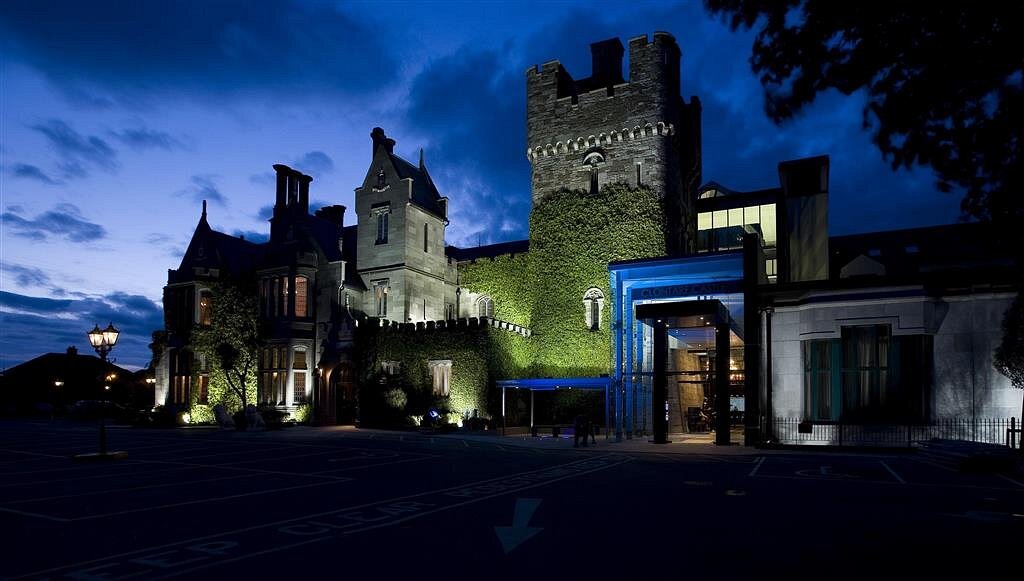
Clontarf Castle
Europe,
Ireland,
citta,
Clontarf
Clontarf Castle, located in the picturesque area of Clontarf, north of Dublin, is a fascinating blend of history, legend, and architecture. The origins of this historic site date back to 1172, when Hugh de Lacy, an influential Anglo-Norman lord, built a wooden and stone fortress on the site of a previous Viking structure. The castle’s location, overlooking Dublin Bay, is no coincidence: Clontarf was the scene of the famous Battle of 1014, in which the Irish king Brian Boru defeated the Viking forces, an event that marked a turning point in Irish history.
The history of Clontarf Castle is rich with dramatic episodes and architectural transformations. After the initial Norman construction, the castle was destroyed and rebuilt several times over the centuries. In the 15th century, the Vernon family became the owners of the castle, and under their management, the structure underwent significant modifications and expansions. The Vernons maintained ownership of the castle for over three hundred years, during which Clontarf Castle became not only a noble residence but also a center of local power.One of the most significant episodes in the castle’s history occurred during the Irish Rebellion of 1641, when the castle was besieged and severely damaged. Despite these tumultuous events, the Vernon family managed to retain control of the property and rebuild the castle, continuing to live there until the mid-19th century.In 1837, Clontarf Castle was purchased by John Edward Vernon, who commissioned a major neo-Gothic renovation by the Irish architect William Vitruvius Morrison. Morrison transformed the medieval structure into a majestic neo-Gothic residence, characterized by turrets, battlements, and intricate stone decorations that give the castle its fairy-tale appearance today. This architectural transformation not only modernized the castle but also enhanced its romantic and historical atmosphere, making it a symbol of the Gothic revival in Ireland.Clontarf Castle continued to evolve throughout the 20th century. In 1957, the castle was sold and converted into a hotel, an operation that safeguarded the structure from abandonment and ruin. Today, Clontarf Castle Hotel is one of Dublin’s most charming and historic destinations, combining modern luxury with the charm of the past. The hotel retains many of the castle’s original architectural elements, including the turrets and stone decorations, offering guests a unique and immersive experience.The history of Clontarf Castle is intimately linked to the rich tapestry of Irish history, and the castle itself is a silent witness to centuries of political and social changes. The Battle of Clontarf in 1014 is one of the most significant events in Irish history, and although the current castle was built long after, the site on which it stands has been a focal point for many of the region’s historical events. This connection to history is further emphasized by the presence of ancient ruins and artifacts discovered in the grounds surrounding the castle.
Read More