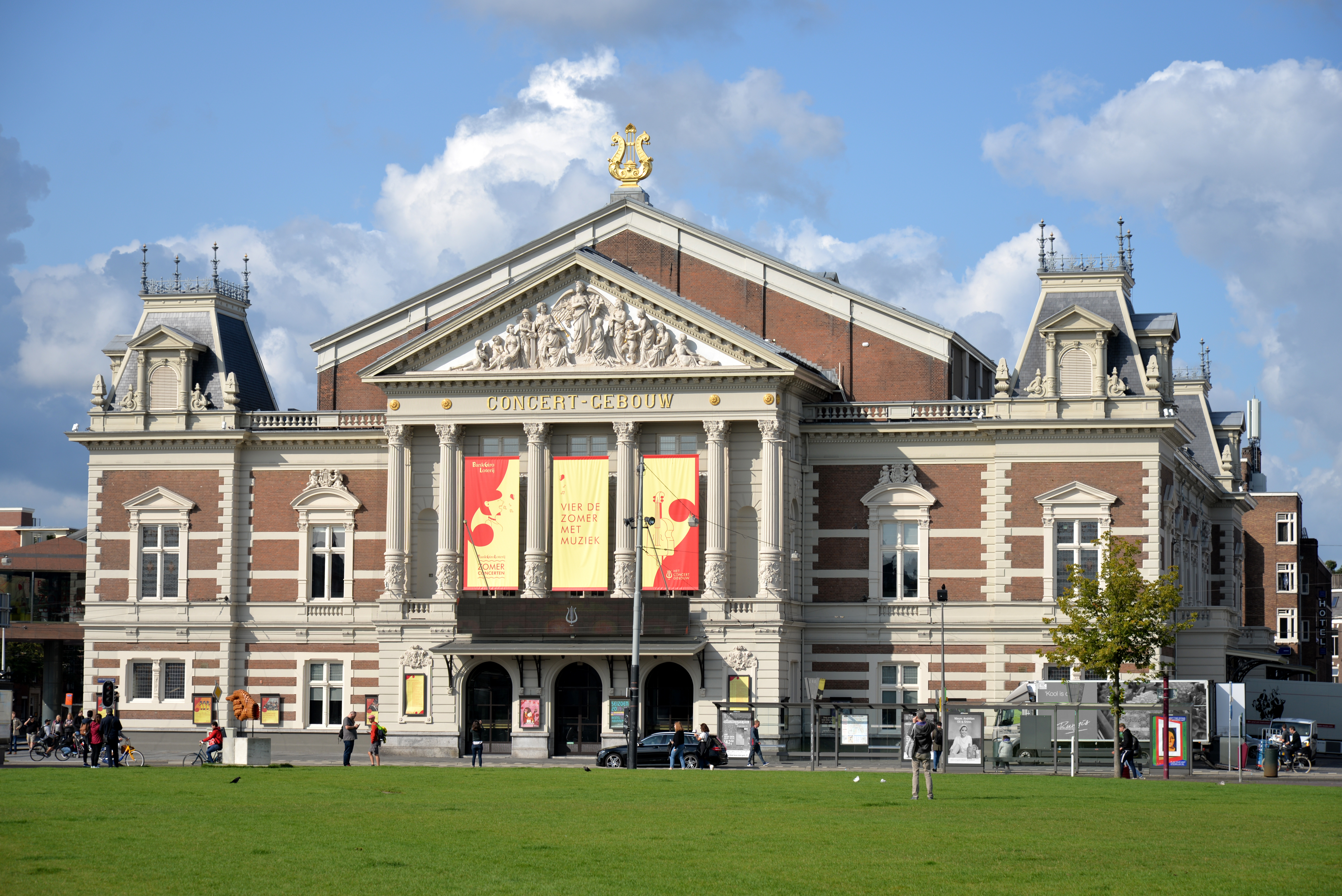
Concertgebouw
Europe,
Netherlands,
Amsterdam, citta,
Zuid
The Concertgebouw in Amsterdam is one of the most renowned music theaters in the world, known for its excellent acoustics and long history of memorable concerts. Inaugurated on April 11, 1888, the Concertgebouw was designed by architect Adolf Leonard van Gendt, who was inspired by the model of the Gewandhaus in Leipzig. Located in the vibrant Museumplein area, this building is a cultural and artistic symbol of Amsterdam, attracting musicians and music enthusiasts from all over the world.
The construction of the Concertgebouw was an ambitious endeavor, initiated by a group of Amsterdam citizens who wanted to create a world-class cultural center. The choice of the site, which was then a swampy and peripheral area, reflected the desire to expand and modernize the city. The land was reclaimed and made suitable for construction thanks to a complex system of wooden piles, on which the building still rests today.The acoustics of the Concertgebouw are universally acclaimed and considered among the best in the world. This is largely due to the combination of the hall’s dimensions, the materials used, and the shape of the structure. The Main Hall (Grote Zaal) has a capacity of about 2000 seats and perfect reverberation, which gives a warm and rich sound. This environment has made the Concertgebouw a preferred destination for internationally renowned orchestras and soloists.The Concertgebouw is home to the Royal Concertgebouw Orchestra (Koninklijk Concertgebouworkest), founded in the same year as the theater’s inauguration. The orchestra has built a stellar reputation under the leadership of conductors such as Willem Mengelberg, Bernard Haitink, Riccardo Chailly, and Mariss Jansons. Each year, the Concertgebouw hosts over 700 concerts, ranging from classical music to jazz, to world music, and welcomes more than 800,000 visitors.A moment of great historical significance for the Concertgebouw was the inauguration ceremony, which featured a performance of Ludwig van Beethoven’s Symphony No. 2, followed by a work by Richard Wagner. Since then, the theater has seen legendary artists perform, such as Gustav Mahler, who conducted several of his symphonies here, and Leonard Bernstein. The Concertgebouw has also played a significant role in promoting contemporary music, commissioning new works and hosting world premieres.The building itself is an architectural masterpiece, with its neoclassical facade and interiors decorated with ornamental details that reflect the elegance and grandeur of the era. The foyer and halls are adorned with works of art, and the atmosphere is made even more evocative by lighting designed to enhance every architectural detail.During World War II, the Concertgebouw was temporarily closed but reopened shortly after the liberation, resuming its central role in Amsterdam’s cultural life. In the 1980s, the building underwent a major renovation to modernize the facilities and further improve the acoustics. This restoration allowed the Concertgebouw to maintain its reputation for excellence and continue to attract top artists.In addition to the Main Hall, the Concertgebouw houses the Small Hall (Kleine Zaal), which has a capacity of about 400 seats and offers a more intimate setting for solo recitals and chamber music. This hall is known for its excellent acoustics and intimate atmosphere, allowing for direct contact between artists and the audience.
Read More