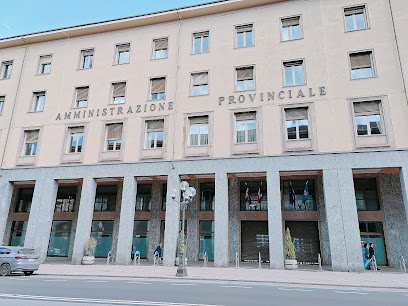
Cuneo Province Building – Cuneo
Europe,
Italy,
Cuneo,
The Province Palace of Cuneo is a fundamental element for the historical and cultural identity of the city. Located in the heart of the city center, this building represents an important example of modern architecture, dating back to the early 20th century. Built between 1905 and 1921, the palace is known for its eclectic style, a mix of neoclassical and Art Nouveau elements, which reflect the architectural trends of the time. In addition to housing the provincial offices, it is also a cultural and social landmark that attracts visitors for its architectural beauty and historical significance. The origins of the Province Palace are rooted in the desire to modernize and make local administration more functional in the period following the Unification of Italy. Cuneo, already known for its strategic and commercial role, needed a representative building to host provincial institutions. Construction began in 1905, following a project devised by architect Giuseppe D’Agostino, who aimed to create a palace that could symbolize progress and modernity. The palace was completed in 1921, but despite its young age, it has already undergone several transformations to adapt to new administrative needs. A significant restoration was carried out in the 1980s, and in 1995, the Palace underwent further conservative restoration aimed at preserving and enhancing the original architectural elements. Among the building’s features, we cannot overlook the main façade, characterized by an elegant portico supported by Ionic columns. This portico invites visitors to enter, creating a perfect harmony between the exterior and the interior of the building. Inside, a monumental staircase leads to various offices and representative halls, embellished with artistic decorations that tell the story of the province of Cuneo. Over the years, the Palace has also hosted cultural events and conferences, becoming a meeting point for citizens and visitors. Today, it represents not only the seat of provincial administration, but also a center of cultural and social aggregation for the community. Upon entering the Province Palace, we are immediately confronted with the majestic honor staircase. This is the first thing that strikes, with its marble steps and elegant balustrades that climb towards the upper floors. It is a central element of the internal architecture and represents the symbolic entrance to local institutions. Moving to the left, we find the Council Chamber, a prestigious environment decorated with stuccos and frescoes that narrate historical events related to the province. Here, the Provincial Council meetings take place. Visitors can admire the craftsmanship of the artists of the time, who have created an atmosphere of grandeur and importance. Continuing on the right, it is worth noting the Exhibition Gallery, an area dedicated to temporary exhibitions. This space is designed to host local artists and cultural initiatives, keeping the artistic tradition of the province alive. The exhibited works range from paintings to photographs, often dedicated to the territory and its traditions. Another architectural detail not to be missed is the coffered ceiling in the main atrium, which, with its minute decorations, tells of the attention to detail of the architects and craftsmen of the time. Each coffer of the ceiling is a standalone work, the result of great precision and creativity. Let’s not forget the building’s exterior, where the façade is decorated with various sculptural elements, including allegorical figures representing civic virtues and progress. These stone sculptures add an artistic touch that enriches the architectural panorama of the center of Cuneo. On the first floor, a spacious corridor leads to several rooms, some of which overlook a beautiful terrace that offers a breathtaking view of the city and the surrounding Alps. This terrace is a privileged place to contemplate the mountain landscape and enjoy a moment of tranquility. Finally, we cannot overlook the Library of the Palace. This space, although not always accessible, is a true treasure trove of history and knowledge. Here, ancient volumes and historical documents are preserved, testifying to the life of the province since its origins. The Province Palace fits perfectly into the context of Cuneo’s historic center, a city that boasts a rich history and numerous monuments. Just a few steps away, we can find Piazza Galimberti, an important square that hosts markets and cultural events, representing a vibrant heart of civic life. The Castle of Roccolo, an ancient fortress, is also nearby and deserves a visit to better understand the history and transformations of Cuneo. Furthermore, the proximity to the Civic Museum of Cuneo offers the opportunity to combine a visit to the Palace with an exploration of local art and history. The museum houses a rich collection of artworks and archaeological finds that illustrate the history of the province over the centuries. An interesting fact about the Province Palace is that it was designed to host not only provincial offices but also public events and meetings, a progressive vision for its time. This highlights the role of the palace as a landmark not only for administration but also for the community of Cuneo. Moreover, throughout its history, the Palace has seen numerous changes and adaptations, in response to the needs of the administration and the growth of the city. This makes it an excellent example of how public buildings can evolve over time while maintaining their social function. We invite you to explore other fascinating corners of Cuneo, such as the Civic Museum, where you can learn more about local history, and the nearby Piazza Galimberti, a hub of events and social life. Don’t miss the chance to deepen your knowledge of this city rich in history!
Read More