Cuneo Railway Station – Cuneo
Europe,
Italy,
Cuneo,
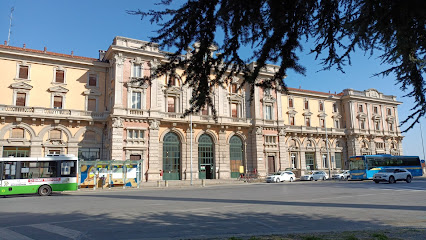
The Cuneo Railway Station, located in the heart of the city of the same name, represents an important transportation hub and a symbol of Italian railway history. Inaugurated in 1884, the station is known not only for its distinctive architecture but also for the crucial role it has played in connecting Cuneo with other cities in the region and beyond. This station is an example of how public transport can influence the growth and development of an area. Its history is intertwined with the expansion of the Italian railway network, a process that began in the second half of the 19th century, and saw the Cuneo station become increasingly central in the country’s infrastructural landscape. The history of the Cuneo Railway Station begins in 1850, when the railway line between Cuneo and Turin was designed. However, the official inauguration of the station took place in 1884, when the first section of the railway was completed. This achievement placed Cuneo in a strategic position, making it a hub for the transport of goods and passengers. The station was built according to a design that reflected the architectural trends of the time. The architects in charge of the project chose an eclectic style, characterized by neo-Renaissance and industrial elements. The station’s facade features an impressive brick structure, with decorative details that emphasize its status as a crucial junction. Over the years, the Cuneo Station has undergone various restorations and expansions. In 1928, for example, important renovations were carried out to adapt the station to the growing needs of travelers and the increasing volume of traffic. In 1987, further renovations were performed to improve the station’s accessibility. The Cuneo Station has also witnessed significant historical moments. During World War II, the strategic importance of the railway made it a military target, and the station suffered damage that required subsequent repair interventions. In recent decades, the station has continued to evolve, adopting modern technologies to enhance the travel experience. Today, it serves not only as a railway station but also as a landmark for cultural and social events in the city of Cuneo. It has become a meeting place that celebrates industrial history while looking to the future with sustainability and innovation projects. Upon arriving at the Cuneo Railway Station, the first thing that captures attention is its imposing façade. Made of red bricks, it features arches and colonnades reminiscent of typical 19th-century station architecture. The beauty of the façade is not only aesthetic; it reflects the ambitions of the Italian state at the time to promote unification and modernization through the railway network. Upon entering the station, you will find a spacious atrium, brightened by large windows overlooking the tracks. This space has been designed to accommodate travelers functionally while also considering beauty. The interior decorations, although more subdued than the exterior, preserve a historical and welcoming atmosphere. To the left of the atrium, you will notice the information service, where qualified staff are available to assist travelers. This is a strategic area, as it provides information on departing and arriving trains, along with additional services that can make the journey easier and faster. As you proceed towards the tracks, the waiting rooms can be found on the right. They are spaces that offer comfortable seating to relax before departure. Here you can observe the seating, some of which are in a vintage style, recalling the station’s past. The waiting rooms are decorated with historical posters of old railways, elements that tell stories of journeys and discoveries. One of the surprising aspects of the station is its train indication system, with schedules and destinations handwritten, a nostalgic reminder of an era when travel was a different affair. This detail, though impractical in modern society, adds a touch of authenticity and history to the visitor’s experience. Stepping out of the atrium and looking towards the tracks, various departing trains can be seen. The Cuneo station offers connections not only to nearby cities but also to more distant destinations. Here you can feel the vibrant pulse of railway life, with travelers arriving and departing, each with their own story to tell. Finally, if you take a moment to observe the outside area, you can notice the green spaces surrounding the station. These areas have been designed to enhance the overall aesthetics and provide a place of relaxation for travelers. These green areas represent an invitation to pause and enjoy the moment, reflecting on the importance of mobility and the connections that trains have created over the years. The Cuneo Railway Station is immersed in an urban context rich in history and culture. Located just a few steps from the city center, it allows for easy exploration of other significant areas. Proceeding towards the center, you will find Piazza Galimberti, an important meeting point for the people of Cuneo, where events and gatherings take place. Another point of interest nearby is the Diocesan Museum of Cuneo, which houses artwork and collections that tell the history of the territory. This museum is a testimony to the region’s cultural richness and merits a visit to better understand the local artistic heritage. Finally, not far from the station is the Cuneo Castle, a historical structure dating back to the medieval period. Exploring the castle offers a unique experience that complements a visit to the station, as both places tell different yet complementary stories of Cuneo and its evolution over time. An interesting element of the Cuneo Railway Station is that it was one of the initial stations to host a freight transport service due to its strategic location. This service had a significant impact on the local economy, contributing to the industrialization of the region. Additionally, during World War II, the station served as a transit point for soldiers and refugees, demonstrating its role in the social and political fabric of the time. It has seen travelers of all kinds, making it a crossroads of human stories. The station has also been the setting for various films and documentaries that sought to capture its beauty and historical significance. These works help keep the memory of this place alive, making it well-known even beyond regional borders.
Read More