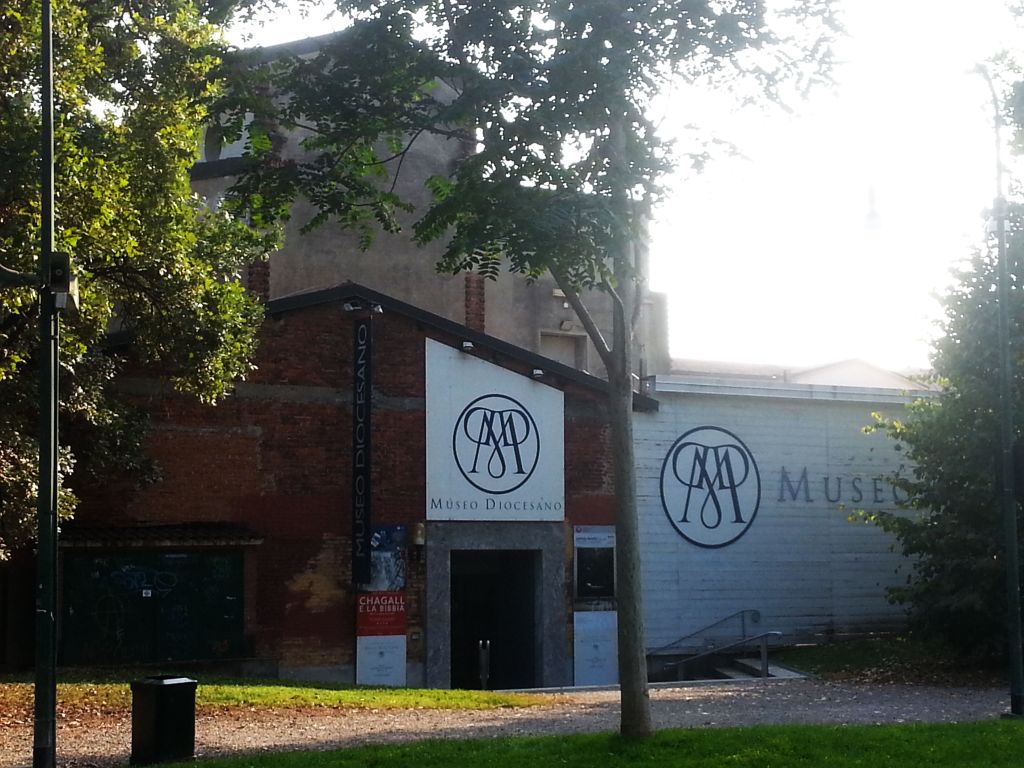
Diocesan Museum
Europe,
Italy,
citta,
Ticinese
The Diocesan Museum of Milan, located in the heart of the city, is a culturally significant institution that collects, preserves, and enhances a vast artistic heritage linked to the history and spirituality of the Milanese diocese. Inaugurated in 2001, the museum is located in the complex of the Cloisters of Sant’Eustorgio, a place of great architectural and spiritual beauty that provides an ideal setting for the exhibited works.
The museum aims to make a valuable artistic heritage accessible to the public, coming from the churches and religious buildings of the diocese, and to promote knowledge of the history of the Ambrosian Church through art. The museum’s permanent collection includes works ranging from the Early Middle Ages to the 20th century, offering a chronological and thematic journey that illustrates the evolution of sacred art and popular devotion.One of the main cores of the collection consists of medieval and Renaissance art works. Among these, stand out the panels and polyptychs by artists such as Bernardino Luini, one of the main followers of Leonardo da Vinci, and the Adoration of the Magi by Marco d’Oggiono, a work that testifies to Leonardo’s influence in Lombard painting of the 16th century. These works not only provide an overview of religious art of the time, but also reflect the historical and cultural context in which they were created.The section dedicated to Baroque and Rococo art includes masterpieces by artists such as Carlo Francesco Nuvolone and Giuseppe Vermiglio, who with their canvases have been able to express with great skill the pathos and theatricality typical of these periods. The expressive power and chromatic richness of these works involve the visitor in an intense aesthetic and spiritual experience.The museum also houses a precious collection of wooden and marble sculptures, documenting Lombard artistic production from the 13th to the 18th century. Among these, the statues of the crucified Christ and saints stand out, created by anonymous masters or attributed to local workshops, offering a glimpse into the devotion and religious craftsmanship of the time.Another section of great interest is dedicated to liturgical furnishings and sacred vestments, including chalices, ostensors, chasubles, and mitres, many of which are of extraordinary workmanship. These objects, often made with precious materials and richly decorated, testify to the importance of worship and liturgy in the life of the Christian community and the skill of the artisans who created them.One of the strengths of the Diocesan Museum of Milan is its ability to combine tradition with contemporaneity. In addition to the permanent collection, the museum organizes temporary exhibitions ranging from ancient to contemporary art, involving Italian and international artists. These exhibitions offer reflections on current themes and the relationship between art, faith, and society.The complex of the Cloisters of Sant’Eustorgio, which houses the museum, is a place of great architectural and historical charm. The cloisters, dating back to the 13th century, are characterized by elegant arches and columns that create an atmosphere of peace and contemplation. This context, together with the beauty of the exhibited works, makes the visit to the museum a unique and engaging experience.An interesting anecdote concerns the Portinari Chapel, located within the Sant’Eustorgio complex and accessible from the museum. This chapel, built in the 15th century at the behest of the Florentine banker Pigello Portinari, is one of the most significant examples of Renaissance architecture in Milan. The chapel houses the famous Ark of Saint Peter Martyr, a masterpiece of Gothic sculpture created by Giovanni di Balduccio, which attracts numerous visitors and scholars every year.
Read More