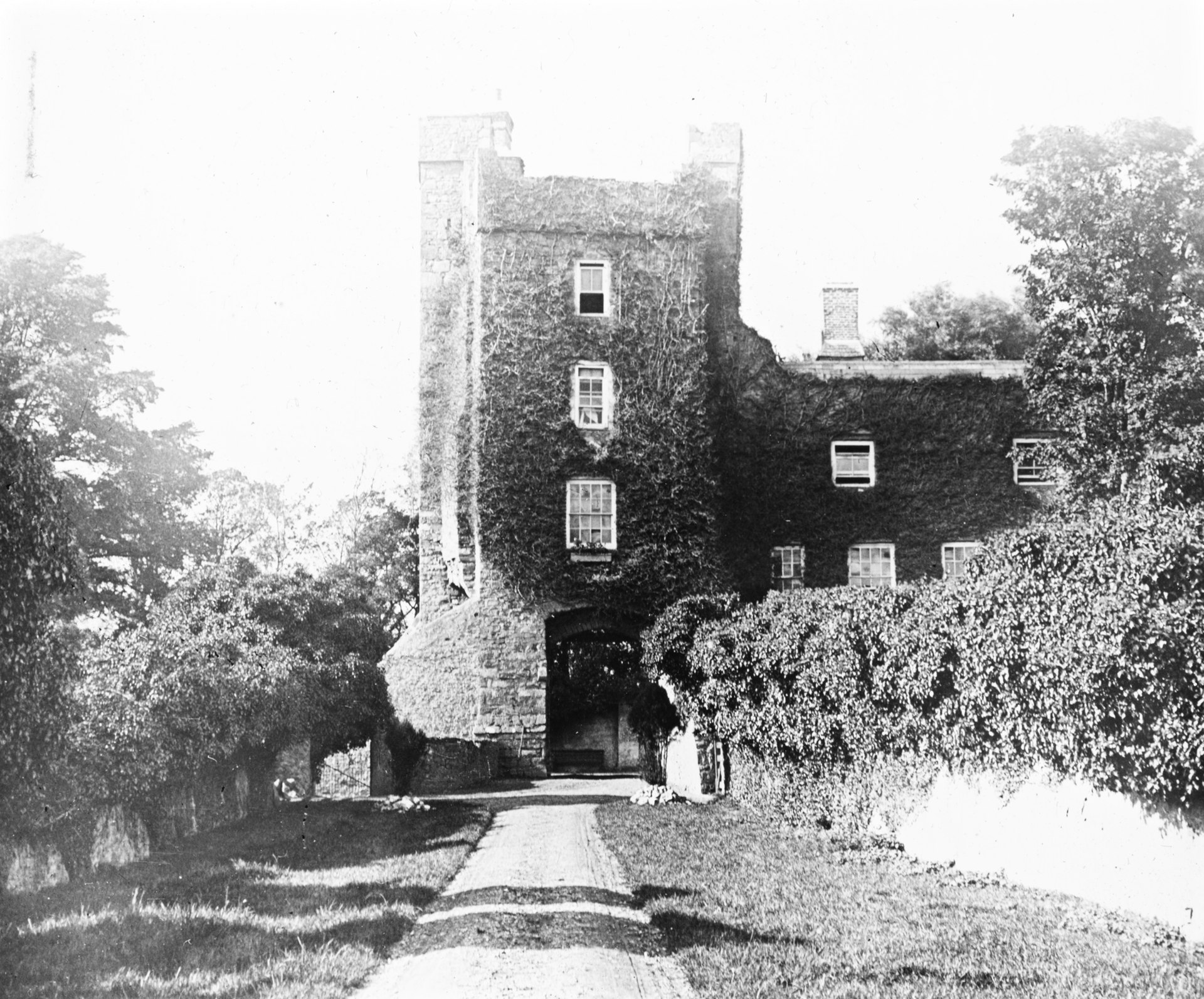
Drimnagh Castle
Europe,
Ireland,
citta,
Drimnagh
Drimnagh Castle, located in the south of Dublin, is a magnificent example of Norman architecture and the only castle in Ireland still surrounded by a flooded moat. Built in the 13th century, the castle has a rich and complex history that reflects the turbulent political and social events of medieval Ireland.
The origins of the castle date back to 1215, when Hugo de Bernivale, a Norman knight following Strongbow, received the lands of Drimnagh as a reward for his services during the Crusades and the invasion of Ireland. Situated on elevated ground and surrounded by extensive forests that stretched to the Dublin mountains, Drimnagh Castle was built as a robust fortress, equipped with thick stone walls and a wide moat fed by a tributary of the River Camac.The castle remained in the hands of the de Bernivale family until the mid-14th century, when it was sold to the Barnewall family, an important Anglo-Norman family. The Barnewalls significantly expanded the castle, adding a large tower and various annex buildings. During the Tudor period, the Barnewall family actively supported the English monarchy, playing a crucial role in the suppression of the Irish Rebellion of 1641. In recognition of their loyalty, the family received additional lands and properties, consolidating their position as one of the most powerful families in the region.Despite its prestige, the castle fell into a state of ruin in the 18th and 19th centuries. Used as a farm, many of its original features were destroyed or lost. It was only at the beginning of the 20th century that the castle received significant attention thanks to Joseph Hatch, a Dublin businessman, who purchased the castle and began restoration work. Hatch used the castle as a summer residence and a place for family events until his death in 1918.After Hatch’s death, the castle passed to the Christian Brothers in 1954, who used it to build a nearby school. However, the castle continued to deteriorate until, in the 1980s, a restoration program was initiated thanks to the efforts of artist Peter Pearson and the organization An Taisce, the National Trust for Ireland. The restoration, completed in the 1990s, restored the castle to its former glory, using traditional techniques to reconstruct the medieval roof, stone windows, and wooden decorations.Today, Drimnagh Castle is open to the public, who can explore the great hall, the medieval basement, and the watchtower with its observation posts. The castle also hosts a charming 17th-century garden, with boxwood hedges, a hornbeam avenue, and mophead-shaped laurels, recreating the atmosphere of a formal medieval garden.The castle has become a popular venue for events such as weddings and photo shoots, and has also hosted film and television productions, including “The Tudors” and “Ella Enchanted.” This makes Drimnagh Castle not only an important historical site but also a vibrant cultural and social center.Folklore and legends abound at Drimnagh Castle. It is said that the ghost of a young girl, a member of the Barnewall family, still haunts the castle halls. Another popular legend tells of a secret tunnel that would connect the castle to a nearby church, used by the family to secretly attend mass during periods of persecution.
Read More