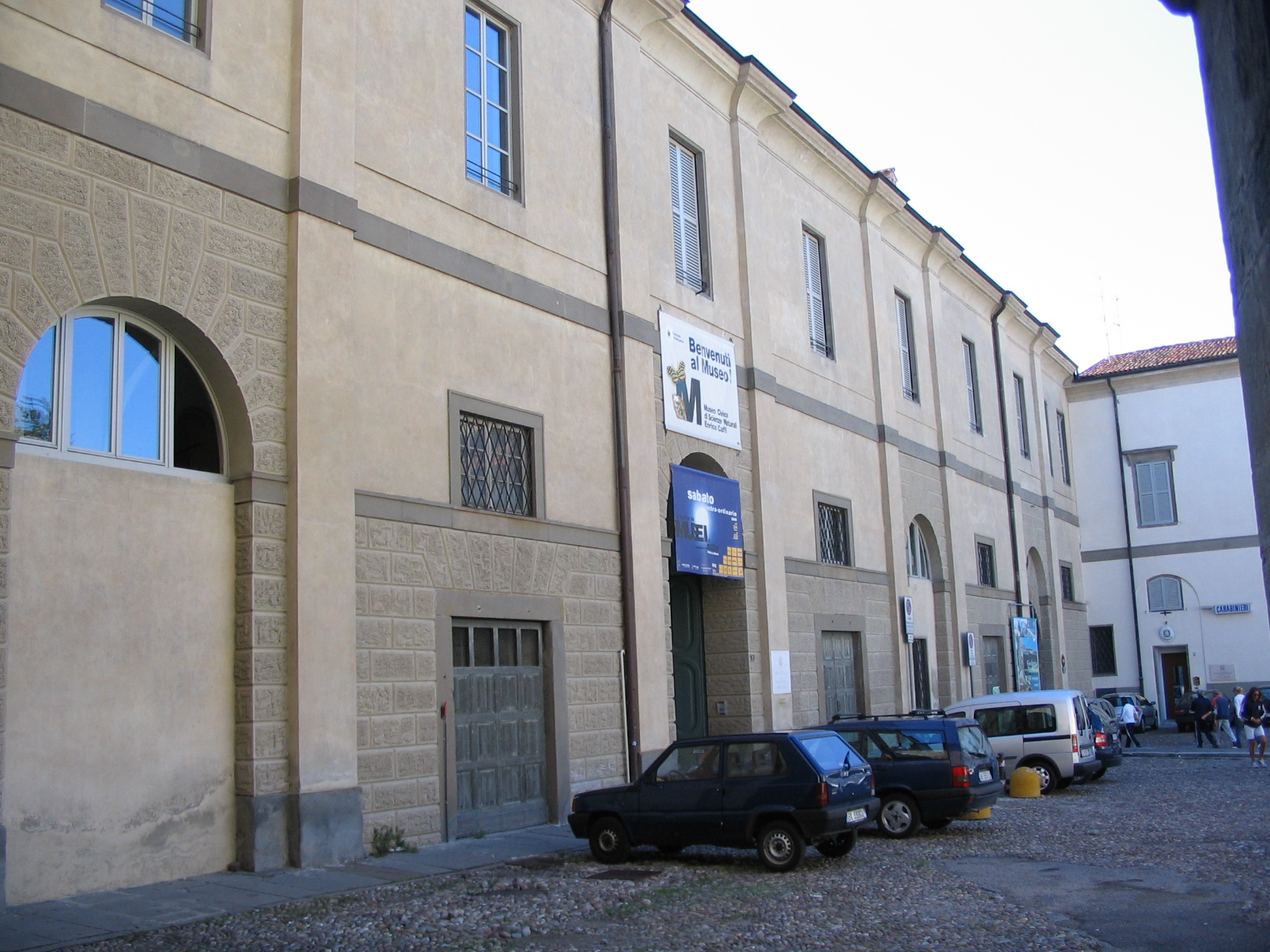
Enrico Caffi Museum of Natural Sciences - Bergamo
Europe,
Italy,
Bergamo,
The Enrico Caffi Natural Sciences Museum, located in Bergamo, is an important reference point in promoting scientific and natural knowledge. Founded in 1880, the museum is dedicated to the work of the renowned Bergamo scientist Enrico Caffi, a pioneer in the study of Lombardy’s flora and fauna. With its collections ranging from ecology to paleontology, the museum is known for providing an in-depth and engaging view of our natural environment. The historical significance and scientific importance of the museum make it an educational hub for studies and research, enhancing our understanding of biodiversity.Origins and HistoryThe Enrico Caffi Natural Sciences Museum was established thanks to the initiative of a group of scientists and natural history enthusiasts in 1880. The push for the museum’s creation was, in part, the desire to preserve and display what had been collected during scientific expeditions and research by the Bergamo society. Enrico Caffi, who had a strong connection to the city, devoted much of his life to collecting and studying specimens of flora and fauna.In 1902, the museum moved to its current location, inside the historic Palazzo Vecchio, a building that provides a wonderful backdrop for its extraordinary collections. Throughout the 20th century, the museum underwent several expansions and renovations aimed at improving the accessibility of its spaces and the display of its collections. Starting in the 1990s, numerous successful temporary exhibitions were held, accompanied by educational paths, lectures, and workshops for schools. These initiatives have contributed to increasing public participation and raising awareness of environmental issues.Today, the Bergamo Natural Sciences Museum offers visitors a wide range of experiences, from permanent collections to interactive workshops, reflecting a constant commitment to scientific communication. With a particular focus on pedagogy and communication, the museum has adapted to the needs of an increasingly diverse and curious audience.What to ObserveAs soon as you enter the museum, you will be welcomed by a large hall with high ceilings and bright windows. Here, to your left, you will find the extraordinary fossil collection. These specimens, ranging from millions to hundreds of thousands of years ago, testify to the history of life on Earth. Don’t miss the opportunity to observe the fossil of a trilobite, a marine organism that lived about 500 million years ago, an example of prehistoric life evolution.Continuing on, in the central hall you will find a rich display of minerals and rocks. It is fascinating to see how each sample tells a unique story, starting from its formation. For example, the quartz you can admire is one of the most abundant minerals in the Earth’s crust and is used in many applications, from engineering to art.Moving to the right, you will notice a section dedicated to local fauna. Here you will find specimens of mammals, birds, and insects, with a focus on species found in the Bergamasque Pre-Alps. Among the most striking specimens, I recommend observing the European eagle owl, one of the most fascinating nocturnal birds of prey in the Bergamasque mountain ecosystem. Every detail of the exhibit is enhanced with information about the biology and habitat of the various animals, offering a great opportunity to deepen your understanding of local biodiversity.As you continue your visit, step out onto the museum’s outdoor terrace, which offers a splendid view of the Bergamo hills. Here, you will recognize the outline of the famous “Sentierone,” one of the city’s most popular walking paths, which diverges from the hustle and bustle of Bergamo’s historic center and invites reflections on the connection between urban environment and nature.Inside, another hall is dedicated to themes of ecology and conservation. Through interactive panels and multimedia installations, visitors can understand the importance of environmental protection. This is a valuable opportunity to reflect on how each of us can contribute to the preservation of our planet.Finally, don’t forget to visit the section of aromatic herbs and local plants. Here, various varieties are displayed, accompanied by descriptions that recount their traditional use and medicinal properties. This area of the museum is a tribute to the botanical culture of our territory, inviting us to explore the world of plants that coexist with us and enrich our daily environment.Context and ConnectionsThe Enrico Caffi Natural Sciences Museum is situated within a context of great architectural and cultural relevance. Located in the heart of Bergamo, the surrounding area is rich in other points of interest. Just a short walk from the museum, you can visit the Trucca Park, a large green space ideal for a walk, enjoying a picnic, or simply relaxing immersed in nature. It is a lively place that often hosts cultural events and activities for families.In addition, about 15 minutes’ walk from the museum is the Donizetti Theatre, dedicated to the famous Bergamo composer Gaetano Donizetti. This historic theater is a hub of the city’s cultural life and offers a varied program of operas, concerts, and theatrical performances. The connection between the museum and the theatre invites exploration of Bergamasque culture in various forms, from visual arts to music.Also not to be missed is the Città Alta, easily reachable by funicular. Here you can stroll among the ancient walls and admire historical monuments such as the Basilica of Santa Maria Maggiore and the Colleoni Chapel. This area offers a dive into the city’s history, enriching the museum visit with a context of great historical and cultural value.CuriositiesAn interesting curiosity regarding the museum’s collection is that it houses over 250,000 specimens, including items of great scientific and historical value. This makes the museum one of the most important in Italy concerning natural history.Moreover, the museum actively collaborates with local schools by offering in-depth educational programs. This initiative aims not only to raise awareness among young people about environmental issues but also to stimulate interest in the natural sciences.The museum is also known for hosting extraordinary events, such as temporary exhibitions on specific themes. These exhibitions can range from climate change to biodiversity protection. This commitment to outreach and scientific education makes it a dynamic and ever-evolving place.
Read More