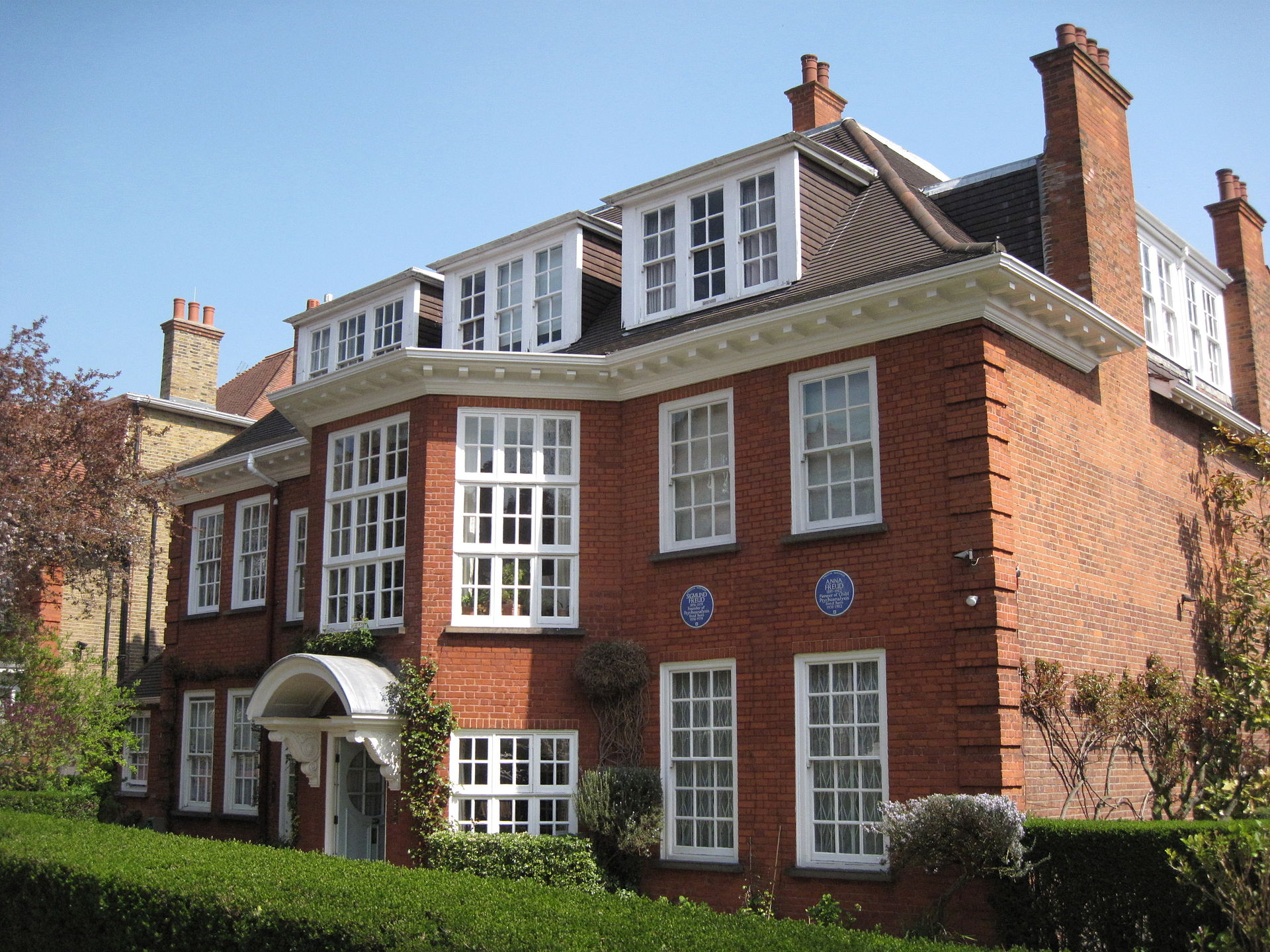
Freud Museum
Europe,
United Kingdom,
citta,
Hampstead
The Freud Museum in London, located at 20 Maresfield Gardens in Hampstead, offers a fascinating immersion into the world of psychoanalysis and the life of one of its most famous founders, Sigmund Freud. This museum, which was Freud’s final residence after his escape from Austria in 1938, represents an exciting journey through the mind of one of the greatest thinkers of the 20th century.
Sigmund Freud and his family fled Austria to escape Nazi persecution, settling in London where they found refuge. The house in Maresfield Gardens was purchased with the help of his supporters, including Princess Marie Bonaparte. The residence, furnished with furniture and personal items brought from Vienna, was transformed into a place that reflected his lifestyle and work.The heart of the museum is Freud’s study, meticulously reconstructed to resemble his Viennese study. At the center of the room sits the famous psychoanalytic couch, covered with a Qashqa’i carpet and adorned with embroidered cushions. This couch, donated to Freud by a patient around 1890, has become an iconic symbol of psychoanalytic practice. In this study, Freud continued to see patients and work until his death in 1939.The house is not only a place of memory, but also an active center of culture and research. Freud’s daughter, Anna, an important child psychoanalyst, continued to live here until her death in 1982. It was at her request that the house was transformed into the Freud Museum, opened in 1986. The museum houses not only Freud’s personal belongings, but also a vast collection of Roman, Greek, Egyptian, and Oriental antiquities accumulated throughout his life.In addition to Freud’s study and personal library, the museum hosts temporary exhibitions that explore various aspects of psychoanalysis, the lives of the Freuds, and their influence on contemporary culture. Artists who have exhibited their works at the museum include Louise Bourgeois, Sophie Calle, and Gavin Turk, whose work responds to the history and collections of the house.The museum also organizes a series of events and conferences that attract scholars and enthusiasts from around the world. Prominent figures such as Jacques Derrida, Slavoj Žižek, and Edward Said have contributed to making the museum a center of intellectual debate. The museum’s educational activities are equally significant, with programs that bring psychoanalytic ideas to a wider audience, including students and local communities.One of the most immersive experiences offered by the museum is the virtual tour, which allows visitors to explore Freud’s study and other rooms of the house from the comfort of their own homes. This initiative has made it possible to access the museum’s cultural heritage globally, keeping Freud’s legacy alive worldwide.Preserving the collections is a priority for the museum. Freud’s library, which contains essential texts for understanding psychoanalysis, is undergoing continuous restoration work to ensure that these valuable resources are preserved for future generations.
Read More