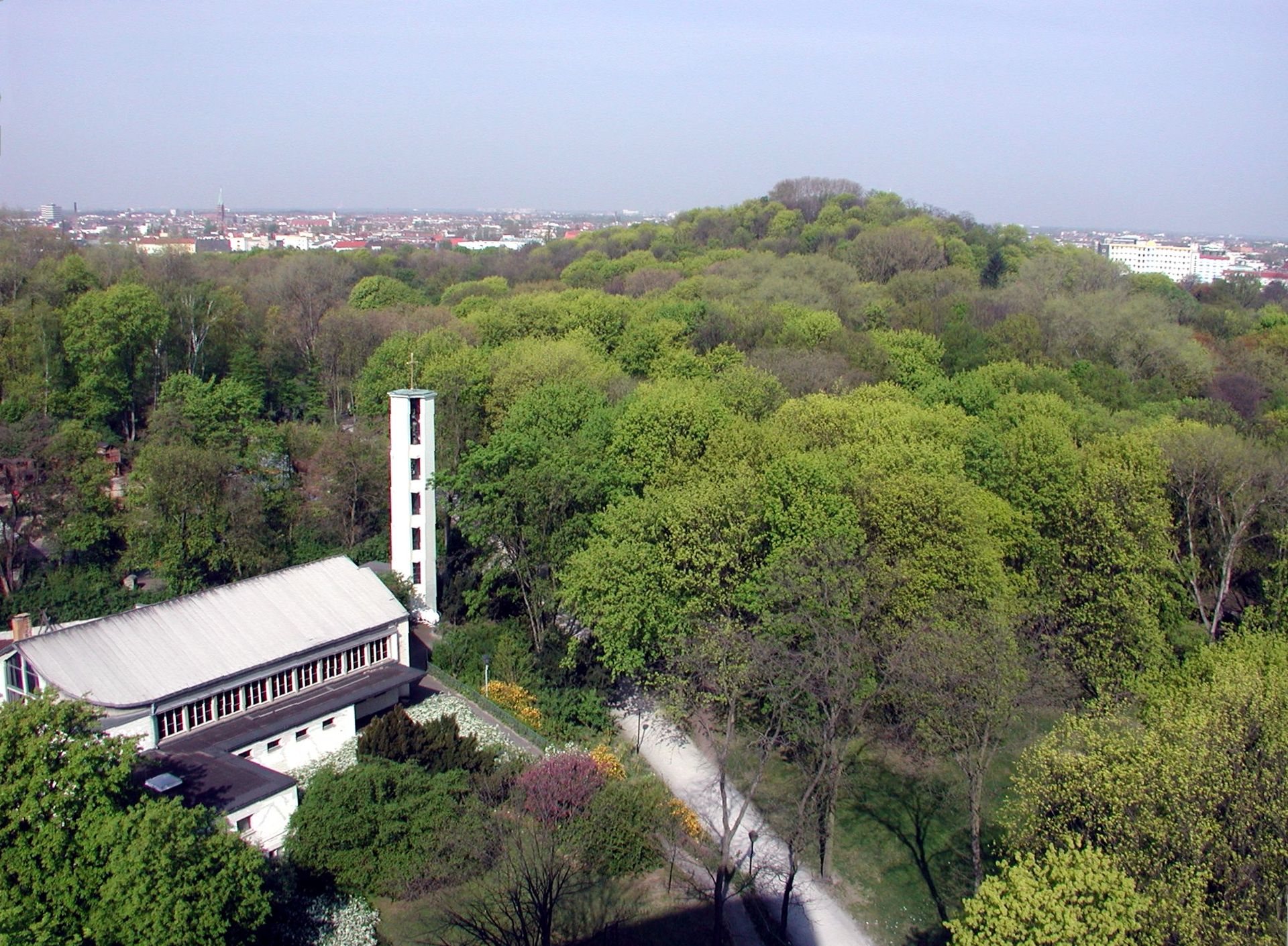
Humboldthain People's Park
Europe,
Germany,
citta,
Gesundbrunnen
The Volkspark Humboldthain in Berlin, located in the Gesundbrunnen district, is a fascinating example of how history and nature can coexist harmoniously in an urban setting. This public park, inaugurated in 1876 and dedicated to the naturalist Alexander von Humboldt, offers visitors not only an oasis of greenery and tranquility, but also a journey through the complex historical events of the 20th century.
Designed by landscape architect Gustav Meyer, Volkspark Humboldthain was created as a commemorative garden for the centenary of Humboldt’s birth. Meyer, already known for his work in Volkspark Friedrichshain, created a park that combined spacious lawns, winding paths, and a variety of trees and plants. The original design of the park aimed to create a place of leisure and relaxation for the citizens of Berlin, an objective that remains central to this day.World War II left an indelible mark on the park. In 1941, two huge anti-aircraft towers, known as Flaktürme, were built to defend the city from Allied bombings. These structures, with walls up to three meters thick, served not only as artillery positions, but also as shelters for thousands of civilians during air raids. The towers, now partially demolished, have become green hills known as Humboldthöhe, offering a panoramic view of Berlin and an ideal place for walks and outdoor activities.After the war, the towers were partially demolished and covered with rubble from the destroyed city, creating the artificial hills we see today. The park was then restored and reopened to the public, transforming a symbol of war and destruction into a place of peace and rebirth. The Berliner Unterwelten, a local association, offers guided tours of the underground sections of the towers, allowing visitors to explore these fascinating historical relics.In addition to its historical landmarks, Volkspark Humboldthain is known for its numerous attractions and recreational activities. The park features an outdoor swimming pool, popular during the summer months, and a variety of playgrounds for children. The trails that crisscross the park are ideal for jogging, walking, and cycling, while the north wall of the large tower has become a popular rock climbing gym managed by the Berlin section of the German Alpine Club.Another attraction of the park is its beautiful rose garden, a meticulously maintained garden that offers a spectacle of colors and scents especially during spring and summer. This space, with its blooming arches and geometric flowerbeds, is a peaceful retreat in the heart of the city, perfect for a relaxing stroll or a picnic.Volkspark Humboldthain is also a place of great ecological importance. During the winter, the anti-aircraft towers become a refuge for approximately 250 bats of six different species, making the park the third largest winter refuge for bats in Berlin. The presence of these animals, along with various species of birds, foxes, and squirrels, contributes to the biodiversity of the park and offers unique opportunities for observing wildlife in an urban setting.The park also hosts a small vineyard, a rarity for a city like Berlin. This vineyard produces around 200 bottles of wine per year, mainly used for special events and municipal functions, highlighting the city’s commitment to promoting sustainability and urban agriculture.
Read More