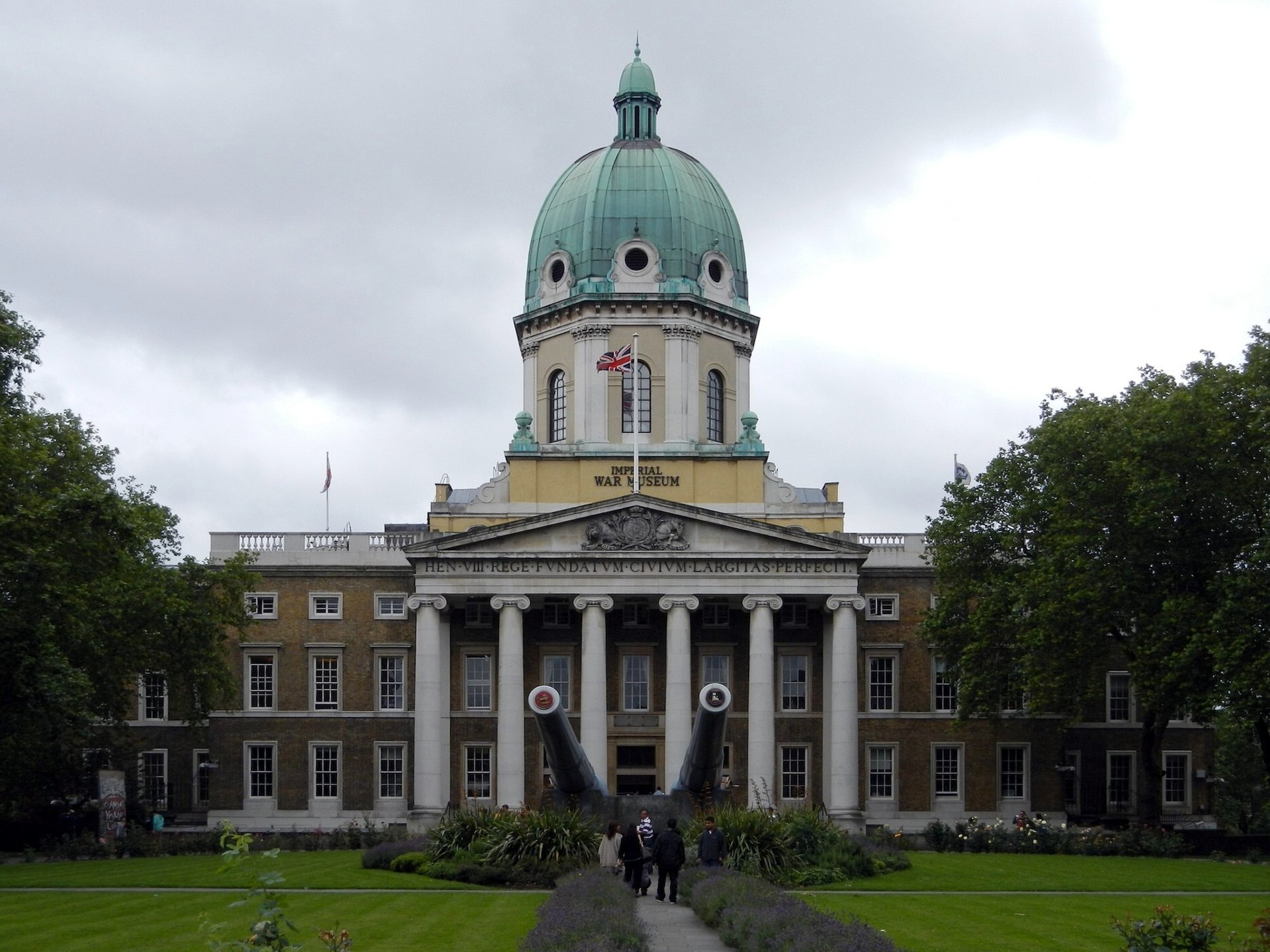
Imperial War Museum
Europe,
United Kingdom,
citta,
Lambeth
The Imperial War Museum in London is one of the most important institutions in the world dedicated to the history of conflicts and the memory of wars. Founded in 1917 during the First World War, the museum aimed to collect and preserve materials documenting the wartime experience of the United Kingdom and its allies. Today, the Imperial War Museum (IWM) spans five locations, each with a unique specialization, but the heart of the institution remains on Lambeth Road in south London.
Entering the main building of the museum is like taking a step back in time. The imposing neoclassical facade, with its columns and majestic portico, evokes a sense of gravity and respect. Inside, the vast atrium houses an extraordinary collection of military vehicles, aircraft, and weapons, including a German V2 missile launcher and a Mark V tank from the First World War. These objects, in addition to impressing with their size and power, tell stories of technological innovation and military strategy.The exhibition path winds through various thematic galleries, each offering a unique perspective on the conflicts of the 20th and 21st centuries. The First World War gallery, for example, features a reconstruction of the trenches of the Western Front, complete with sounds and smells that recreate the soldiers’ experience. The letters, diaries, and personal effects on display provide a poignant glimpse into the daily lives of the fighters, highlighting courage and human suffering.The section dedicated to the Second World War is equally fascinating. Here, visitors can explore a reconstructed wartime house, with rooms showing how British families lived under the threat of bombings. The museum has a vast collection of propaganda posters, illustrating the importance of visual communication in maintaining morale and encouraging the war effort. Another focal point is the Holocaust exhibition, documenting the atrocities committed by the Nazis through personal testimonies, photographs, and artifacts.But the Imperial War Museum does not just tell war stories. Its exhibitions also explore the consequences of conflicts, both at an individual and collective level. The “Conflicts Since 1945” gallery examines more recent wars, from the Korean conflict to the war in Afghanistan, analyzing the causes and effects of these wars and the role played by the United Kingdom on the international stage. This reflective approach encourages visitors to consider not only the brutality of war, but also the complex political and social dynamics that fuel it.Art plays a fundamental role in the Imperial War Museum. The museum’s art collection includes works by famous war artists such as Paul Nash, John Singer Sargent, and Henry Moore. These works not only visually document conflicts, but also offer an emotional and critical interpretation of events. An emblematic example is Nash’s painting “We Are Making a New World,” depicting a landscape devastated by war, a symbol of the absurdity and destruction caused by conflict.A lesser-known but equally important aspect of the museum is its role in research and education. The museum’s archive preserves millions of documents, photographs, and audio recordings, accessible to scholars and researchers worldwide. Additionally, the museum offers a wide range of educational programs for schools and community groups, aimed at promoting historical understanding and encouraging critical reflection on the themes of war and peace.
Read More