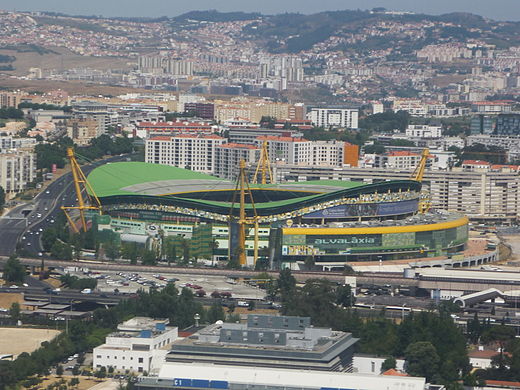
José Alvalade Stadium
Europe,
Portugal,
citta,
Alvalade
The Estádio José Alvalade, located in Lisbon, is a symbol of pride for the Sporting CP football club and a reference point in the Portuguese sports scene. The history of this stadium is closely intertwined with that of the club, and it represents a meeting place for fans and a theater of football emotions.
The first version of the Estádio José Alvalade was inaugurated on June 10, 1956, at a time when Sporting CP was looking for a larger and more modern home than the old stadium. The stadium’s name is a tribute to José Alvalade, one of the club’s founders and a key figure in its history. This first stadium could accommodate about 40,000 spectators and witnessed numerous historic moments for the club, including national and international successes.However, over the years and with the increasing expectations of fans and logistical needs, the construction of a new facility became necessary. Thus, in 2003, in preparation for the 2004 European Football Championships, the current Estádio José Alvalade was inaugurated. This new stadium, designed by architect Tomás Taveira, represents a masterpiece of modern architecture and functionality.With a capacity of 50,095 seats, the Estádio José Alvalade stands out for its innovative and colorful design. The multicolored seats and the green and white facade, which recall the social colors of Sporting CP, create a vibrant and welcoming atmosphere. The structure is equipped with all modern amenities, including VIP areas, restaurants, and press areas, making it one of the most advanced stadiums in Portugal. During the 2004 European Championship, the Estádio José Alvalade was one of the main facilities used, hosting several matches, including the semi-final between Portugal and the Netherlands. This event further strengthened the stadium’s reputation as one of Europe’s premier sports facilities.One of the most fascinating anecdotes related to the stadium concerns the famous Lisbon derby, the match between Sporting CP and Benfica. This encounter, known for the intense rivalry between the two clubs, has seen epic moments on the field of the Estádio José Alvalade, contributing to the creation of the legend and tradition of Portuguese football.
Read More