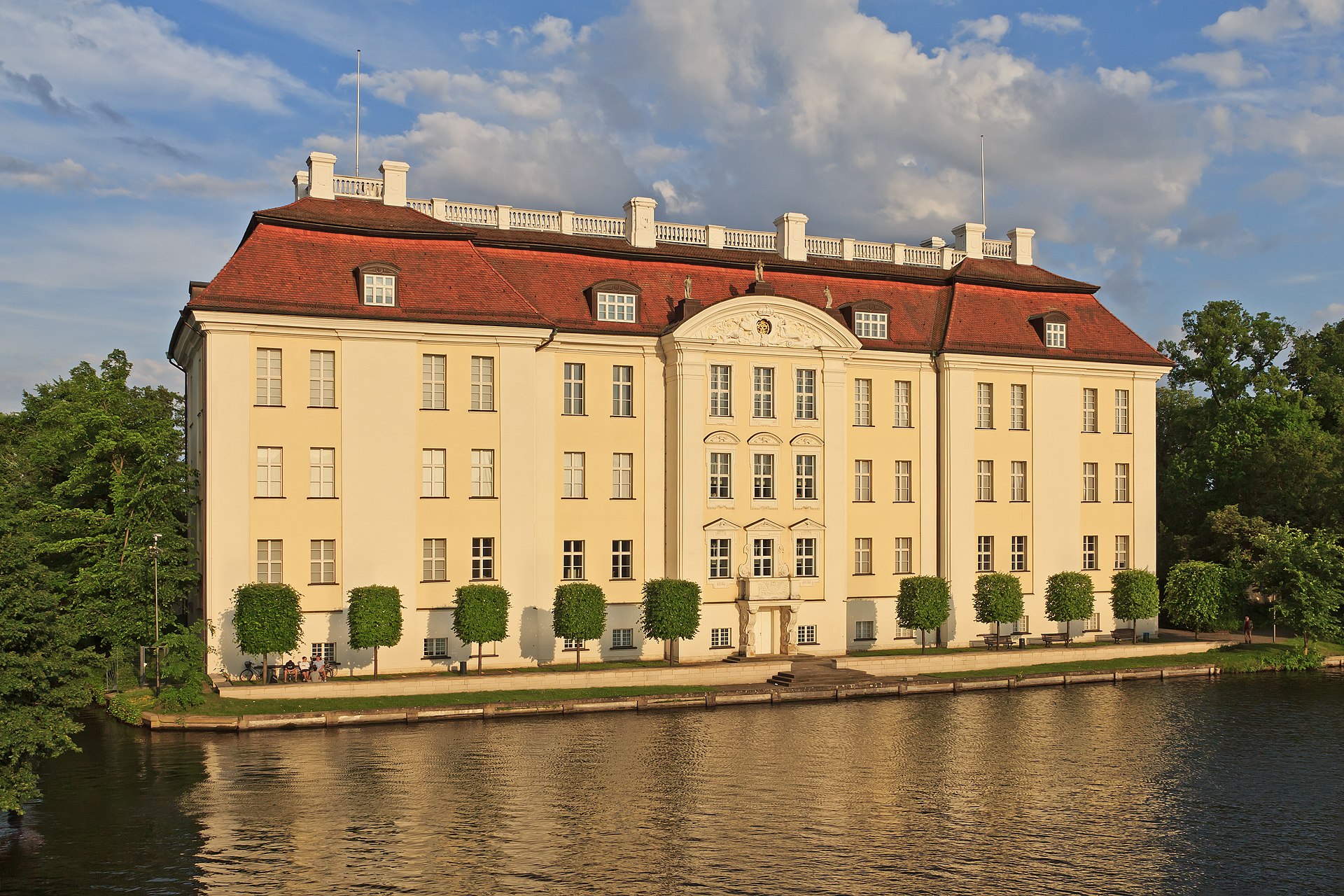
Köpenick Castle
Europe,
Germany,
citta,
Köpenick
Schloss Köpenick, an elegant baroque palace located on an island in the Dahme River, in the Köpenick district of Berlin, is one of the few surviving intact baroque buildings in the city. The palace has its roots in a millennia-old history dating back to the Slavic period of the 8th century, when the area was home to a fortress. In 1558, Elector Joachim II of Brandenburg had a Renaissance castle built on this site, used as a hunting lodge.
The baroque palace, as we know it today, was commissioned by Frederick III, Elector of Brandenburg, who later became the first King of Prussia, Frederick I. Construction began in 1677 and was completed in 1690, entrusted to architects Rutger van Langervelt and Johann Arnold Nering. One of the most fascinating elements of the palace is the artistic contribution of the Italian Giovanni Caroveri, who decorated the interiors with exquisite stuccoes.The Köpenick Palace is known not only for its architecture, but also for its tumultuous history. In 1730, it was the scene of a dramatic military trial against the young Crown Prince Frederick, accused of desertion by his own father, Frederick William I, known as the Soldier King. Frederick was imprisoned and forced to witness the execution of his close friend, Hans Hermann von Katte, an event that left a lasting mark on the future King of Prussia, later known as Frederick the Great.Today, the palace houses a branch of the Kunstgewerbemuseum (Museum of Decorative Arts), displaying a vast collection of furniture, tapestries, and art objects from the Renaissance to the Rococo period. Among the museum’s most famous rooms is the Coat of Arms Room, decorated with sumptuous stuccoes celebrating the territorial greatness of the Electorate of Brandenburg. The ceilings of the room, adorned with frescoes by Jacques Vaillant, depict scenes from ancient mythology, with a special focus on the goddess of hunting, Diana.The palace church, designed by Nering and consecrated in 1685, is an early example of artistic baroque style with its roof featuring a lantern, dome, and golden crown. Inside, allegories of faith and love adorn the portal, while the pulpit, shaped like a chalice, symbolizes Protestant faith.The park surrounding the palace, originally designed in a baroque style in 1690, now features characteristics typical of the 1960s, with numerous sculptures and a café located in a picturesque riverside location. This green space is an ideal place for relaxing walks and offers a splendid view of the Dahme.
Read More