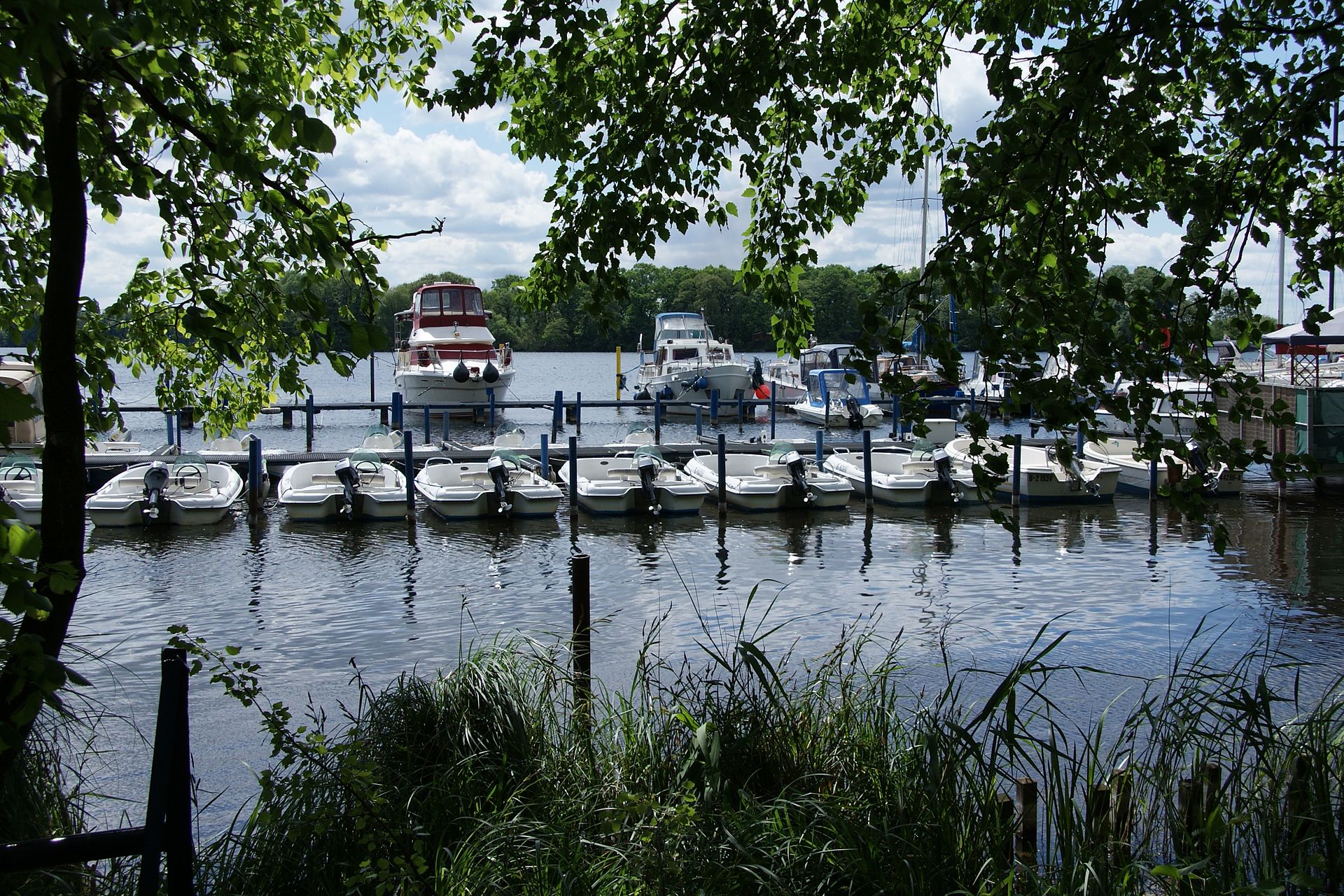
Lake Tegeler
Europe,
Germany,
citta,
Tegel
The Tegeler See, located in the Reinickendorf district in the northwest of Berlin, is one of the largest and most fascinating lakes in the German capital. With an area of about 4.6 square kilometers, this lake represents an important natural and recreational resource for the city, as well as a place rich in history and culture.
The Tegeler See is surrounded by a series of parks and forests, which offer an oasis of tranquility and natural beauty in the urban heart. Tegel Park, located along the eastern shore of the lake, is particularly appreciated for its panoramic walks, well-kept meadows, and shaded paths. This park is the ideal place for walks, picnics, and outdoor activities, and also offers a spectacular view of the lake and its serene waters.One of the most fascinating aspects of the Tegeler See is its ancient history. The first evidence of human presence in the area dates back to the Stone Age, and over the centuries the lake has played a crucial role in the life of the local community. During the Middle Ages, its waters were used for fishing and transportation, contributing to the economic development of the region. In the 19th century, the lake became a popular tourist destination, thanks also to the construction of villas and summer residences along its shores.A historical and architectural landmark of the Tegeler See is Tegel Castle, also known as Villa Humboldt. This elegant residence, built in the 18th century, was the home of Wilhelm von Humboldt, a famous scholar and founder of the University of Berlin, and his brother Alexander von Humboldt, a renowned naturalist and explorer. The castle is surrounded by a beautiful park that hosts centuries-old trees and a landscaped garden designed in English style. Today, the castle and park are open to the public and offer a fascinating glimpse into the life and works of the Humboldt brothers.Another distinctive feature of the Tegeler See is its flora and fauna. The lake and its surroundings are home to a rich biodiversity, with numerous species of water birds, mammals, and insects. Among the most common birds are swans, ducks, and seagulls, while the surrounding forests are the habitat of foxes, squirrels, and hares. This biological diversity makes the Tegeler See an ideal place for nature lovers and birdwatching enthusiasts.An interesting anecdote concerns the ancient Tegel water mill, one of the oldest mills still in operation in Germany. Built in the 16th century, the mill has undergone numerous changes and restorations, but continues to function and can be visited by tourists. This historic mill offers a fascinating insight into traditional grain milling techniques and represents a living piece of the region’s industrial history.
Read More