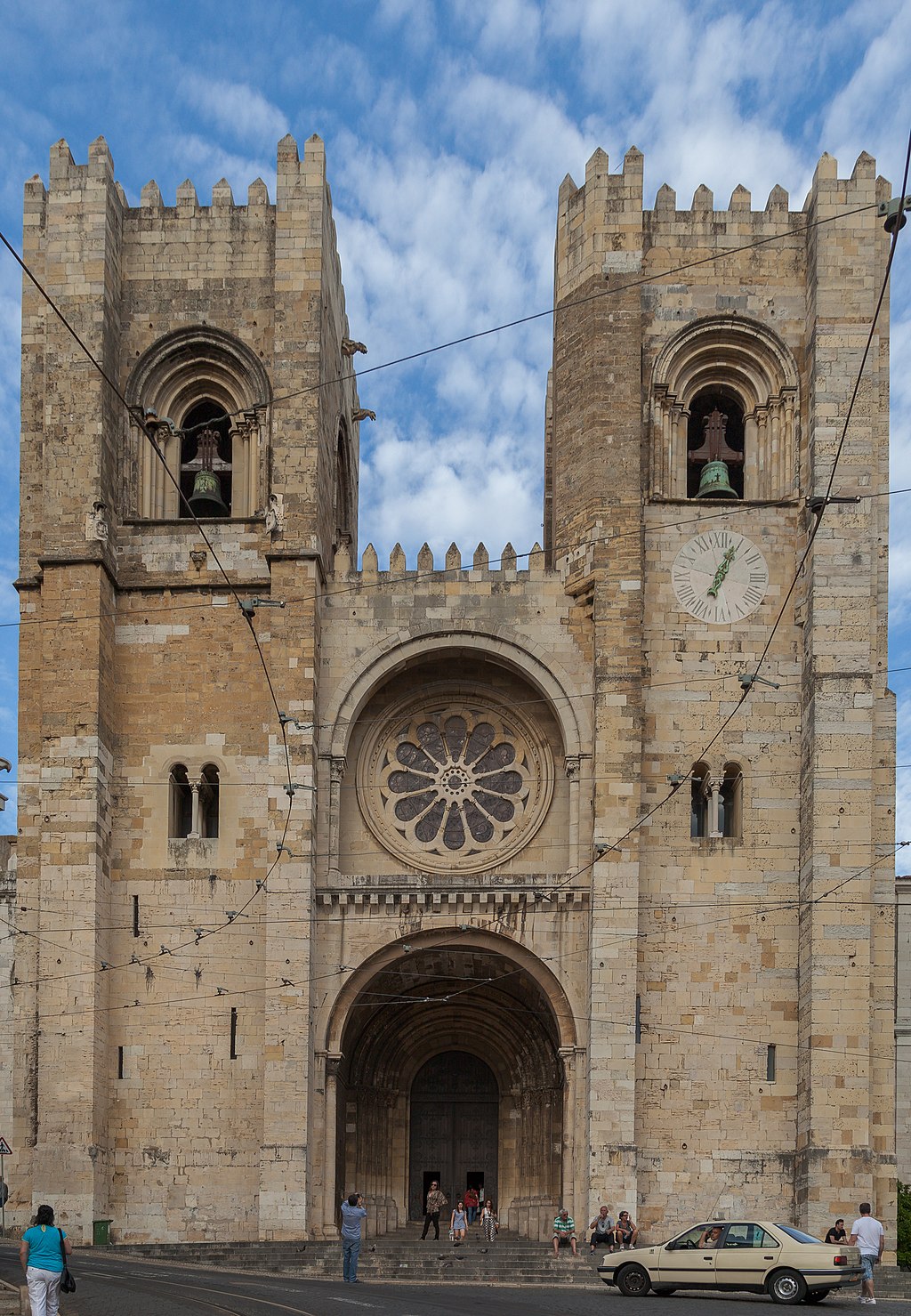
Lisbon Cathedral
Europe,
Portugal,
citta,
Alfama
The Lisbon Cathedral, also known as the Cathedral of Santa Maria Maggiore, is one of the oldest and most symbolic monuments in the Portuguese capital. Located in the Alfama district, the cathedral stands on a site of great historical significance, witnessing many cultural and architectural transformations over the centuries.
The construction of the cathedral began in 1147, immediately after the reconquest of Lisbon from the Moors by the first king of Portugal, Afonso Henriques. The Sé was built on the site of a mosque, which in turn was built on an ancient Visigothic temple, symbolizing the shift of power and faith in the city. This historical context is evident in the structure of the cathedral, which reflects a mix of architectural styles, from Romanesque to Gothic, with Baroque and Neoclassical influences added in later centuries.Externally, the Lisbon Cathedral presents an imposing and austere façade, characterized by two massive crenellated towers and a central rose window, typical of Romanesque architecture. The towers, in addition to serving as defensive elements, house bells that mark the time and religious celebrations of the city. The main entrance, adorned with intricate carvings and sculptures, invites visitors to explore the solemn and majestic interior of the cathedral.Inside, the cathedral offers an extraordinary visual and spiritual experience. The side aisles and central nave are supported by sturdy Romanesque columns, giving the building a sense of solidity and durability over time. The Gothic cloister, built in the 13th century, is a place of peace and reflection, decorated with elegant arches and finely carved capitals. During the restoration of the cloister, numerous archaeological finds were discovered, including Roman and Visigothic remains, which tell the long history of the site.One of the most fascinating elements of the Lisbon Cathedral is the Chapel of the Most Holy Sacrament, a Baroque work from the 17th century. This chapel is richly decorated with marble inlays, frescoes, and gilding, offering a striking contrast with the Romanesque simplicity of the main structure. Another chapel of great interest is the Chapel of Bartolomeu Joanes, with a magnificent Gothic altarpiece.The cathedral also houses the Treasure of the Sé, a collection of sacred objects and relics, including liturgical vestments, chalices, processional crosses, and illuminated manuscripts. This collection provides a valuable overview of religious art and devotion over the centuries.The history of the Lisbon Cathedral has been marked by numerous significant events. The 1755 earthquake, which destroyed much of the city, caused serious damage to the cathedral, but it was subsequently restored, maintaining its central role in the religious life of Lisbon. During the Carnation Revolution of 1974, the cathedral was one of the gathering places for protesters, reflecting its continued role in the public and political life of the city.The Lisbon Cathedral is also a place of important religious celebrations. Every year, during the feast of Saint Anthony, the patron saint of Lisbon, the cathedral becomes the center of processions and ceremonies that attract faithful from all over the city. This event highlights the deep bond between the cathedral and the local community, strengthened by the active participation of citizens in religious activities.
Read More