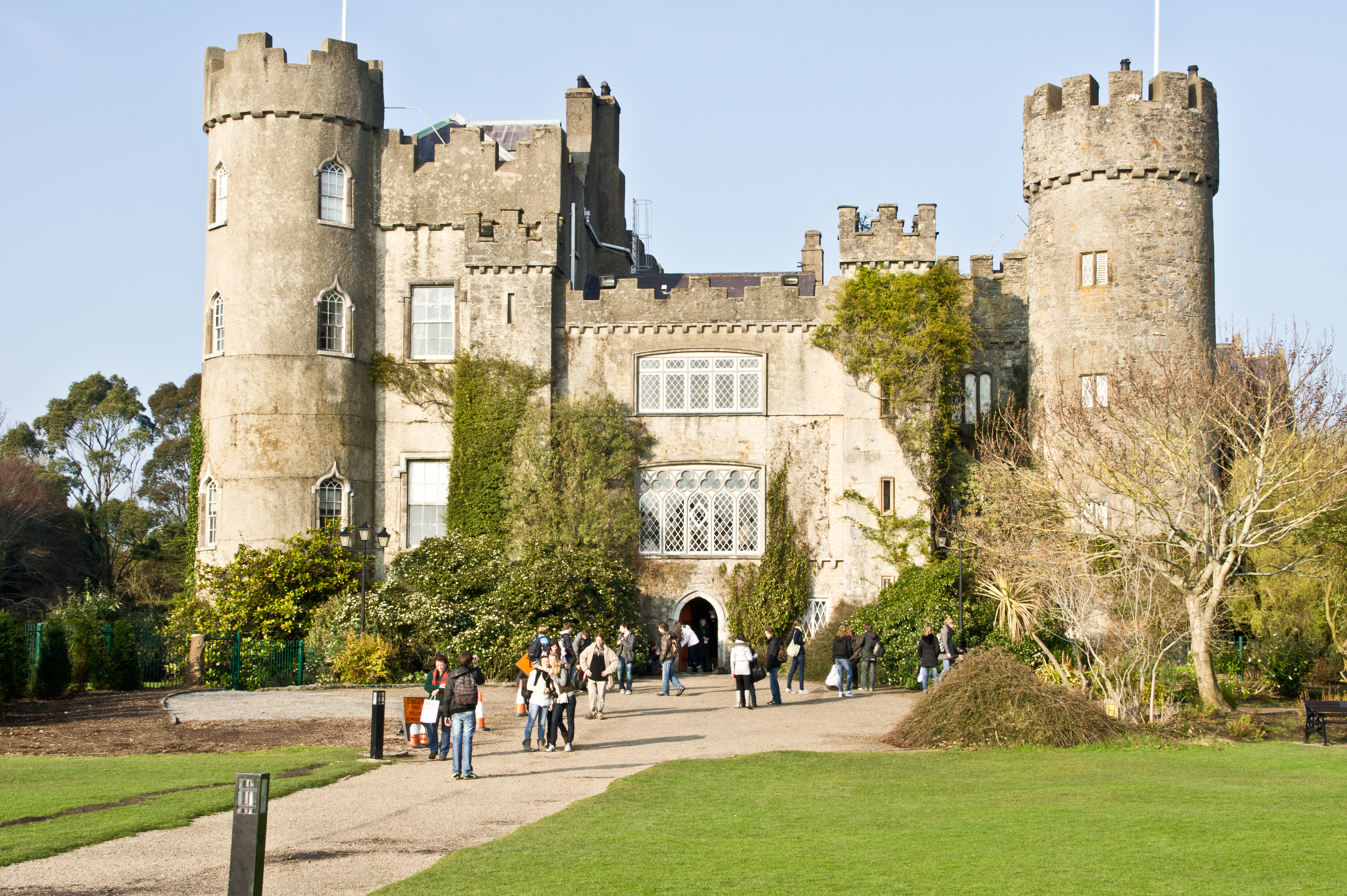
Malahide Castle
Europe,
Ireland,
citta,
Malahide
Malahide Castle, located in County Dublin, is one of Ireland’s most fascinating and well-preserved historic residences. Initially built in the 12th century, the castle boasts over eight hundred years of history and has witnessed numerous significant historical events. This imposing building is not only a magnificent example of medieval architecture but also a symbol of the complex and turbulent events that have characterized Irish history.
The construction of Malahide Castle began in 1185 when Richard Talbot, an Anglo-Norman knight, received the land from King Henry II as a reward for his services. From that moment, the castle became the residence of the Talbot family for almost eight hundred years, with only brief interruptions. The longevity of the family ownership is rare and offers a unique historical continuity, reflected in the castle’s interiors, rich with period furniture, paintings, and tapestries.The architecture of the castle is an amalgam of styles that reflect the different eras of its history. Its imposing towers, thick walls, and elegant Gothic windows testify to the numerous modifications and expansions the building has undergone over the centuries. One of the castle’s most distinctive features is the Great Hall, a beautifully decorated medieval dining room that houses a collection of family portraits and ancient weapons.During the 17th century, the castle was the scene of tumultuous events. In 1649, during the Irish Confederate Wars, Oliver Cromwell and his troops occupied the castle, forcing the Talbots into exile. The family returned to the castle after the Restoration of the monarchy in 1660, but the subsequent centuries brought further challenges. During the 1798 Rebellion, the Talbot family was again involved in political upheavals, with some members actively participating in the rebellion.A fascinating aspect of Malahide Castle’s history concerns the legends and ghosts said to haunt it. One of the most famous ghosts is that of Puck, a castle jester who fell in love with a prisoner and was mysteriously found dead. Legend has it that his spirit continues to wander the castle, and numerous visitors have reported seeing his figure in the towers and corridors.In the 20th century, the castle underwent significant transformations. After the death of Milo Talbot, the last Baron of Malahide, in 1973, the castle and surrounding lands were sold to the Republic of Ireland to avoid the fragmentation of the property. The Irish government initiated a restoration project to preserve the castle and open it to the public. Today, the castle is managed by Dublin Tourism and attracts thousands of visitors every year.The gardens of Malahide Castle are as remarkable as the building itself. Spanning over 100 hectares, the gardens include a wide range of exotic and rare plants, the result of Lord Milo Talbot’s botanical passion. The Italian gardens, rose gardens, and greenhouses offer a spectacular visual experience and are an oasis of tranquility for visitors.The castle also houses a railway museum, which features a collection of model trains and historical memorabilia, providing an interesting addition to the visit. The museum is a tribute to the historical importance of railways in Ireland and to Lord Talbot’s personal collection. An interesting anecdote concerns the dining table in the Great Hall, which is said to have been donated to the Talbot family by Robert the Bruce, King of Scotland. This precious relic is just one of the many historical objects that can be admired during a visit to the castle.
Read More